
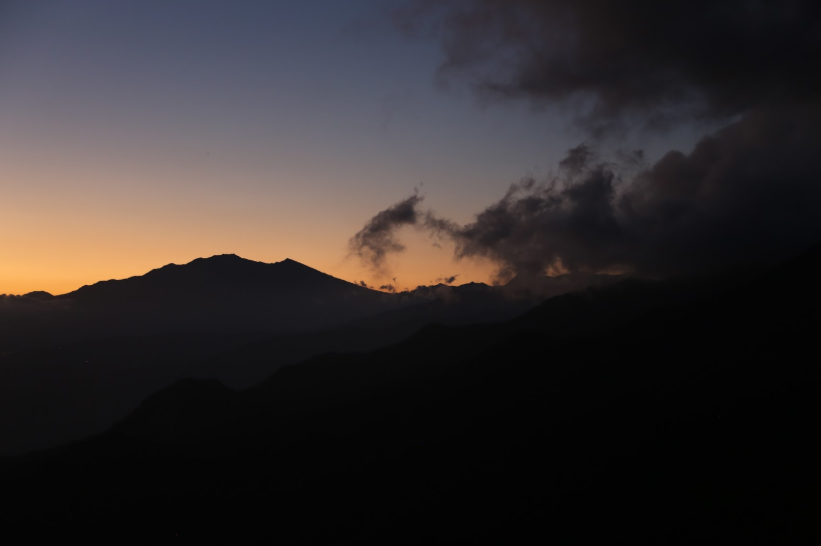
Hot Springs in Panama: Chasing Volcanic Water Through the Mountains

When people imagine Panama, they usually picture Caribbean islands, Pacific beaches, dense rainforest, waterfalls and mountains covered in cloud forest. Hot springs are rarely the first thing that comes to mind. And that is part of what makes them so interesting.

Panama has a surprisingly fascinating geothermal side. Beneath some of its mountains and valleys, groundwater moves through warm volcanic rock before finding its way back to the surface. The result is a collection of natural thermal springs, warm pools and rustic soaking spots scattered through some of the country's most beautiful landscapes.

They are not the enormous thermal resort complexes you might associate with Iceland, Japan or Costa Rica. In many cases, Panama's hot springs are much more modest. You might find a handful of stone pools on private land, a warm stream running beside a cold mountain river, or a simple local bathing area surrounded by tropical vegetation.

And honestly, that is part of the magic.

You are not necessarily going to a luxury spa. You are going to find a warm piece of the earth hiding in the middle of the mountains.

Why does Panama have hot springs?

The answer begins with Panama's extraordinary geological history.

Much of the country's mountain landscape was shaped by volcanic activity. Volcán Barú dominates the highlands of Chiriquí, while El Valle de Antón occupies the enormous caldera of an ancient volcano. Even though Panama does not have the spectacular collection of active volcanoes found farther west in Central America, the country's volcanic past is still written into its landscape.

Rainwater and groundwater can penetrate the earth through cracks and fractures in the rock. As the water moves deeper underground, it encounters warmer geological material. It is then forced or drawn back toward the surface, sometimes emerging as a thermal spring.

The fascinating part is that this process can happen surprisingly close to ordinary cold rivers.

In the Caldera area of Chiriquí, for example, hot spring pools are found beside cold mountain water. Some pools have temperatures reported in the range of roughly 34 to 45°C depending on the particular spring and location. Historical reporting on the Caldera springs describes several pools with different temperatures, which is one reason the experience feels more like discovering a natural geothermal system than visiting a conventional swimming pool.

Imagine sitting in naturally heated water while a cold mountain river rushes past a few metres away.

That contrast is one of the great pleasures of Panama's thermal springs.

Caldera: probably the most adventurous thermal experience

For travelers exploring Chiriquí, Caldera is one of the most interesting places to look for naturally heated water.

The springs are in the broader Caldera Valley southeast of Boquete. Several pools are located on private land, and the environment is considerably more rustic than a conventional spa. Recent travel information describes several geothermal pools with temperatures ranging from approximately 38 to 45°C, while older reporting documents multiple pools with temperatures from the mid 30s into the low 40s.

The fact that the pools have different temperatures is important. A 38°C pool can feel wonderfully warm. A pool approaching 45°C is a completely different experience.

You get in.

You think, "This isn't too bad."

Five minutes later you are wondering why you have voluntarily climbed into a giant natural soup.

That is where the nearby river becomes particularly interesting.

The Río Caldera provides a natural contrast to the thermal pools, allowing visitors to cool themselves after soaking. This hot and cold combination is one of the characteristics that makes the Caldera springs so memorable.

And this is not a polished resort experience. Recent descriptions emphasize the rustic character of the site, with basic pools and very limited facilities. That can actually be part of the attraction for travelers who would rather have an unusual adventure than spend the afternoon at a luxury spa.

Los Pozos de Caldera

The Caldera area has more than one geothermal attraction.

Los Pozos de Caldera is another collection of thermal pools in the same broad region. It is generally described as smaller and more secluded, with pools situated closer to forest and the Río Chiriquí.

The pools can be smaller and shallower than those at the better known Caldera springs, creating a different atmosphere. Instead of imagining a large resort pool filled with tourists, think of a handful of people sitting in naturally warm water in a mountain landscape.

That is the Panama hot spring experience at its most appealing.

The journey is part of the experience too. Roads and access conditions can be rougher than travelers expect, particularly toward more rustic thermal sites. Current local travel information recommends checking road conditions before going and carrying cash because facilities and payment options can be limited.

This is one of those occasions where asking someone locally before leaving can save you a lot of frustration.

The strange hot and cold combination

One of the most fascinating things about Panama's hot springs is the possibility of experiencing completely different temperatures within a very small area.

At Caldera, warm geothermal pools sit near cold river water. Historical accounts specifically describe the unusual contrast between the hot pools and the nearby cold Río Caldera.

It is almost like nature built its own sauna.

Hot pool.

Cold river.

Hot pool.

Cold river.

Hot pool.

At some point you stop thinking about geothermal geology and simply realize that this is an extremely enjoyable way to spend an afternoon.

The contrast can also make the thermal experience feel much more intense. After sitting in hot water, even ordinary mountain water can suddenly feel freezing.

El Valle de Antón: hot springs inside an ancient volcanic world

Another completely different thermal experience can be found at El Valle de Antón in Coclé.

El Valle is one of Panama's most unusual towns because it sits inside the enormous crater of an ancient volcanic system. The surrounding mountains form a dramatic ring around the valley, creating a landscape that feels very different from the lowlands around Panama City.

The local thermal pools, known as Pozos Termales, are one of the area's longstanding attractions.

These springs are generally warmer than the surrounding environment rather than spectacularly hot. Sources describe temperatures around the high 30s Celsius, although exact temperatures can vary by pool and conditions. Panama's tourism authority describes thermal waters in the area at around 38°C and also notes the distinctive reddish, whitish and yellowish appearance associated with the mineral content.

This is a very different experience from the more rustic Caldera pools.

El Valle is easier to combine with other attractions, including hiking, waterfalls, markets and the surrounding volcanic landscape. The thermal pools can therefore become part of a larger day of exploring rather than the entire reason for the trip.

And then there is the famous volcanic mud

One of the traditions associated with the thermal pools at El Valle is the use of volcanic mineral mud.

Visitors apply mud to their skin, let it dry and then wash it off in the thermal pools.

It is one of those travel experiences that sounds slightly ridiculous when described in advance.

"Today we're going to put mud all over our faces and sit in a warm pool."

But once you're sitting there with half your body covered in grey volcanic mud while surrounded by tropical vegetation, it suddenly makes perfect sense.

The mud is often promoted as having medicinal or cosmetic benefits. Some local sources attribute various therapeutic properties to the mineral content, but travelers should distinguish traditional claims from medically established treatments. The experience itself can certainly be fun and is part of the local character of the attraction.

Don't confuse every warm pool with a hot spring

This is surprisingly important when researching Panama.

El Valle has several beautiful places where you can swim in natural water, but not every natural pool in the area is a thermal spring.

Ojo de Agua, for example, is associated with freshwater swimming rather than geothermal hot water. It is a lovely place to cool off, but it should not be confused with the actual Pozos Termales.

The distinction matters because travelers sometimes search for "hot springs in El Valle" and end up reading about several completely different water attractions.

Panama has warm water, cold water, waterfalls, rivers, natural pools and geothermal springs, sometimes within relatively short distances of one another.

That is part of the fun.

Hot springs aren't necessarily "healing"

There is a long tradition around the world of believing that thermal and mineral waters can cure everything from arthritis to skin conditions. Panama is no exception. Local descriptions of both El Valle and Caldera have historically attributed medicinal properties to their mineral waters.

But it is worth separating the enjoyable experience of soaking in warm mineral water from medical claims.

A hot spring can feel fantastic. Warm water can be relaxing, and soaking can temporarily make tired muscles feel better. That doesn't mean the water is a proven treatment for a medical condition.

Think of it as a wonderful natural bathing experience rather than an alternative hospital.

That distinction doesn't make the experience any less enjoyable.

How hot is too hot?

This is one thing travelers sometimes underestimate.

A pool at 35 or 36°C may feel pleasantly warm. Once temperatures climb above 40°C, however, prolonged soaking becomes a different proposition.

Your body is already working to regulate its temperature, and sitting in very hot water for too long can cause dizziness, dehydration, weakness or overheating.

The solution is simple.

Don't try to win.

You don't get a prize for staying in the hottest pool the longest.

Take breaks. Drink water. Get out if you feel dizzy, nauseous, unusually weak or uncomfortable. Sit somewhere cooler and let your body return to normal.

If you're traveling with someone who has cardiovascular problems, is pregnant, takes medications that affect temperature regulation or has another relevant medical condition, it's sensible to get medical advice before using very hot thermal pools.

The weather can make the experience even better

Hot springs are particularly enjoyable when the surrounding air is cool.

This is one reason mountain locations can be so atmospheric.

Imagine arriving in the highlands after a cloudy or rainy day. The mountains are covered in mist. Everything is green. The air is cool enough that you want a jacket.

Then you step into naturally warm water.

Suddenly the weather is perfect.

The same thermal pool can feel completely different on a hot, sunny afternoon. Sometimes you don't even want very warm water when the air temperature is already high.

This is why timing matters. A cloudy afternoon or early morning can be magical at a mountain hot spring, while the middle of a hot tropical day may be less comfortable.

What should you bring?

For rustic hot springs, think less "luxury spa" and more "backpacker adventure."

Bring a swimsuit, towel, drinking water, sandals or shoes with decent grip, a plastic bag for wet clothing and some cash. Don't assume there will be a restaurant, ATM, locker or reliable mobile signal.

At the more rustic sites, facilities can be extremely basic. Recent information on the Caldera springs, for example, notes limited infrastructure and recommends bringing cash.

And bring a sense of humor.

You may end up changing behind something that technically qualifies as a changing room only because nobody has yet complained.

That's part of the adventure.

The journey can be better than the destination

One of the things that makes Panama's hot springs particularly interesting for backpackers is that they can be combined with other adventures.

You can hike in the mountains, explore a waterfall, visit a coffee region, stop at a small village, eat lunch somewhere local and finish the day sitting in naturally heated water.

In Chiriquí, hot springs fit particularly well into an exploration of the mountains around Boquete and the Caldera region. In El Valle, they can be combined with hikes, waterfalls and exploration of the enormous volcanic crater.

This is very different from flying somewhere specifically to spend three days inside a thermal resort.

Panama lets you build the thermal experience into a much bigger adventure.

There are still places that feel genuinely wild

This may be the most interesting thing about Panama's hot springs.

The country has never developed its thermal resources on the same gigantic scale as some other destinations. That means there are still places where the experience feels surprisingly close to nature.

You might hear birds rather than spa music.

You might hear a river rather than a swimming pool filtration system.

You might be surrounded by trees instead of manicured gardens.

And instead of someone handing you a robe, you might be standing beside a muddy trail wondering whether your shoes are ever going to look the same again.

For some travelers, that's exactly the point.

Hot springs as part of the Panama backpacking experience

The backpacking version of Panama isn't just about beaches and parties.

It's about finding the strange little experiences between the major destinations.

It's hiking through cloud forest.

It's discovering a waterfall down an unmarked road.

It's sitting beside a river.

It's eating something you can't pronounce in a tiny roadside restaurant.

It's getting completely soaked by tropical rain.

And sometimes it's finding a steaming pool of geothermal water in the middle of the mountains.

That's what makes the hot springs worth seeking out.

They are not necessarily the most spectacular attraction in Panama. They don't have the fame of Bocas del Toro, the beaches of Santa Catalina or the hiking around Boquete.

But they offer something different.

They connect you directly to the geology underneath the country.

The same volcanic forces that helped create Panama's mountains are still influencing the water beneath your feet. Groundwater disappears underground, moves through warm rock and eventually returns to the surface as a naturally heated spring.

You can literally sit in geological history.

And then, if you're lucky enough to find a cold river beside it, you can jump into that too.

That is the beauty of Panama's hot springs. They aren't just places to soak. They are little windows into the volcanic machinery beneath the country, surrounded by some of the landscapes that make Panama such an extraordinary place to explore.

Swimming in Panama’s Rivers: The Wildest Way to Cool Off

There are few things that feel more authentically Panamanian than jumping into a clear mountain river after hiking through the jungle. Forget the hotel swimming pool. In Panama, some of the best places to cool down are natural swimming holes surrounded by enormous trees, moss covered rocks, waterfalls, birds, butterflies and jungle sounds. You can spend an hour sitting in a river pool watching the water pour over rocks, then climb out, dry yourself on a warm stone and realize that you are swimming in exactly the same water that was flowing through the mountains long before anyone built a road nearby.

For travelers, river swimming can be one of the great pleasures of exploring Panama. Rivers run through the mountains of Chiriquí, Veraguas, Coclé, Panama and other parts of the country, and many have spectacular swimming holes, cascades and waterfalls. Around places such as Boquete, Gualaca, Santa Fe and the forests of Chiriquí, finding a beautiful river can become an adventure in itself. But there is an important difference between swimming in a hotel pool and swimming in a tropical river: the river is completely in charge.

That is what makes it so exciting, and also what makes a little common sense extremely important.

The water can look completely innocent

One of the biggest mistakes people make with rivers is judging them entirely by appearance. A river can look like a peaceful, shallow stream while having a surprisingly powerful current underneath. Water flowing over rocks can create underwater channels and currents that are difficult to see from the surface. Even relatively shallow moving water can knock someone off their feet, particularly if the bottom is slippery. The U.S. National Park Service warns that currents can remain powerful even when the surface appears calm and that river bottoms can contain slippery rocks, unexpected depth changes and places where swimmers can become trapped.

This is particularly relevant in Panama because mountain rivers can change character quickly after rain. You might be standing beside a beautiful clear pool in the morning and return later to find that the water is brown, fast and dramatically higher.

And here is something many visitors don't realize: it doesn't necessarily have to be raining where you are.

Rain falling farther upstream can eventually arrive at the swimming area. A river drains an entire landscape, not just the patch of sky directly above your head. Panama's mountains can receive enormous amounts of rain, and water levels can change surprisingly quickly.

Panama's firefighters specifically warn that rivers can experience sudden rises even when there is no rain at the swimming location.

The rainy season changes everything

Panama's rainy season is not a reason to avoid rivers altogether. In fact, waterfalls can become spectacular and the rainforest becomes incredibly lush. But rain should make you more observant.

After substantial rainfall, the water may become cloudy or brown because of sediment, and the current may become considerably stronger. Rocks that were previously exposed can disappear beneath the water. Swimming holes that looked harmless yesterday may suddenly have stronger circulation, floating branches or debris.

This is one of those situations where local knowledge is incredibly valuable. If you are staying at a hostel, lodge or guesthouse near a river, ask people who actually live in the area what the river is doing. A local who has watched the same river for years may know that a particular swimming hole becomes dangerous after heavy rain or that a certain waterfall should never be approached from above.

The Canadian government also recommends consulting residents and tour operators about local water hazards and following warnings from authorities when participating in water activities in Panama.

Waterfalls are beautiful, but they deserve respect

Waterfalls are probably the most irresistible part of river swimming in Panama. There is something almost impossible to resist about standing underneath a tropical waterfall while cold mountain water pounds onto your shoulders.

But waterfalls also create some of the biggest hazards.

The area immediately above a waterfall can be deceptive. A small section of fast moving water may look like something you could easily walk through, but once you lose your footing, the current can carry you toward the edge. Wet rocks can also be extraordinarily slippery.

Never assume that because you can see someone else sitting near the edge of a waterfall, the location is automatically safe. Conditions change with water levels, and one person's comfort level is not necessarily evidence of safety.

Jumping from rocks is another classic river mistake. You cannot reliably judge underwater depth simply by looking at the surface. Rocks, submerged branches and uneven bottoms may be invisible from above. Panama's travel health guidance specifically warns against diving into shallow or unknown water.

The safest rule is simple: never jump or dive into water when you don't know exactly what is underneath you.

Watch the rocks

Panama's rivers are full of beautiful smooth stones, which are also excellent at making people fall over.

Algae, moss and constant water movement can turn rocks into natural banana peels. Even people who are excellent swimmers can have trouble staying upright when walking across a riverbed.

Water shoes or sturdy sandals with good grip can make a big difference. Flip flops are particularly useless when you're trying to scramble over wet rocks. Bare feet can also leave you vulnerable to cuts from sharp stones or hidden objects.

And don't assume that deeper water is necessarily safer. Sometimes the safest place to sit is a shallow area where you have good footing. Other times, a deep pool is perfectly calm while a seemingly harmless shallow section has a strong current flowing over it.

The trick is learning to read the river rather than simply looking for the deepest or prettiest pool.

Don't underestimate cold mountain water

Panama is hot, but not every river is warm.

Mountain streams can be surprisingly cold, particularly in higher elevations and shaded cloud forest areas. After hiking for an hour in tropical heat, jumping into cold water can feel fantastic, but prolonged exposure can eventually become uncomfortable or dangerous.

This is another reason not to assume that being a strong swimmer means you can handle every river. Cold water can affect strength and coordination, particularly if you're tired from a long hike.

Fortunately, most recreational river swimming in Panama isn't about spending hours swimming continuously. It's usually more about floating, sitting in pools, cooling off and enjoying the surroundings.

And that is arguably the better way to do it.

Never swim alone

This may be the least exciting piece of advice, but it is one of the most important.

A river is not a swimming pool, and rescue can be difficult. Some remote swimming holes have no lifeguards, poor mobile phone coverage and no easy road access. If something goes wrong, you may be much farther from help than you realize.

Panama's fire department recommends avoiding swimming alone, particularly in rivers where currents can be unpredictable.

There is also a psychological advantage to having other people around. Someone standing on the bank may notice a problem before the person in the water does. If you are exploring a more remote river or canyon, having an experienced guide or someone familiar with the location can be particularly valuable.

Alcohol and rivers are a terrible combination

This deserves its own paragraph because it is one of the easiest mistakes for backpackers to make.

A cold beer beside a tropical river sounds fantastic. A cold beer while swimming in a tropical river is considerably less fantastic.

Alcohol affects coordination, judgment and reaction time, all of which matter when you're dealing with currents, slippery rocks and uneven riverbeds. Panama's firefighters specifically advise against drinking alcohol before or during swimming because it increases the risk of accidents.

Have the beer afterward.

The river will still be there.

There is also a health side to natural swimming

Clear mountain water looks incredibly clean, but clear does not necessarily mean sterile.

Natural rivers can contain microorganisms originating from humans or animals. Heavy rain can wash contaminants into waterways, and certain bacterial infections can be associated with freshwater exposure.

One particular concern in tropical environments is leptospirosis, a bacterial infection transmitted through water or soil contaminated with urine from infected animals. The CDC specifically identifies swimming and wading in rivers, streams and other freshwater as possible exposure activities and advises avoiding potentially contaminated water, particularly after flooding or heavy rainfall.

That doesn't mean you should look at every Panamanian river and imagine it is contaminated. It means you should understand that natural water is different from treated swimming-pool water.

If you have open cuts, scrapes or fresh wounds, covering them with a waterproof dressing or avoiding questionable freshwater altogether is sensible. The CDC also recommends avoiding swallowing untreated natural water.

If a river looks unusually dirty, smells bad, has obvious sewage contamination or has recently experienced flooding, find another place to swim.

The jungle itself is part of the experience

One of the best things about river swimming in Panama is that the swimming is often only half the experience.

You might hike through dense forest to reach the water. Along the way you may hear howler monkeys in the distance, see white faced capuchins moving through the canopy, spot brightly colored frogs, watch butterflies crossing the trail or hear birds calling from somewhere you can't quite locate.

Then you arrive at the river and everything changes.

The temperature drops. The sound of the water drowns out the road. You find a rock in the shade and sit down. Maybe there is a waterfall nearby. Maybe the river disappears around a bend into the forest. Maybe you are completely alone except for the birds.

This is one of the reasons river swimming can feel much more memorable than visiting a conventional tourist attraction. There isn't necessarily a ticket booth, a souvenir shop or a perfectly manicured path. Sometimes there is simply a trail, a river and a beautiful place to sit.

Look upstream before getting in

This is one of the simplest habits you can develop.

Before entering a river, look upstream.

Check the water. Look at its speed. Look for floating branches, debris or sudden changes in color. Look at the banks. Check whether the water level appears to be rising.

Then look downstream.

Where would the current take you if you lost your footing?

Is there a waterfall? A narrow canyon? Large rocks? Fallen trees?

Thinking about these things for thirty seconds can completely change how you approach a swimming hole.

If the water suddenly becomes muddy or begins carrying branches and debris, get out and move away from the riverbank. Don't wait until the water is already dangerously high.

A recent example illustrates just how seriously this should be taken. In August 2026, Panama's Ministry of Environment temporarily closed areas of Chagres National Park because of increased river flow and warned people not to enter, swim, navigate or remain along the riverbanks because of the risk of rising water and sudden currents.

The best river swimming is often slow

There is a temptation when traveling to turn every natural attraction into an activity. Swim as far as possible. Jump from the highest rock. Climb the waterfall. Race your friends downstream.

You don't have to.

Some of the best river experiences are remarkably lazy.

Find a calm pool. Sit on a rock. Let the water flow around your legs. Float for a few minutes if the conditions are genuinely safe. Listen to the jungle. Watch insects skating across the surface. Look for fish. Have a conversation with the people you are traveling with.

It doesn't need to become an extreme sport.

In fact, the people who have spent the most time around these rivers often seem to have exactly the opposite attitude. They know where the water is safe, where it isn't, when the river changes and when it is better simply to sit on the bank and enjoy the view.

River swimming is one of Panama's great pleasures

For a traveler, swimming in a Panamanian river can become one of those memories that stays with you long after the trip is over. Maybe it is the freezing water after a sweaty jungle hike. Maybe it is sitting beneath a waterfall surrounded by rainforest. Maybe it is discovering a swimming hole that seems completely hidden from the rest of the world.

But the best river experiences happen when you respect the fact that you are entering a wild environment rather than a swimming pool.

Check the weather. Ask locals about conditions. Avoid rivers after heavy rain when conditions are questionable. Never underestimate currents. Don't dive into unknown water. Be careful on wet rocks. Don't swim alone. Skip the alcohol until afterward. Keep open wounds protected and avoid swallowing untreated water. And if authorities or local experts tell you that a river is unsafe, believe them.

The goal isn't to be afraid of Panama's rivers. Quite the opposite.

The goal is to understand them well enough to enjoy them.

Because when the conditions are right, there are few better feelings in Panama than finishing a hot jungle hike, hearing rushing water ahead of you, stepping into a cool natural pool and realizing that for the next hour, this is your swimming pool.

Serpientes venenosas en Panamá: lo que todo viajero debería saber antes de explorar la selva

Panamá es uno de esos países donde la naturaleza no está simplemente detrás de una valla o al otro lado de una carretera. Puedes estar caminando por un bosque nuboso, cruzando un pequeño sendero entre árboles gigantes, descansando en una hamaca o siguiendo un camino hacia una cascada y, de repente, recordar que estás en uno de los ecosistemas tropicales más diversos del planeta. Y entre toda esa biodiversidad hay un animal que suele despertar una mezcla especial de fascinación y respeto: la serpiente.

Panamá tiene una gran variedad de serpientes, incluyendo varias especies venenosas capaces de provocar mordeduras médicamente graves. Pero aquí viene la primera cosa importante que cualquier viajero debería entender: ver una serpiente y estar en peligro por una serpiente son dos cosas completamente diferentes. La gran mayoría de las serpientes no están buscando personas. No quieren perseguirte, atacarte ni convertir tu caminata en una escena de película. Generalmente quieren exactamente lo mismo que cualquier otro animal salvaje: comida, refugio y que los dejen tranquilos.

La fer de lance, la serpiente que más respeto merece

Cuando se habla de serpientes venenosas en Panamá, una de las primeras que aparece en la conversación es la fer de lance, conocida localmente como equis y científicamente como Bothrops asper. Es una víbora de foseta grande, robusta y extraordinariamente bien camuflada. Puede encontrarse en diferentes ambientes tropicales y es especialmente importante para quienes exploran zonas boscosas.

La fer de lance tiene una combinación que merece respeto: buen camuflaje, tamaño considerable, veneno potente y una distribución relativamente amplia. A veces puede estar prácticamente al lado de un sendero sin que nadie la vea. Esto es precisamente lo que hace que mirar dónde pisas sea mucho más importante que caminar con miedo.

Muchas personas imaginan que una serpiente peligrosa necesariamente se comportará de manera agresiva. La realidad es bastante más complicada. Una serpiente que se siente amenazada puede defenderse, especialmente si una persona se acerca demasiado, la pisa accidentalmente o bloquea su ruta de escape. Por eso, si encuentras una equis en el camino, la mejor estrategia no es intentar descubrir hasta dónde puedes acercarte. Es darle espacio.

Las víboras de palma y la increíble variedad de colores

Panamá también alberga varias especies de víboras de palma, algunas de las cuales pueden ser sorprendentemente pequeñas y hermosas. La eyelash viper, por ejemplo, puede presentar tonos verdes, amarillos, marrones, naranjas e incluso variaciones bastante llamativas. Algunas tienen pequeñas estructuras sobre los ojos que les dan una apariencia casi fantástica.

Son precisamente este tipo de serpientes las que recuerdan al viajero que la selva tropical puede ser visualmente engañosa. Una serpiente verde puede desaparecer completamente entre las hojas. Una serpiente marrón puede parecer una rama. Una serpiente que parece estar inmóvil puede estar perfectamente consciente de que estás pasando cerca.

Por eso, una de las reglas más sencillas para caminar por el bosque es también una de las más útiles: no pongas las manos donde no puedes ver. No metas los dedos debajo de troncos, dentro de agujeros, entre rocas o en montones de hojas simplemente porque quieres comprobar qué hay allí. La selva está llena de sorpresas y algunas es mejor dejarlas sin descubrir.

Los bushmasters: enormes, raros y fascinantes

Los bushmasters pertenecen al género Lachesis y son algunas de las serpientes venenosas más impresionantes de América tropical. Son grandes, pesadas y están asociadas principalmente con bosques relativamente intactos. Encontrarse con una sería una experiencia extraordinaria para un amante de la naturaleza, pero no es el tipo de encuentro que nadie debería intentar provocar.

Precisamente porque son poco comunes, muchos viajeros pasan meses explorando Panamá sin ver jamás uno. Es mucho más probable encontrar rastros de otros animales, escuchar ranas durante la noche, observar monos en los árboles o descubrir una serpiente completamente inofensiva cruzando el sendero.

Aun así, conocer que existen forma parte de entender el entorno. La selva panameña no es peligrosa porque tenga serpientes; es un ecosistema completo donde existen depredadores, presas, insectos venenosos, plantas irritantes y todo tipo de animales que simplemente no están adaptados a la vida humana.

Las serpientes coral y sus colores espectaculares

Las serpientes coral son otro grupo que merece atención. Sus patrones de colores rojos, negros y amarillos pueden ser extraordinariamente llamativos y hacen que parezcan casi demasiado bonitas para ser peligrosas. Algunas especies poseen venenos neurotóxicos importantes, aunque normalmente son serpientes tímidas y poco interesadas en enfrentarse con personas.

Una de las dificultades para los viajeros es que las serpientes coral pueden confundirse con otras serpientes que tienen patrones parecidos. Además, las reglas populares basadas en rimas sobre los colores de las serpientes no deberían utilizarse como método de identificación en un país tropical con tanta diversidad.

La regla más segura es mucho más aburrida, pero funciona mejor: si no conoces la especie, trátala como un animal salvaje y no la toques.

Y luego están todas las serpientes que no son venenosas

Esta parte suele perderse cuando se habla de serpientes en Panamá. El país no está lleno de serpientes venenosas. También existe una enorme variedad de especies completamente inofensivas para las personas.

Las boas son un buen ejemplo. Son constrictoras y no poseen veneno. Otras serpientes se alimentan de ranas, lagartijas, pequeños mamíferos, aves, peces o incluso otras serpientes. Algunas viven principalmente en los árboles, otras pasan mucho tiempo en el suelo y algunas están estrechamente asociadas con ambientes acuáticos.

Estas serpientes también cumplen funciones importantes. Ayudan a controlar poblaciones de roedores y otros animales pequeños y forman parte de las complejas cadenas alimentarias de los bosques tropicales. Ver una serpiente no debería provocar automáticamente la reacción de matarla. Desde el punto de vista ecológico, incluso las especies que nos producen miedo tienen un trabajo que hacer.

La noche es otra historia

Para los viajeros que disfrutan de las caminatas nocturnas, hay una diferencia importante. Muchas especies de serpientes son más activas después del atardecer. Esto no significa que caminar de noche sea una mala idea. De hecho, una caminata nocturna puede ser una de las experiencias más fascinantes que puedes tener en Panamá. Significa simplemente que debes prestar un poco más de atención.

Una buena linterna es esencial. También conviene caminar a un ritmo razonable y mirar el sendero unos metros por delante. No es necesario caminar mirando obsesivamente cada centímetro del suelo, pero sí prestar atención especialmente cuando atraviesas hojas, raíces, troncos caídos o vegetación densa.

Y hay una ventaja inesperada: una linterna también te permite descubrir una enorme cantidad de vida que normalmente permanece invisible durante el día. Ranas, insectos, arañas, pequeños mamíferos y otros animales comienzan a aparecer después del anochecer. De repente, el bosque que parecía tranquilo durante el día se convierte en un lugar completamente diferente.

Qué hacer si encuentras una serpiente

Si ves una serpiente en el sendero, detente. Mantén una distancia razonable y observa hacia dónde quiere ir. Muchas veces simplemente continuará su camino y desaparecerá entre la vegetación.

No intentes tocarla con un palo. No intentes levantarla para tomar una fotografía. No intentes bloquearle el paso. Y especialmente no intentes demostrarle a tus compañeros de viaje que tienes más valentía que sentido común.

Si quieres una fotografía, utiliza el zoom de tu teléfono o cámara desde una distancia segura. Una fotografía borrosa de una serpiente viva es infinitamente mejor que una fotografía perfecta tomada a diez centímetros de sus colmillos.

También es buena idea avisar a otras personas que puedan venir detrás de ti. Si estás caminando con un grupo, simplemente decir “hay una serpiente en el sendero” puede evitar que alguien llegue caminando rápidamente y la pise accidentalmente.

¿Qué pasa si una serpiente muerde a alguien?

Aquí no hay espacio para experimentar. Una mordedura de una serpiente desconocida debe tratarse como una emergencia médica. La persona debe recibir atención médica lo antes posible.

No intentes cortar la herida. No intentes succionar el veneno. No pongas hielo directamente sobre la mordedura. No intentes capturar o matar a la serpiente para llevarla contigo. Y no pierdas tiempo con remedios caseros que no sustituyen el tratamiento médico.

Si es posible identificar la especie desde una distancia segura, una fotografía puede ayudar, pero la prioridad absoluta es conseguir asistencia médica. La persona debe mantenerse lo más tranquila y quieta posible mientras se organiza el traslado.

También es importante recordar que una mordedura no siempre produce inmediatamente síntomas dramáticos. Eso no significa que no sea grave. Algunas reacciones pueden desarrollarse con el tiempo, por lo que una posible mordedura de una serpiente venenosa nunca debería ignorarse simplemente porque la persona inicialmente se siente bien.

La selva no está intentando atraparte

Quizás la idea más importante para un viajero sea esta: no necesitas tener miedo de la selva para disfrutarla.

Panamá recibe viajeros que pasan semanas, meses o incluso años explorando sus montañas, costas, islas y bosques. Miles de personas hacen senderismo, acampan, visitan parques nacionales y recorren caminos rurales sin tener jamás un encuentro peligroso con una serpiente.

El riesgo existe, pero puede reducirse considerablemente con comportamiento sensato. Llevar calzado adecuado, utilizar una linterna durante las caminatas nocturnas, prestar atención al sendero y no manipular animales salvajes son medidas sencillas que tienen mucho más sentido que caminar aterrorizado esperando que una serpiente aparezca detrás de cada árbol.

Y cuando finalmente ves una serpiente, puede convertirse incluso en uno de los momentos memorables del viaje. Para alguien interesado en la naturaleza, observar un animal salvaje en su ambiente natural puede ser mucho más emocionante que verlo detrás de un cristal. La clave está en mantener la distancia y recordar que tú eres el visitante.

Panamá no es un zoológico. Es un país donde todavía puedes caminar por un bosque y encontrarte con animales que viven completamente fuera del mundo humano. Puedes escuchar monos antes de verlos, encontrar huellas de mamíferos en el barro, descubrir un perezoso entre las ramas y, si tienes mucha suerte, observar una serpiente perfectamente camuflada que probablemente llevaba allí mucho más tiempo que tú.

Ese es precisamente el encanto de explorar la naturaleza panameña. Hay un pequeño elemento de incertidumbre. Nunca sabes exactamente qué vas a encontrar detrás de la siguiente curva del sendero.

Así que respeta a las serpientes, aprende a reconocer los riesgos, utiliza el sentido común y disfruta del bosque. No necesitas convertir cada rama en una amenaza ni cada movimiento entre las hojas en una emergencia. La mayoría de las serpientes preferirían no verte en absoluto. Y, probablemente, tú también estarás perfectamente feliz de mantener esa relación a distancia.

Giftige slangen in Panama: wat reizigers moeten weten voordat ze de jungle in gaan

Panama is een fantastisch land voor natuurliefhebbers, maar wie de jungle, nevelwouden en afgelegen wandelpaden intrekt, komt terecht in een wereld waar dieren zich niet speciaal voor toeristen zichtbaar maken. Dat geldt misschien wel het meest voor slangen. Panama heeft een indrukwekkende verscheidenheid aan slangensoorten, waaronder verschillende soorten die medisch belangrijk gif bezitten. Tegelijkertijd is het belangrijk om niet in de klassieke val te trappen waarbij iedere slang die je in het bos ziet meteen als gevaarlijk wordt beschouwd. De meeste slangen willen helemaal niets met mensen te maken hebben en proberen eerder te verdwijnen dan aan te vallen.

De soort waar reizigers in Panama waarschijnlijk het meest over horen, is de fer-de-lance, in het Spaans vaak equis genoemd. Deze grote groefkopadder komt op veel plaatsen voor en heeft een reputatie die hij niet helemaal voor niets heeft gekregen. De slang kan goed gecamoufleerd zijn tussen bladeren, takken en modder en kan soms verrassend dicht bij wandelpaden liggen zonder dat je hem meteen ziet. Fer-de-lance zijn overwegend nachtactief, hoewel ze onder bepaalde omstandigheden ook overdag kunnen worden aangetroffen. Hun beet kan ernstige medische gevolgen hebben en moet altijd als een noodgeval worden behandeld.

Een andere interessante groep zijn de palmpitadders, waaronder de opvallende eyelash viper. Deze kleine tot middelgrote slangen kunnen verschillende kleuren hebben, van groen en geel tot bruin en roodachtige tinten. Sommige leven hoog in de begroeiing, andere bevinden zich dichter bij de grond. Hun camouflage kan bijzonder goed zijn. Een groene slang tussen groene bladeren klinkt gemakkelijk te herkennen, totdat je beseft hoeveel tinten groen er in een tropisch bos bestaan. Voor wandelaars betekent dit vooral dat je niet zomaar met je handen onder bladeren, in holle bomen of tussen dicht struikgewas moet grijpen.

Dan zijn er de bushmasters, een van de indrukwekkendste giftige slangen van de tropische Amerika's. Ze zijn groot, relatief zeldzaam en leven vooral in bosgebieden. Een ontmoeting met een bushmaster is veel minder waarschijnlijk dan met een fer-de-lance, maar juist vanwege hun grootte en potentieel ernstige beet worden ze vaak genoemd wanneer men praat over de gevaarlijkste slangen van Panama. Voor de gemiddelde backpacker is de kans om er een tegen te komen klein. Het is veel waarschijnlijker dat je een hele wandeling maakt zonder ook maar één slang te zien.

Ook koraalslangen komen in Panama voor. Ze zijn prachtig gekleurd met opvallende rode, gele en zwarte banden en zien er bijna uit alsof iemand ze speciaal voor een tropisch aquarium heeft ontworpen. Hun gif kan zeer krachtig zijn, maar ze zijn over het algemeen schuw en proberen confrontaties te vermijden. Het probleem voor reizigers is dat felgekleurde slangen gemakkelijk tot verkeerde conclusies leiden. Niet iedere slang met opvallende kleuren is gevaarlijk en niet iedere onopvallende slang is onschadelijk. Daarom is het beter om kleurpatronen niet als enige identificatiemiddel te gebruiken.

Panama heeft daarnaast een enorme verzameling niet giftige slangen. Boa's, racer snakes, waterslangen, boomslangen en verschillende andere soorten spelen een belangrijke rol in het ecosysteem. Sommige eten knaagdieren, andere jagen op kikkers, hagedissen, vogels of andere kleine dieren. Slangen zijn een essentieel onderdeel van het tropische voedselweb en helpen populaties van allerlei andere dieren in balans te houden. Een slang die over een pad glijdt, is dus niet automatisch een probleem dat moet worden opgelost. In de meeste gevallen is het gewoon een wild dier dat onderweg ergens anders naartoe is.

Voor backpackers is vooral nachtelijk wandelen een moment waarop extra aandacht verstandig is. Veel slangen zijn juist na zonsondergang actief. Een goede zaklamp is daarom geen luxe wanneer je in een bosrijke omgeving loopt. Kijk waar je je voeten neerzet en geef een slang altijd de ruimte wanneer je er een ziet. Probeer hem niet te fotograferen vanaf een halve meter afstand, probeer hem niet met een stok te verplaatsen en probeer al helemaal niet te bewijzen dat je nergens bang voor bent. De jungle heeft geen interesse in je Instagram-verhaal.

Overdag is het gevaar meestal niet dat een slang actief op zoek gaat naar een wandelaar. Het grotere risico ontstaat wanneer een persoon een slang per ongeluk verrast, erop stapt of probeert hem vast te pakken. Dat is een belangrijk verschil. De meeste slangen zijn niet geïnteresseerd in het achtervolgen van mensen. Ze willen voedsel, beschutting en een rustige plek om te leven. Een mens is voor een slang meestal eerder een enorme, lawaaierige verstoring dan een interessante prooi.

Wanneer je een slang ziet tijdens een wandeling, is de eenvoudigste strategie vaak ook de beste: stop, blijf rustig en geef hem ruimte. Loop langzaam achteruit of wacht totdat het dier zich verwijdert. Probeer niet tussen de slang en zijn ontsnappingsroute te komen. Vooral in dicht bos kan het verstandig zijn om gewoon een paar minuten te wachten. Je hebt geen haast, de slang waarschijnlijk ook niet.

Een beet moet daarentegen altijd serieus worden genomen. Wie in Panama door een onbekende slang wordt gebeten, moet zo snel mogelijk medische hulp zoeken. Probeer de slang niet te vangen of te doden om hem te identificeren. Een foto van veilige afstand kan nuttig zijn als dat zonder risico kan, maar het belangrijkste is medische behandeling. Het is geen goed idee om de wond open te snijden, het gif eruit te zuigen, ijs rechtstreeks op de beet te leggen of een strak tourniquet aan te brengen. Zulke traditionele methoden kunnen de situatie juist verergeren.

Het goede nieuws voor reizigers is dat je je leven niet hoeft te organiseren rond de angst voor slangen. Miljoenen mensen reizen ieder jaar door Panama, wandelen door regenwoud en bezoeken nationale parken zonder ooit door een giftige slang te worden gebeten. Een beetje bewustzijn maakt een groot verschil. Goede schoenen, een zaklamp voor nachtelijke wandelingen, aandacht voor waar je je handen en voeten plaatst en vooral respect voor wilde dieren zijn doorgaans veel belangrijker dan voortdurend bang zijn.

En misschien is dat uiteindelijk een van de mooiste dingen aan het reizen door Panama. De jungle is geen pretpark waar alle dieren netjes op hun aangewezen plaats zitten. Er kunnen apen boven je hoofd zitten, luiaards ergens in de bomen hangen, kikkers naast het pad springen en misschien ligt er ergens een slang die je helemaal niet had opgemerkt. Dat is precies wat een tropisch bos zo bijzonder maakt. Je bent niet alleen maar op bezoek bij een verzameling bezienswaardigheden. Je loopt door een levend ecosysteem.

De beste manier om de slangen van Panama te ervaren is daarom niet met angst, maar met respect. Kijk goed, loop verstandig, laat wilde dieren met rust en onthoud dat een slang meestal veel liever onopgemerkt blijft dan midden op een wandelpad een ontmoeting met een backpacker aangaat. In Panama is de jungle groot genoeg voor jullie allebei.

Giftige Schlangen in Panama: Was Reisende über das Leben im Dschungel wissen sollten

Panama ist ein fantastisches Reiseziel für Menschen, die gerne draußen unterwegs sind. Man kann morgens durch kühle Nebelwälder wandern, nachmittags in einem tropischen Fluss schwimmen und abends irgendwo mitten im Wald sitzen und den Geräuschen des Dschungels lauschen. Doch wer viel in der Natur unterwegs ist, sollte auch wissen, dass Panama zahlreiche Schlangenarten beherbergt, darunter einige mit medizinisch sehr gefährlichem Gift.

Das bedeutet allerdings nicht, dass man beim Wandern ständig Angst vor Schlangen haben muss. Die meisten Schlangen wollen Menschen aus dem Weg gehen. Ein Biss entsteht häufig dann, wenn ein Tier überrascht, bedrängt oder versehentlich berührt oder getreten wird. Wer sich vernünftig verhält, kann das Risiko erheblich reduzieren.

Eine der wichtigsten Giftschlangen Panamas ist die Terciopelo oder Fer de Lance, wissenschaftlich Bothrops asper. In Panama wird sie auch häufig Equis genannt. Sie gehört zu den Grubenottern und ist für einen erheblichen Teil der schweren Schlangenbisse in Mittelamerika verantwortlich. Sie kann in verschiedenen Lebensräumen vorkommen, auch in der Nähe menschlicher Siedlungen und landwirtschaftlich genutzter Gebiete. Besonders problematisch ist ihre Tarnung. Eine regungslos zwischen Blättern liegende Schlange kann erstaunlich schwer zu erkennen sein.

Daneben gibt es verschiedene Palmlanzenottern, darunter die auffällige Schlegels Lanzenotter, die oft als Eyelash Viper bezeichnet wird. Diese kleineren Schlangen leben häufig in Bäumen und Büschen und zeigen wunderschöne grüne, gelbe oder gemusterte Färbungen. Gerade deshalb sollte man sich nicht von ihrer Größe oder ihrem hübschen Aussehen täuschen lassen. Auch sie sind giftig und sollten niemals angefasst werden.

Panama beherbergt außerdem Buschmeister, große Grubenottern der Gattung Lachesis. Sie gehören zu den größten Giftschlangen Amerikas. Begegnungen sind selten, da sie sehr zurückgezogen leben und eher mit intakten Waldgebieten verbunden sind. Trotzdem gehören sie zu den Tieren, denen man im Dschungel besser sehr viel Platz lässt.

Eine ganz andere Gruppe sind die Korallenschlangen der Gattung Micrurus. Ihre auffälligen roten, gelben und schwarzen Bänder machen sie unverwechselbar schön. Ihr Gift wirkt vor allem auf das Nervensystem und kann bei schweren Vergiftungen zu Lähmungen und Atemproblemen führen. Bisse sind vergleichsweise selten, doch die wichtigste Regel bleibt dieselbe: Eine unbekannte Schlange wird nicht angefasst.

Interessant ist auch, dass nicht jede große Schlange in Panama giftig ist. Boas, zum Beispiel, besitzen kein Gift. Sie überwältigen ihre Beute durch Würgen. Trotzdem sollte man eine wilde Boa natürlich ebenfalls nicht anfassen. Ein großes Wildtier kann auch ohne Gift kräftig zubeißen und erheblichen Schaden verursachen.

Für Reisende ist deshalb die beste Strategie nicht, hundert verschiedene Schlangenarten auswendig zu lernen. Viel wichtiger sind ein paar einfache Regeln. Beim Wandern sollte man feste Schuhe tragen und darauf achten, wohin man tritt. Hände gehören nicht blind in Löcher, Baumhöhlen, dichte Vegetation oder unter Steine und Äste. Beim Übersteigen eines Baumstammes sollte man zuerst sehen, was sich auf der anderen Seite befindet.

Nachts ist besondere Vorsicht sinnvoll. Viele Schlangen sind in den kühleren Abendstunden und während der Nacht aktiv. Wer nach Sonnenuntergang durch den Wald läuft, sollte eine vernünftige Taschenlampe benutzen und nicht einfach mit dem Handy in der Hand durch das Unterholz laufen. Flipflops mögen am Strand wunderbar sein, auf einem dunklen Dschungelpfad sind sie dagegen keine besonders gute Idee.

Und wenn man tatsächlich eine Schlange sieht? Stehen bleiben, Abstand halten und sie in Ruhe lassen. Nicht mit einem Stock anstupsen, keine Steine werfen und schon gar nicht versuchen, ein Foto aus nächster Nähe zu machen. Die Schlange möchte normalerweise genauso wenig eine Begegnung mit dir wie du mit ihr.

Sollte es tatsächlich zu einem Biss kommen, muss man einen möglichen Giftschlangenbiss als medizinischen Notfall behandeln. Abstand vom Tier gewinnen, ruhig bleiben, möglichst wenig bewegen und so schnell wie möglich professionelle medizinische Hilfe organisieren. Ringe, Uhren und andere enge Gegenstände an der betroffenen Extremität sollten wegen möglicher Schwellungen entfernt werden.

Was man nicht tun sollte, ist ebenso wichtig: Die Wunde nicht aufschneiden, Gift nicht aussaugen, die Stelle nicht verbrennen und keine improvisierten Tourniquets oder Hausmittel verwenden. Solche Methoden können zusätzlichen Schaden verursachen und wertvolle Zeit kosten.

Die ehrliche Wahrheit über Schlangen in Panama ist deshalb ziemlich einfach: Sie sind real, einige sind wirklich gefährlich, aber sie sind kein Grund, den Dschungel zu meiden. Wer respektvoll mit der Natur umgeht, nachts Licht benutzt, auf seine Hände und Füße achtet und Wildtiere nicht anfässt, kann die Wälder Panamas mit deutlich weniger Risiko erkunden.

Und vielleicht gehört genau das zum Reiz des tropischen Dschungels. Panama ist kein Freiluftzoo. Unter dem Blätterdach leben Tiere, die ihren eigenen Regeln folgen. Affen, Faultiere, Frösche, Spinnen, Vögel und Schlangen sind Teil dieses unglaublichen Ökosystems.

Man muss ihnen nicht aus dem Weg gehen.

Man muss nur verstehen, dass man Gast in ihrem Lebensraum ist.

Venomous Snakes in Panama: What Travellers Should Know Before Exploring the Jungle

Panama is an extraordinary country for people who like getting outside. Within a relatively small area you can move from Caribbean beaches to tropical lowlands, from dry Pacific forests to cool cloud forest, and from busy cities to places where the forest seems to stretch in every direction. For travellers, that variety is one of Panama's greatest attractions. It also means that anyone who spends serious time hiking, camping, exploring waterfalls or wandering through remote jungle should understand one important part of the environment: Panama has a substantial variety of snakes, including several species with medically important venom.

That fact sometimes gets presented in one of two completely opposite ways. One version makes the Panamanian jungle sound like a snake-filled death trap where every bush contains a deadly reptile. The other pretends snakes are almost irrelevant. Neither is particularly useful. The reality is much more interesting. Most snakes you encounter will want nothing to do with you, snakebites are not something that most travellers experience, and sensible behaviour dramatically reduces the risk. At the same time, Panama genuinely has venomous snakes capable of causing severe injury or death, and travellers exploring remote areas should know how to behave around them.

The most important thing to understand is that snakes are part of the jungle rather than an enemy waiting for tourists. They aren't hunting humans. They don't normally chase people down trails. They don't see a backpacker and decide that attacking them would be a good afternoon activity. A snake is generally interested in finding food, avoiding predators and surviving long enough to reproduce. A human walking past is usually something it would prefer to ignore.

The problem happens when a human and a snake accidentally get too close to each other.

That can happen remarkably easily in tropical vegetation. A snake may be resting quietly beside a trail and be almost invisible because its pattern blends into leaves, branches and shadows. Someone steps too close, reaches down without looking, grabs a branch, sits on a log or walks through thick vegetation, and suddenly the snake feels threatened. The resulting bite isn't necessarily the result of an aggressive animal. It can simply be an unfortunate misunderstanding between two animals that would both rather be somewhere else.

The Fer de Lance

The snake travellers should take particularly seriously is the fer de lance, Bothrops asper. In Panama it is also commonly called the equis, referring to the X shaped markings that can occur along its body. It is a pit viper and one of the country's most medically important snakes. The Smithsonian Tropical Research Institute identifies Bothrops asper among Panama's venomous snakes, while the World Health Organization identifies this species as an important cause of snakebite envenoming in Central America.

The fer de lance is a remarkably effective ambush predator. Its colouring can make it extraordinarily difficult to notice when it is motionless on the forest floor. Depending on the individual and habitat, it can appear brown, gray, olive or tan with darker markings. It isn't necessarily the gigantic monster people imagine when they hear the word "viper." That can actually make it more concerning for inexperienced visitors because its camouflage can be excellent.

Fer de lance are found in a variety of habitats, including forest, agricultural areas and disturbed environments. They can occur surprisingly close to human activity. This is an important lesson for travellers: venomous snakes aren't restricted to pristine rainforest hundreds of kilometres from civilization. You can encounter wildlife around farms, rural roads, forest edges and other places where suitable habitat remains.

They are primarily nocturnal or active during cooler periods, although activity patterns vary. A person walking around after dark therefore needs to be particularly careful about where they put their feet and hands.

The good news is that avoiding one is usually quite straightforward.

Don't step over something you haven't inspected.

Don't reach into holes.

Don't grab vegetation blindly.

Don't walk barefoot through jungle vegetation.

And if you see a snake, don't try to find out how close you can get before it becomes uncomfortable.

Eyelash Vipers

Another spectacular group of Panamanian pit vipers is the eyelash palm pit viper, Bothriechis schlegelii. These snakes are famous for their extraordinary appearance. They can occur in several colour forms, including yellow, green and patterned individuals, and they have small projections above the eyes that give them their distinctive "eyelashes."

They are relatively small compared with some of Panama's larger vipers, but their size should not be interpreted as meaning harmless. They are venomous pit vipers and should be treated accordingly.

Eyelash vipers are strongly associated with vegetation and can be found above ground, which creates a different kind of risk from the large terrestrial vipers. A traveller staring at the ground may be watching carefully for snakes while completely forgetting that a snake could be sitting on a branch above them.

This is one reason experienced jungle travellers develop the habit of looking around rather than simply looking down.

The forest has multiple levels.

There is wildlife on the ground, wildlife in the bushes and wildlife overhead.

Bushmasters

Panama is also home to bushmasters in the genus Lachesis, among the largest venomous snakes in the Americas. The bushmaster is an extraordinary animal and one of the snakes that has acquired almost legendary status among people interested in tropical wildlife.

Unlike the highly adaptable fer de lance, bushmasters are generally associated with more intact forest habitats and are elusive. Encounters are uncommon, which is probably good for everyone involved. They are large, heavily built pit vipers and possess potent venom.

Their rarity for ordinary travellers is worth emphasizing. Knowing that bushmasters exist in Panama does not mean that every jungle hike is likely to end with one crossing the trail. Quite the opposite. Most visitors will never see one.

But this is precisely why trying to handle an unfamiliar snake is such a bad idea.

You don't need to know whether the snake in front of you is a bushmaster, fer de lance, eyelash viper or something completely harmless.

You simply need to know that it is a snake and that you should give it space.

Coral Snakes

Then there are the coral snakes, which belong to the genus Micrurus. These are among Panama's most visually distinctive snakes. Their contrasting bands of red, yellow and black make them look almost as though someone painted them specifically to advertise that they should not be touched.

Coral snakes possess neurotoxic venom that can interfere with the nervous system. Serious envenoming can cause muscle weakness and paralysis, including paralysis affecting the muscles needed for breathing.

Fortunately, coral snakebites are relatively uncommon compared with bites from some pit vipers. Coral snakes tend to be secretive and spend much of their time away from obvious human activity.

The important traveller lesson is not to get caught up in trying to memorize colour patterns.

There are countless internet rules about identifying coral snakes from their bands. Those rules can become dangerously unreliable when you're dealing with an unfamiliar species, poor lighting, a frightened animal or somebody who has only spent ten minutes looking at pictures online.

The safest identification system is much simpler.

Don't touch the snake.

Turtleshell and Cat Eyed Snakes

Panama also contains a variety of snakes that are venomous or rear fanged but are not generally considered comparable in medical importance to species such as fer de lance, coral snakes or bushmasters. Among these are several cat eyed snakes and other colubrid species.

This is where things become fascinating for anyone interested in reptiles.

The word "venomous" doesn't automatically mean "capable of killing a person." Snake venom exists on a spectrum, and different snakes have evolved different venom systems for different prey. Some species have venom that is primarily adapted to small prey and poses little danger to humans, while others possess venom capable of producing severe systemic effects.

For the average traveller, however, trying to classify every Panamanian snake according to its medical significance isn't particularly useful.

A harmless snake should still be left alone.

A mildly venomous snake should definitely be left alone.

A highly venomous snake should be left alone even more enthusiastically.

The Snakes You Are Most Likely To Notice

Panama also has many completely harmless snakes, and these often make up the majority of the snakes travellers actually see.

There are racers, vine snakes, boas, boas of various types, water snakes and numerous other species. Some are beautifully patterned. Others are almost completely plain. Some spend much of their time on the ground while others live in trees.

The presence of harmless snakes is actually one of the more enjoyable aspects of exploring Panama. Once you stop thinking of every snake as a potential killer, you can start appreciating just how diverse they are.

A snake crossing a trail isn't automatically an emergency.

Quite often, it is simply a snake going somewhere.

Let it go somewhere.

Boa Constrictors Are Not Venomous

One particularly important distinction for travellers is the difference between venomous and constricting snakes.

Panama has boas, including the common boa, and these are impressive animals. They are powerful predators that kill prey by constriction rather than injecting venom.

That doesn't mean you should grab one.

A large wild boa is an incredibly strong animal with sharp teeth, and an encounter with one should be treated with respect. But it isn't the same medical situation as being bitten by a fer de lance.

This distinction is useful because travellers sometimes assume that any large snake must be venomous.

It isn't.

Some of Panama's largest snakes are not venomous at all.

And some of its medically important snakes aren't particularly large.

Why Snakes Are Harder To See Than You Think

One of the biggest problems with snakes is camouflage.

People imagine that seeing a snake means seeing something obvious lying across a trail. Sometimes that's exactly what happens.

Other times, the snake is almost invisible.

A brown viper can look like a piece of dead vegetation. A green tree snake can disappear among leaves. A patterned snake can become almost impossible to distinguish from shadows on the forest floor.

This is why staring at the trail for five minutes doesn't make you completely safe.

Look ahead.

Look around.

Look beside rocks.

Look at fallen logs.

And particularly when climbing or scrambling, look where your hands are going.

A good rule for Panama is that anything you cannot see clearly should not receive your hand.

That applies to holes, cracks, vegetation, tree cavities and piles of leaves.

You don't need to be frightened of what is hiding there.

You simply don't need to put your hand into it.

Night Hiking Requires More Attention

The situation changes after sunset.

Tropical forests are spectacular at night, but nighttime is also when many snakes and other animals become active. A night walk can be one of the most memorable experiences in Panama because the forest becomes a completely different ecosystem after dark.

But bring a proper flashlight.

And use it.

Don't walk through vegetation while staring at your phone.

Don't assume that because a trail was empty during the afternoon it will remain empty at night.

Don't walk barefoot because you're only going a short distance.

And don't assume that drinking several beers has improved your ability to identify reptiles.

It probably hasn't.

The World Health Organization specifically recommends using a light when walking outside at night in areas where snakes may be active and recommends protective footwear as an important prevention measure.

What About Your Hostel or Cabin?

Travellers sometimes worry about snakes getting into accommodation.

In most normal tourist accommodation, this isn't something that should dominate your thoughts. But jungle properties are different from sealed urban hotels. If your accommodation is surrounded by forest, there can be more opportunities for wildlife to wander nearby.

That doesn't mean you should spend the night barricading the door.

Instead, use ordinary common sense.

Shake out shoes if they've been left outside.

Don't leave bags open on the ground in jungle areas.

Keep doors and screens closed where appropriate.

If you see a snake around your accommodation, don't attempt to remove it yourself.

Tell the staff.

People who live and work around the forest generally know much more about the local wildlife than a traveller who arrived yesterday.

What Happens If You Are Bitten?

This is where being frighteningly honest is useful.

A bite from a medically important venomous snake can be a serious medical emergency.

Depending on the species and venom, envenoming can cause intense pain and swelling, bleeding problems, tissue damage, neurological symptoms, kidney injury and potentially life threatening complications. Some neurotoxic venoms can cause paralysis that eventually affects breathing. Some cytotoxic and hemotoxic venoms can cause severe local tissue damage and dangerous bleeding abnormalities.

Not every bite results in severe envenoming, and some bites may contain little or no venom. But you cannot safely determine the seriousness of a suspected venomous snakebite simply by looking at it.

Do not wait for dramatic symptoms.

Get medical help immediately.

The first priority is getting away from the snake without being bitten again. Once you're safe, keep yourself as still and calm as possible and arrange urgent transportation to appropriate medical care.

If possible, have somebody else deal with transportation and communication while you remain still. Remove rings, watches and other restrictive items from the affected limb because swelling may develop.

Do not waste time trying to catch the snake.

If you can photograph it safely from a distance, that may potentially help identification, but your phone is worth infinitely less than your life.

What You Absolutely Should Not Do

There are still some remarkably persistent myths about snakebite.

Don't cut the wound.

Don't suck out the venom.

Don't try to burn the bite.

Don't apply a tourniquet unless specifically instructed by qualified medical professionals using an appropriate protocol.

Don't pour alcohol or chemicals onto it.

Don't try to "neutralize" venom with some homemade remedy.

Don't wait several hours to see whether it gets worse.

And don't spend your first precious minutes searching the internet for the correct colour pattern.

The World Health Organization recommends immobilizing the affected person and getting them to medical care as quickly as possible. It specifically warns against several traditional first aid practices that can cause additional injury or delay effective treatment.

Modern medical treatment, including antivenom when indicated, is what matters.

Don't Try To Kill The Snake

This is worth emphasizing because it can turn one emergency into two.

If somebody is bitten, the instinct may be to kill the snake so doctors can identify it.

Don't.

A snake that has already bitten someone can still bite the second person.

A photograph taken safely from a distance can be useful. A description can also help. But nobody needs to become Steve Irwin in the middle of a medical emergency.

Get the person to medical care.

Let professionals determine treatment.

So Should Travellers Be Afraid?

No.

Should they respect snakes?

Absolutely.

There is a huge difference between those two things.

Panama isn't a country where you need to abandon hiking because snakes exist. Millions of people live, work and travel in tropical environments every day without being bitten. The vast majority of travellers who hike in Panama will never have a serious snake encounter.

But the small risk is real enough that sensible precautions are worthwhile.

Wear appropriate footwear.

Use a flashlight after dark.

Watch where you step.

Watch where you put your hands.

Don't handle wildlife.

Stay on established trails when appropriate.

Give snakes plenty of room.

And if you see one, resist the irresistible human temptation to get closer for the perfect photograph.

The snake doesn't need your Instagram content.

The Strange Beauty Of Panama's Snakes

Once you understand the risks, something interesting happens.

Snakes become much less frightening and much more fascinating.

You start noticing how perfectly adapted they are to their environment. The pit vipers have heat sensing pits that help them detect warm prey. Tree dwelling species have bodies designed for climbing. Coral snakes possess specialized venom systems. Boas use extraordinary muscular strength rather than venom. Tiny species occupy ecological niches that most visitors never even realize exist.

They are not monsters.

They are highly specialized predators that have been evolving alongside the rest of the Panamanian ecosystem for millions of years.

And they are part of the reason Panama's forests function as incredibly complex ecosystems.

For a traveller, the goal isn't to eliminate every element of risk from the wilderness. If you did that, you would eventually eliminate the wilderness itself.

The goal is to understand the environment you're entering.

Panama's jungle contains monkeys swinging through trees, sloths sleeping above trails, colourful frogs hiding under leaves, tarantulas wandering after dark, enormous insects, crocodilians in some waterways and venomous snakes quietly occupying their own corners of the ecosystem.

That's what makes exploring it so memorable.

You are entering somewhere alive.

So hike the trails. Explore the waterfalls. Take the night walk. Look carefully into the trees. Listen to the forest. Watch where you put your feet.

And if you encounter a snake, stop, admire it from a respectful distance and let it continue on its way.

The best snake encounter in Panama is one where the snake disappears into the jungle and you walk away with a great story rather than a trip to the emergency room.

The Anteaters of Panama: Three Strange and Wonderful Mammals Hiding in the Jungle

Panama is one of those places where you can walk into the forest expecting to see birds, monkeys and maybe a sloth, only to discover that the jungle contains something considerably stranger. Anteaters are among Panama's most fascinating mammals, and they are remarkably easy to overlook. They don't make much noise, they aren't particularly interested in humans and many are most active when people are asleep. But Panama is home to three species of anteater, each with its own personality, appearance and preferred way of surviving in the tropical forests.

The Giant Anteater: Panama's Big One

The giant anteater is the spectacular member of the family. With its enormous bushy tail, long snout, powerful claws and unmistakable black and white markings, it looks almost like an animal designed by someone who had never seen a normal mammal before.

Despite its name, giant anteaters aren't enormous compared with some other large mammals. Adults can reach roughly two metres in total length when the tail is included, with the tail accounting for a remarkable portion of that length.

Giant anteaters spend much of their time walking across the ground searching for ants and termites. Their incredibly long snouts contain long, sticky tongues that can extend dramatically from the mouth, allowing them to raid insect colonies without needing to chew their food. They don't have conventional teeth. Instead, they rely on their specialized tongue and digestive system to process their tiny prey.

Their enormous claws aren't just for digging into termite mounds. They are also serious defensive weapons. A giant anteater normally wants nothing to do with a confrontation, but when threatened it can rear up and use its powerful forelimbs.

In Panama, giant anteaters are associated particularly with suitable forest, savanna and wetland habitats, although seeing one is certainly not something you should expect on every jungle walk. They are relatively elusive, and habitat loss and human activity have affected their populations in parts of their range.

The Northern Tamandua: The Anteater Most Backpackers Could Actually Encounter

If you are exploring the forests of Panama, the northern tamandua is arguably the anteater you have the best chance of encountering.

It is considerably smaller than the giant anteater and looks almost like a bizarre combination of an anteater, a small bear and a tree climbing specialist. Northern tamanduas have powerful claws, a long snout, a prehensile tail and distinctive colouring that can vary considerably.

And unlike the giant anteater, tamanduas are excellent climbers.

They spend plenty of time in trees searching for ants, termites and other insects. Their prehensile tails help them navigate branches and provide additional support while climbing. Watching one moving through the canopy can be an extraordinary experience because the animal seems almost perfectly engineered for its environment.

The tamandua's claws are particularly impressive. They are used for opening insect nests and climbing, but they also provide protection. When threatened, a tamandua can stand upright and spread its arms, displaying those formidable claws.

They can also produce an unpleasant defensive smell, giving them another way of convincing potential predators that perhaps lunch should be found somewhere else.

Northern tamanduas are found throughout much of Panama's forested regions. They can inhabit primary and secondary forests, mangroves and other wooded environments, making them considerably more adaptable than their giant relative.

For visitors staying around Panama's mountain forests, the tamandua is the anteater worth keeping an eye out for.

The Silky Anteater: Panama's Tiny Tree Dweller

And then there is the oddball of the anteater world.

The silky anteater is tiny.

Seriously tiny.

This little creature is dramatically smaller than the giant anteater and northern tamandua and spends much of its life high in trees. It has soft golden or brownish fur, a short face, a remarkably specialized body and a prehensile tail.

Silky anteaters are nocturnal and highly arboreal, which makes them exceptionally difficult to find. They aren't the kind of animal you casually spot walking across a road.

Instead, they move through the forest canopy at night, feeding primarily on ants and other tiny insects. Their small size and unusual colouring allow them to blend remarkably well into the vegetation.

The silky anteater is also one of those animals that demonstrates how little we sometimes see when we walk through a tropical forest. You can spend hours underneath a canopy without realizing that a tiny mammal is quietly moving through the branches above you.

For wildlife enthusiasts, finding one is a serious prize.

Why Does Panama Have Three Anteaters?

All three belong to the broader anteater group known as Vermilingua, meaning "worm tongue." Their entire lifestyle has been shaped around eating social insects.

Ants and termites are abundant in tropical ecosystems, but they are not particularly easy food. They bite, sting and defend their colonies aggressively. Anteaters evolved an extraordinary collection of adaptations to exploit this food source.

They have long narrow snouts, extremely long tongues, powerful claws and specialized digestive systems. They can open insect colonies, rapidly collect hundreds or thousands of insects and move on before destroying the entire colony.

That last part is important.

Anteaters generally don't want to completely destroy the colonies they feed on. They often make relatively quick visits to multiple colonies instead, allowing the insects to rebuild and providing the anteater with a renewable food supply.

It is essentially the jungle version of eating at several restaurants instead of burning down the first one after dinner.

A Mammal Built Almost Entirely Around One Strange Diet

What makes anteaters particularly fascinating is just how specialized they are.

Imagine evolving into an animal that doesn't need teeth because your entire feeding strategy revolves around inserting an extraordinarily long tongue into an ant colony.

The tongue is covered in sticky saliva that helps capture insects. The animal rapidly flicks it in and out, collecting prey before withdrawing to swallow.

Their claws are equally specialized. The front claws can be extremely long and powerful, allowing them to break into nests and defend themselves. Their sense of smell is also highly developed, helping them locate insect colonies.

And then there is the snout.

That strange elongated face suddenly makes perfect sense when you understand what is happening inside the forest.

Everything about the animal is essentially an adaptation to one question:

How do I eat thousands of ants without getting eaten by the ants?

Why Seeing One in Panama Is Special

Anteaters aren't like toucans or hummingbirds. You can't necessarily walk into a Panamanian forest and expect to see one immediately.

They are often solitary. They can be nocturnal or crepuscular depending on the species and circumstances. Some spend much of their time in trees, while others spend more time on the ground. Their colouring can make them surprisingly difficult to spot.

That's why an encounter can feel almost magical.

You might be walking along a trail when someone suddenly stops.

"What's that?"

A branch moves.

Something strange and furry appears.

Then you realize you're looking at an animal with a ridiculous nose, enormous claws and a tail that looks completely oversized for its body.

For wildlife lovers, that moment is one of the great rewards of exploring Panama.

And the really fascinating part is that there isn't just one kind of anteater waiting somewhere in the forest.

There are three.

The giant anteater is the impressive ground-dwelling specialist. The northern tamandua is the versatile climber that can turn up in a surprising variety of forest habitats. And the tiny silky anteater is the mysterious nocturnal specialist that spends much of its life hidden above your head.

Together, they are another reminder that Panama's forests contain far more than the animals most tourists come looking for.

Sometimes the most extraordinary creature in the jungle is the weird little mammal quietly eating ants in a tree while everybody walks underneath it.

Lost and Found Hostel: A Legendary Backpacking Experience in the Panamanian Jungle

There are hostels, and then there is Lost and Found. Somewhere high in the mountains of western Panama, surrounded by cloud forest, wildlife, trails, waterfalls and enormous views, Lost and Found Hostel has developed the kind of reputation that is difficult to manufacture and almost impossible to copy. It feels less like somebody opened a hostel because they thought it might be a good business and more like a group of backpackers somehow got together and built the place they always wished existed. A little hostel, a little jungle lodge, a little adventure base and a little social experiment, all thrown together in the middle of the forest.

The first thing that makes Lost and Found unusual is the location. This isn't a hostel conveniently positioned beside a bus station, surrounded by fast food restaurants and ten other backpacker hotels. You actually have to go somewhere to get there. The hostel sits in the Fortuna Forest Reserve in the mountains of Chiriquí, on the route between Boquete and Bocas del Toro. And once you arrive, the outside world starts feeling surprisingly far away. There are mountains, jungle, trails, birds, monkeys, waterfalls and spectacular views stretching toward Volcán Barú. It is the sort of place where you can arrive planning to stay two nights and suddenly realize several days have disappeared.

But the location is only half the story. The other half is what somebody decided to do with it.

Lost and Found feels designed by people who actually understand backpackers because it was. The place has that wonderfully difficult to describe quality that comes from people building something according to how they themselves would want to travel. There is less emphasis on making everything polished and predictable and much more emphasis on creating things to do, places to hang out and reasons for strangers to actually talk to each other.

There are hammocks everywhere. There are games. There are trails. There is a jungle lounge and bar. There are communal areas where people end up talking long after they originally intended to go to bed. There are waterfalls to discover, wildlife to look for, puzzles to solve, treasure hunts, beer pong, foosball, cards, UNO, cornhole, an arcade and enough random little challenges to keep competitive backpackers occupied. It doesn't feel like somebody purchased a standard hostel package from a hotel supplier and assembled it in the jungle. It feels accumulated. Built over years. Added to whenever somebody had another ridiculous or brilliant idea.

And perhaps that is part of the magic.

Lost and Found isn't really trying to be a resort. It isn't trying to be a luxury jungle retreat where everybody whispers beside an infinity pool. It is much more adventurous than that. It has the personality of an old school backpacking destination, where the experience matters more than whether everything looks brand new. You are here to explore, meet people, get muddy, wander into the forest, swing in a hammock, find a waterfall, spot a monkey, have a beer and eventually end up sitting around talking to someone from another continent.

That combination has created something increasingly rare in modern travel: a place where social interaction happens naturally.

You don't have to attend a forced hostel event called "International Friendship Night." You don't need an organized icebreaker. You don't need somebody standing on a microphone telling everyone to introduce themselves. Put a bunch of travelers in the middle of the jungle, give them hammocks, trails, games, food, drinks and nowhere particularly urgent to go, and the social part tends to take care of itself.

The result can be wonderfully unpredictable.

One person might arrive intending to hike for an afternoon. Another might be planning to spend the entire day reading. Someone else may have just come from Bocas del Toro. Someone may be heading toward Boquete. Within an hour, they are discussing waterfalls, countries, travel stories and where everybody is going next. Before long, somebody has organized a game, somebody has discovered a trail and somebody else has convinced everyone to stay for another night.

This is what happens when a hostel is designed around the backpacking experience rather than simply around beds.

And then there is the jungle itself.

Lost and Found is not merely surrounded by nature as a decorative backdrop. Nature is part of the experience. The property sits in a remarkably biodiverse environment where wildlife can turn up when you least expect it. White faced monkeys, sloths, agoutis, armadillos, peccaries, deer and a fascinating collection of nocturnal creatures can all be encountered in the surrounding forest. Birds are everywhere, and the hummingbird feeders can become their own little wildlife theatre. On a good day, you can sit around watching tiny hummingbirds move through the feeders while somewhere behind you a group of travelers is arguing over the rules of a completely unnecessary game.

That contrast is very Lost and Found.

It is simultaneously an outdoor adventure destination and a social hostel.

You can spend the morning walking through the forest and the afternoon doing absolutely nothing in a hammock. You can go looking for waterfalls and later find yourself playing cards with people you met ten minutes ago. You can spend the evening watching the sunset over the mountains and then head out on a night walk looking for the creatures that only appear after dark.

The famous night walks are another example of what makes the place different. Once the sun disappears, the forest becomes an entirely different world. Tarantulas, scorpions, snakes, porcupines, insects and other nocturnal creatures become part of the adventure. The forest that seemed peaceful during the afternoon suddenly feels alive in a completely different way.

And there is something wonderfully old fashioned about all of this.

Before travel became dominated by phones, algorithms, online reviews and people photographing their breakfast from six different angles, backpacking was largely about being somewhere interesting with a bunch of other interesting people and seeing what happened next. Lost and Found somehow retains a bit of that spirit.

Your phone works. There is Wi Fi. There are plenty of modern conveniences. But the environment constantly gives you better alternatives.

There is a trail over there.

There is a waterfall down there.

Someone just spotted a monkey.

The sunset is starting.

Dinner is happening.

A game is starting.

There is a hummingbird sitting about three feet away.

Somebody has found another bizarre creature.

And suddenly scrolling through your phone doesn't seem quite as interesting.

That is probably one of the greatest compliments you can give a hostel.

The place was also clearly designed with people who love the outdoors in mind. The architecture and layout don't simply try to separate travelers from the environment. They constantly bring the environment into the experience. Open social spaces, hammocks, mountain views, forest trails and outdoor gathering areas make the jungle impossible to ignore.

It is almost as if the philosophy was: Why would we build a hostel in the jungle and then hide everyone from the jungle?

Instead, the forest becomes part of the common room.

The mountains become part of the view from your hammock.

The wildlife becomes part of the entertainment.

And the trails become part of the backyard.

There is also a sense that Lost and Found has been shaped by travelers over time. You can feel the fingerprints of backpackers everywhere. The little traditions, strange games, challenges, communal meals, inexpensive drinks, social spaces and quirky activities all seem to come from an understanding that travelers don't necessarily need more luxury. They need more stories.

And Lost and Found is very good at producing stories.

That is ultimately what makes the experience legendary.

People rarely remember the exact color of the walls in a hotel room. They remember the ridiculous game they played with strangers. They remember getting lost on a trail. They remember the waterfall. They remember the person they met who ended up traveling with them for another month. They remember sitting in a hammock during a tropical downpour. They remember seeing wildlife at night. They remember staying up too late talking to people they had met that morning.

Lost and Found is built around those moments.

It is not simply somewhere to sleep while passing through Panama. It has become a destination in its own right. A place where travelers deliberately build into their route because the hostel itself is part of the adventure.

That is a pretty remarkable achievement for a hostel hidden away in the mountains.

And perhaps the best way to explain Lost and Found is simply this: it feels like it was designed by backpackers, for backpackers, in a place that backpackers would never forget.

It isn't perfect in the sterile, polished, corporate sense.

It is better than that.

It has personality.

It has history.

It has weird little traditions.

It has jungle.

It has mountains.

It has wildlife.

It has adventure.

And, perhaps most importantly, it has people.

That combination is becoming increasingly difficult to find. Which is why Lost and Found has developed something much more valuable than a collection of beds and positive reviews.

It has developed a legend.

Lost and Found Hostel: mucho más que un hostel en Panamá

Hay hostels donde llegas con tu mochila, encuentras una cama, conoces a algunos viajeros y después de un par de noches sigues tu camino. Y luego está Lost and Found Hostel, un lugar que es bastante más difícil de definir. Es un hostel, pero también tiene algo de lodge en la selva. Es una base para aventuras, pero también un lugar donde puedes pasar todo el día relajándote. Y, sobre todo, es un hostel de destino, un lugar al que no solo vienes para dormir, sino que se convierte en parte importante de tu viaje por Panamá.

Lost and Found está situado en las montañas del oeste de Panamá, dentro de la Reserva Forestal de Fortuna. La naturaleza aquí no es simplemente algo que se puede visitar durante una excursión. Está alrededor de la propiedad. Hay bosque tropical, montañas, senderos y vistas hacia Boquete y el volcán Barú. Es muy diferente a alojarse en un hostel en una ciudad donde sales por la puerta y encuentras inmediatamente tiendas, restaurantes y tráfico. Aquí sales y estás en medio de la naturaleza.

Por eso el lugar tiene una verdadera sensación de jungle lodge. Hay hamacas, espacios comunes, una zona social en la jungla y muchos rincones donde puedes sentarte tranquilamente a disfrutar del paisaje. Puedes despertarte, tomar un café y decidir que no vas a hacer absolutamente nada durante unas horas. Y probablemente acabarás haciendo exactamente eso. Hasta que alguien diga que va a buscar una cascada, explorar un sendero o hacer alguna aventura, y de repente el plan cambia.

Ese elemento espontáneo forma parte de la personalidad de Lost and Found.

También está el lado de hostel social. La idea nunca fue simplemente ofrecer camas económicas a mochileros. El ambiente está pensado para que los viajeros se conozcan. Las comidas compartidas, los juegos, los desafíos, el beer pong, el futbolín y las zonas comunes hacen que sea fácil comenzar una conversación.

Puedes llegar solo sin conocer a nadie y unas horas después estar sentado durante la cena con viajeros de varios países hablando sobre sus rutas por Panamá. Alguien quiere ir a una cascada. Otra persona está pensando en ir a Boquete. Alguien más se dirige hacia Bocas del Toro al día siguiente. Y antes de darte cuenta, tienes un pequeño grupo de compañeros de aventura.

Luego está la parte que convierte al lugar en algo parecido a una base de aventuras. La selva que rodea Lost and Found ofrece oportunidades para caminar, explorar, descubrir cascadas y observar animales. Algunas experiencias pueden hacerse de manera independiente, mientras que otras, como la caminata nocturna guiada, permiten descubrir el bosque acompañado por alguien que conoce bien la zona.

Por la noche, la selva cambia completamente. Los sonidos aumentan, los insectos comienzan su actividad y aparecen criaturas que rara vez se ven durante el día. Con un poco de suerte puedes encontrar ranas, tarántulas, escorpiones, serpientes, puercoespines y otros animales nocturnos. Una caminata que parecía sencilla puede convertirse rápidamente en una de las experiencias que más recuerdes de Panamá.

Durante el día también hay mucho que observar. Monos cariblancos, perezosos, agutíes, armadillos, pecaríes y venados forman parte de la fauna de la región. Los comederos de colibríes alrededor de la propiedad atraen además a estas pequeñas aves llenas de color, que pueden aparecer mientras estás sentado tomando algo o descansando en una hamaca.

Y esa es una de las cosas que hacen diferente a Lost and Found. No necesitas convertir cada experiencia en un tour organizado. La naturaleza ya está allí. La aventura puede ser una caminata, una cascada, observar aves, hacer una excursión nocturna o simplemente explorar los alrededores con otros viajeros.

La ubicación también lo convierte en una parada interesante para quienes viajan entre Boquete y Bocas del Toro. En lugar de considerar el trayecto simplemente como transporte entre dos destinos famosos, puedes convertirlo en una parte real del viaje. Pasar unos días en las montañas, conocer la selva, descansar en una hamaca, conocer otros mochileros y después continuar hacia Bocas.

Eso es precisamente lo que significa ser un destination hostel.

En un hostel normal, el alojamiento suele ser simplemente el lugar donde duermes entre una aventura y la siguiente.

En Lost and Found, el alojamiento es parte de la aventura.

Quizás llegas pensando quedarte dos noches y terminas quedándote cinco. Quizás conoces a alguien durante la cena y después continúas viajando con esa persona. Quizás sales a caminar y terminas descubriendo una cascada. Quizás pasas una tarde entera en una hamaca porque la vista es demasiado buena para levantarte.

Y quizás la mejor aventura de todas es simplemente sentarte por la noche con un grupo de personas que acabas de conocer y terminar hablando durante horas.

Lost and Found también conserva algo del espíritu clásico del backpacking. Hoy es posible organizar prácticamente cada minuto de un viaje desde el teléfono. Puedes reservar alojamiento, transporte, restaurantes y actividades mucho antes de llegar. Todo está planificado.

Pero algunos de los mejores recuerdos de un viaje ocurren cuando el plan se rompe un poco.

Una conversación inesperada. Una caminata improvisada. Una cascada que no estaba en el itinerario. Un animal que aparece en la oscuridad. Una partida de algún juego que dura más de lo esperado. Una persona que conociste en la cena y que termina convirtiéndose en tu compañero de viaje durante los siguientes días.

Por eso resulta difícil llamar a Lost and Found simplemente un hostel.

Es un hostel, un lodge en la selva, una base de aventuras y un punto de encuentro internacional para viajeros, todo en un solo lugar.

Puedes venir por la ubicación. Puedes venir porque otro mochilero te habló del lugar. Puedes venir porque necesitas una parada entre Boquete y Bocas del Toro.

Pero una vez que llegas, es posible que descubras que la parada se ha convertido en el destino.

Lost and Found no es simplemente un lugar donde pasar la noche en Panamá. Es un lugar que forma parte de la experiencia de viajar por Panamá.

Lost and Found Hostel: hostel, jungle lodge en avontuurlijke bestemming in één

Er zijn hostels waar je aankomt, je rugzak op je bed legt, een paar andere reizigers ontmoet en na een paar dagen weer verdergaat. En dan is er Lost and Found Hostel in Panama. Dit is een plek die moeilijk in één categorie past. Het is een hostel, maar het heeft ook de sfeer van een jungle lodge. Het is een uitvalsbasis voor avontuur, maar ook een plek waar je gemakkelijk een hele dag kunt ontspannen. Bovenal is het een destination hostel, een hostel dat zelf een bestemming wordt.

Lost and Found ligt hoog in de bergen van West Panama, midden in het Fortuna Forest Reserve. Rondom vind je tropisch regenwoud, bergen en volop natuur, met uitzichten richting Boquete en de vulkaan Barú. Je bent hier niet omringd door winkels en drukke straten. De jungle ligt letterlijk voor de deur en een gewone wandeling kan zomaar veranderen in een klein avontuur.

Dat geeft het hostel een beetje het gevoel van een jungle lodge. Er zijn veel hangmatten, gemeenschappelijke ruimtes, een jungle lounge en allerlei plekken waar je gewoon kunt zitten en van het uitzicht genieten. Je kunt 's ochtends koffie drinken, uren in een hangmat blijven liggen en besluiten dat je vandaag helemaal niets gaat doen. Tot iemand ineens zegt: "We gaan naar een waterval." En voor je het weet ben je onderweg.

Het sociale karakter is minstens zo belangrijk. Lost and Found is geen hostel waar iedereen alleen maar achter zijn telefoon zit. Gezamenlijke maaltijden, spelletjes, uitdagingen, beer pong, tafelvoetbal en de verschillende gemeenschappelijke ruimtes zorgen ervoor dat reizigers elkaar gemakkelijk ontmoeten. Je kunt alleen aankomen en een paar uur later plannen maken met mensen die je diezelfde dag hebt leren kennen.

Daar komt de avontuurlijke kant bij. Vanuit de omgeving kun je wandelen, watervallen ontdekken, vogels bekijken en de jungle verkennen. Er zijn activiteiten die je zelfstandig kunt doen en er is onder andere een begeleide nachtwandeling. Zodra de zon ondergaat, verandert het bos volledig. Kikkers, insecten en andere nachtdieren worden actief en met een beetje geluk zie je dieren die overdag verborgen blijven.

Ook overdag is de natuur overal aanwezig. Apen, luiaards, agouti's, gordeldieren, pekari's en herten leven in de omgeving. De kolibrievoeders trekken bovendien regelmatig kleurrijke kolibries aan. Soms hoef je dus helemaal geen excursie te boeken. Je kunt gewoon in een hangmat zitten en kijken wat er voorbij komt.

De ligging maakt Lost and Found bovendien interessant voor backpackers die tussen Boquete en Bocas del Toro reizen. In plaats van deze route alleen als een manier om van A naar B te komen, kun je er een echte bestemming van maken. Een paar dagen in de bergen stoppen, de jungle ontdekken, nieuwe mensen ontmoeten en daarna verder reizen naar Bocas.

Dat is uiteindelijk wat een destination hostel anders maakt.

Bij een gewoon hostel is het bed vaak de bestemming voor de nacht. Bij Lost and Found is het bed slechts het begin van het avontuur.

Misschien kom je voor twee nachten en blijf je vijf. Misschien ontmoet je iemand tijdens het diner en reis je daarna samen verder. Misschien ontdek je een waterval, zie je een bijzonder dier tijdens een wandeling of breng je gewoon een halve middag door in een hangmat met uitzicht over de bergen.

Lost and Found is daarom moeilijk alleen een hostel te noemen. Het is een hostel, jungle lodge, sociale ontmoetingsplek en avontuurlijke uitvalsbasis in één. Een plek waar je kunt ontspannen, ontdekken en mensen ontmoeten, terwijl de natuur overal om je heen aanwezig is.

En misschien is dat precies waarom mensen hier niet alleen komen om te slapen.

Ze komen om Lost and Found zelf te ervaren.

Lost and Found Hostel: Hostel, Dschungel Lodge und Abenteuerbasis in einem

Es gibt Hostels, in denen man mit seinem Rucksack ankommt, sein Bett bezieht, ein paar andere Reisende kennenlernt und nach zwei Tagen wieder weiterzieht. Und dann gibt es das Lost and Found Hostel in Panama. Es ist ziemlich schwierig, diesen Ort nur mit einem einzigen Begriff zu beschreiben. Ist es ein Hostel? Ja. Ist es eine Dschungel Lodge? Irgendwie auch. Ist es eine Basis für Abenteuer? Auf jeden Fall. Und ist es ein Ort, an dem man leicht länger bleibt als ursprünglich geplant? Sehr wahrscheinlich.

Genau diese Mischung macht Lost and Found so besonders. Es ist nicht einfach eine günstige Unterkunft irgendwo auf der Reiseroute. Es ist ein Destination Hostel, also ein Hostel, das selbst zum Reiseziel wird. Man kommt vielleicht ursprünglich hierher, weil man zwischen Boquete und Bocas del Toro unterwegs ist. Aber sobald man angekommen ist, stellt man schnell fest, dass Lost and Found viel mehr zu bieten hat als nur ein Bett für die Nacht.

Das Hostel liegt hoch in den Bergen im Westen Panamas, mitten im Fortuna Forest Reserve. Rundherum befinden sich dichter tropischer Wald, Berge und jede Menge Natur. Von der Anlage hat man beeindruckende Ausblicke in Richtung Boquete und auf den Vulkan Barú. Es ist eine völlig andere Umgebung als ein typisches Hostel in einer Stadt. Keine belebte Straße voller Geschäfte direkt vor der Tür, sondern Wald, Berge, Wanderwege und das Gefühl, ein kleines Stück aus der normalen Welt verschwunden zu sein.

Und genau hier kommt die Lodge Seite von Lost and Found ins Spiel. Die Atmosphäre erinnert eher an eine rustikale Berg und Dschungel Lodge als an ein gewöhnliches Backpacker Hostel. Es gibt zahlreiche Hängematten, gemeinschaftliche Bereiche, eine Dschungel Lounge, tropische Vegetation und jede Menge Plätze, an denen man einfach sitzen und die Aussicht genießen kann.

Man kann morgens aufwachen, einen Kaffee trinken und erstmal überhaupt nichts machen. Eine Stunde später liegt man vielleicht immer noch in einer Hängematte und beobachtet die Wolken über den Bergen. Und dann sagt plötzlich jemand: „Wir gehen zu einem Wasserfall.“ Schon ist aus einem entspannten Vormittag ein kleines Dschungelabenteuer geworden.

Das ist ein wichtiger Teil des Charakters von Lost and Found. Man kann entspannen oder etwas erleben. Und meistens passiert beides am selben Tag.

Natürlich ist Lost and Found auch ein echtes Backpacker Hostel. Der soziale Aspekt gehört zu den Dingen, die den Ort über die Jahre geprägt haben. Die Idee war nie, einfach nur möglichst viele Betten aufzustellen. Viel wichtiger ist die Umgebung, in der Reisende miteinander ins Gespräch kommen und gemeinsame Erlebnisse haben.

Das funktioniert besonders gut, weil sich das soziale Leben nicht nur auf eine Bar beschränkt. Es gibt gemeinsame Mahlzeiten, Spiele, Herausforderungen, Beer Pong, Tischfußball und verschiedene Bereiche, in denen man sitzen und miteinander reden kann. Dadurch entstehen ständig neue Bekanntschaften.

Man kommt vielleicht alleine an und kennt niemanden. Ein paar Stunden später sitzt man beim Abendessen neben jemandem aus Deutschland, Kanada, Frankreich, Australien oder Argentinien und diskutiert darüber, wohin die Reise am nächsten Tag gehen soll.

Jemand möchte einen Wasserfall sehen. Jemand anderes hat einen interessanten Wanderweg entdeckt. Eine weitere Person fährt am nächsten Morgen Richtung Bocas del Toro. Und plötzlich entsteht eine kleine Gruppe, die gemeinsam loszieht.

Genau diese spontanen Begegnungen sind ein großer Teil des Backpacker Erlebnisses.

Dann gibt es noch die Abenteuerseite von Lost and Found. Und auch hier unterscheidet sich das Hostel von einer gewöhnlichen Unterkunft. Man muss nicht jeden Morgen in einen Tourbus steigen, um etwas zu erleben. Ein großer Teil der Umgebung kann direkt von der Unterkunft aus erkundet werden.

Es gibt Wanderwege, Wasserfälle, Dschungel, Möglichkeiten zur Vogelbeobachtung und Begegnungen mit der Tierwelt. Einige Erlebnisse kann man selbstständig entdecken, während andere, wie die geführte Nachtwanderung, gemeinsam mit jemandem unternommen werden, der die Umgebung kennt.

Besonders nach Sonnenuntergang verändert sich der Wald komplett. Tagsüber sieht alles relativ ruhig aus. Sobald es dunkel wird, beginnt jedoch eine andere Welt. Frösche werden aktiv, Insekten erscheinen und nachtaktive Tiere verlassen ihre Verstecke. Mit etwas Glück können Besucher Tiere entdecken, die man tagsüber kaum zu Gesicht bekommt.

Auch tagsüber ist die Tierwelt ein wichtiger Bestandteil des Erlebnisses. Weißgesichtskapuziner, Faultiere, Agutis, Gürteltiere, Pekaris und Hirsche gehören zu den Tieren, die in der Umgebung vorkommen können. Rund um die Futterstellen lassen sich außerdem regelmäßig wunderschöne Kolibris beobachten.

Für Naturliebhaber und Vogelbeobachter kann deshalb schon das einfache Sitzen in einer Hängematte zu einer kleinen Safari werden. Man muss nicht immer irgendwohin fahren. Manchmal kommt die Natur einfach zu einem.

Und genau das macht Lost and Found auch zu etwas anderem als einem normalen Touranbieter. Die Abenteuer sind nicht einfach Produkte, die man kauft, erlebt und anschließend wieder vergisst. Die gesamte Umgebung ist Teil des Erlebnisses.

Eine Wanderung kann zu einem Wasserfall führen. Eine kurze Erkundung kann plötzlich zu einer Begegnung mit einem Tier werden. Eine Nachtwanderung kann aus einer normalen Abendaktivität eine völlig neue Erfahrung machen. Und manchmal besteht das Abenteuer einfach darin, mit anderen Reisenden loszuziehen und zu sehen, was passiert.

Auch die Lage des Hostels macht es für Backpacker besonders interessant. Wer durch den Westen Panamas reist, kann Lost and Found als Zwischenstation zwischen Boquete und Bocas del Toro einplanen. Viele Reisende sehen diese Strecke zunächst nur als Transportweg zwischen zwei bekannten Reisezielen.

Lost and Found verändert dieses Konzept ein wenig.

Statt einfach von A nach B zu fahren, kann man den Weg selbst zum Teil der Reise machen. Ein paar Tage in den Bergen verbringen, den Dschungel erkunden, neue Leute kennenlernen und danach weiter Richtung Bocas del Toro reisen.

Und genau hier liegt der Unterschied zwischen einem normalen Zwischenstopp und einem Destination Hostel.

Bei einem normalen Zwischenstopp zählt vor allem, wie bequem das Bett ist.

Bei einem Destination Hostel zählt, was passiert, nachdem man den Rucksack abgestellt hat.

Vielleicht wollte man ursprünglich nur zwei Nächte bleiben und bleibt plötzlich fünf. Vielleicht lernt man beim Abendessen jemanden kennen und reist anschließend gemeinsam weiter. Vielleicht entdeckt man einen Wasserfall, von dem man vorher noch nie gehört hatte. Vielleicht verbringt man einen halben Nachmittag in einer Hängematte, weil die Aussicht einfach zu schön ist, um aufzustehen.

Oder man sitzt abends mit anderen Reisenden zusammen und merkt plötzlich, dass es längst viel später ist, als man gedacht hatte.

Das sind die Momente, an die man sich später erinnert.

Lost and Found hat außerdem etwas von der alten Art des Backpackens bewahrt. Reisen war früher weniger durchgehend digital. Man kam irgendwo an, hörte sich um, sprach mit anderen Reisenden und ließ sich ein Stück weit überraschen.

Heute kann man jeden einzelnen Tag einer Reise bereits Monate vorher auf dem Smartphone planen. Unterkunft, Transport, Restaurant, Aktivitäten und Sehenswürdigkeiten können längst feststehen, bevor man überhaupt im Flugzeug sitzt.

Lost and Found funktioniert besonders gut, wenn man ein wenig Platz für das Ungeplante lässt.

Vielleicht hat man einen festen Reiseplan. Aber vielleicht kommt etwas dazwischen. Eine neue Freundschaft. Eine spontane Wanderung. Ein Spiel. Eine Nachtwanderung. Ein Tier im Wald. Ein Gespräch, das länger dauert als erwartet. Oder einfach ein Nachmittag, an dem man feststellt, dass man überhaupt keinen Grund hat, irgendwohin zu gehen.

Genau deshalb lässt sich Lost and Found nicht wirklich mit dem Wort „Hostel“ erklären.

Es ist ein Hostel mit dem Gefühl einer Dschungel Lodge. Es ist eine Abenteuerbasis ohne die typische Atmosphäre eines kommerziellen Tourunternehmens. Es ist ein sozialer Treffpunkt, der gleichzeitig mitten in der Natur liegt. Man kann spielen, essen, trinken, wandern, Tiere beobachten, neue Leute kennenlernen oder einfach in einer Hängematte liegen und auf die Berge schauen.

Und vor allem ist es ein Ort, an dem die Unterkunft selbst Teil der Reise wird.

Man kann nach Lost and Found kommen, weil es zufällig auf dem Weg zwischen Boquete und Bocas del Toro liegt. Man kann kommen, weil ein anderer Backpacker davon erzählt hat. Oder man kann einfach neugierig sein.

Aber sobald man dort angekommen ist, verändert sich die Perspektive.

Der Rucksack ist abgestellt. Der Dschungel liegt direkt vor der Tür. Die Berge sind am Horizont. Irgendjemand lädt zu einem Spiel ein. Jemand anderes erzählt von einem Wasserfall. Kolibris schwirren durch die Luft. Das Abendessen rückt näher.

Und plötzlich kann der nächste Bus auch noch ein bisschen warten.

Lost and Found ist deshalb nicht einfach ein Ort zum Übernachten. Es ist ein eigenes kleines Reiseziel. Ein ungewöhnlicher Mix aus Hostel, tropischer Lodge, Abenteuerbasis und internationaler Backpacker Gemeinschaft. Ein Ort, an dem das Bett nur der Ausgangspunkt ist und nicht das eigentliche Erlebnis.

Lost and Found Hostel : bien plus qu’une auberge, un lodge dans la jungle et une base d’aventure réunis en un seul endroit

Il existe des auberges où l’on arrive avec son sac à dos, on pose ses affaires sur un lit, on rencontre quelques voyageurs et, deux jours plus tard, on reprend la route. Et puis il y a Lost and Found Hostel, un endroit qui est beaucoup plus difficile à classer. Est-ce une auberge ? Oui. Est-ce un lodge dans la jungle ? Un peu. Est-ce une base pour partir à l’aventure ? Absolument. Est-ce un endroit où l’on peut facilement rester plus longtemps que prévu ? Très certainement. C’est justement ce mélange qui rend Lost and Found si particulier. Ce n’est pas simplement une auberge où dormir pendant un voyage au Panama. C’est une auberge destination, un endroit que l’on vient véritablement découvrir.

Perché dans les montagnes de l’ouest du Panama, au cœur de la réserve forestière de Fortuna, Lost and Found est entouré de forêt tropicale, de montagnes et de nature. Depuis la propriété, les paysages s’étendent vers Boquete et le volcan Barú. Ici, on est loin de l’image classique d’une auberge située au milieu d’une ville, entourée de restaurants, de magasins et de circulation. Le cadre fait partie intégrante de l’expérience. On arrive dans un environnement où la jungle est littéralement devant la porte, et où une promenade ordinaire peut rapidement devenir une petite expédition.

C’est là que le côté lodge entre en scène. Lost and Found possède cette sensation de refuge de montagne et de jungle que l’on associe normalement à un lodge écologique, avec ses espaces communs, ses nombreux hamacs, ses vues, sa végétation tropicale et cette impression agréable d’être un peu coupé du reste du monde. On peut passer une matinée entière à ne rien faire, simplement installé dans un hamac avec une vue sur les montagnes. Puis, quelques minutes plus tard, on peut décider qu’il serait finalement plus intéressant de partir à la recherche d’une cascade.

Et c’est précisément cette liberté qui fait partie du charme du lieu.

Le côté auberge de jeunesse est tout aussi important. Lost and Found n’a jamais été conçu uniquement comme une collection de lits bon marché. L’idée est plutôt de créer un environnement où les voyageurs se rencontrent réellement. Les espaces communs, les repas, les jeux, les activités et le cadre isolé font que les gens finissent naturellement par se parler. Un voyageur arrive seul et, quelques heures plus tard, il peut déjà avoir trouvé quelqu’un avec qui partir explorer la jungle ou continuer son voyage vers Bocas del Toro.

Le dîner collectif est souvent l’un de ces moments où tout commence. Les voyageurs qui ne se connaissaient pas quelques heures auparavant se retrouvent autour de la même table, racontent leurs aventures, comparent leurs itinéraires et commencent à imaginer la prochaine journée. Quelqu’un veut aller voir une cascade. Quelqu’un d’autre connaît un sentier. Une autre personne prévoit de partir vers Boquete le lendemain. Et soudain, un groupe se forme presque spontanément.

C’est une forme de voyage assez différente de celle où chacun reste derrière son téléphone.

Lost and Found possède aussi une réputation particulière pour son atmosphère sociale. L’objectif n’est pas de créer une auberge où tout le monde doit faire la fête en permanence, mais plutôt un endroit où il est facile de rencontrer des gens. Il y a des jeux, des défis, du beer pong, du baby-foot, des espaces pour discuter, un salon jungle et suffisamment d’endroits différents pour que chacun puisse trouver son propre équilibre entre aventure, détente et vie sociale.

Puis arrive le troisième élément : l’aventure.

À Lost and Found, on n’a pas besoin de monter dans un minibus tous les matins pour commencer à explorer le Panama. Une partie de l’aventure se trouve directement autour de l’auberge. Les sentiers, la forêt, les cascades et la faune font partie du décor quotidien. Certaines activités peuvent être faites librement, tandis que d’autres, comme la promenade nocturne guidée, permettent d’explorer la jungle avec quelqu’un qui connaît bien l’environnement.

La forêt nocturne est d’ailleurs une toute autre expérience. Lorsque le soleil disparaît, le paysage change complètement. Les insectes deviennent actifs, les grenouilles commencent leur concert et certains animaux qui restent invisibles pendant la journée apparaissent. Avec un peu de chance, on peut observer des porcs-épics, des serpents, des tarentules, des scorpions, des mammifères nocturnes et une multitude de petites créatures qui rappellent rapidement que l’on se trouve au milieu d’une véritable forêt tropicale.

Même pendant la journée, la faune peut faire partie de l’expérience. Des singes à face blanche, des paresseux, des agoutis, des tatous, des pécaris et des cerfs vivent dans la région. Les mangeoires attirent également de magnifiques colibris, qui peuvent devenir presque des habitués du secteur autour de l’auberge. Pour les voyageurs passionnés par les oiseaux et la nature, le simple fait de s’asseoir quelques minutes autour des espaces extérieurs peut devenir une activité en soi.

C’est aussi ce qui différencie Lost and Found d’une entreprise de tours traditionnelle. On ne vient pas simplement acheter une excursion, prendre quelques photos et retourner à son hôtel. L’environnement entier devient l’expérience. L’aventure peut être une cascade, une randonnée, une observation d’oiseaux, une promenade nocturne ou simplement une exploration improvisée de la forêt.

La position de Lost and Found ajoute encore une autre dimension. Pour les voyageurs qui parcourent l’ouest du Panama, l’auberge se trouve sur un itinéraire particulièrement intéressant entre les régions de Boquete et de Bocas del Toro. Beaucoup de voyageurs avaient initialement prévu de passer rapidement d’une destination à l’autre. Puis ils découvrent qu’il est possible de faire une pause dans les montagnes et de transformer le trajet en véritable étape du voyage.

C’est une différence importante. Dans un itinéraire classique, Lost and Found pourrait être considéré comme un simple arrêt entre deux destinations. En réalité, beaucoup de voyageurs découvrent que l’arrêt devient la destination.

On peut arriver en pensant rester deux nuits et finalement rester cinq. On peut rencontrer quelqu’un au dîner et décider de poursuivre une partie du voyage ensemble. On peut partir pour une petite promenade et revenir quelques heures plus tard après avoir découvert une cascade. On peut passer une après-midi entière dans un hamac parce que la vue est trop belle pour être ignorée. Ou simplement s’asseoir autour d’une table avec des voyageurs venus de plusieurs pays et réaliser que l’on a complètement oublié l’heure.

Ce sont précisément ces moments imprévus qui rendent le voyage mémorable.

Il y a également quelque chose d’assez rétro dans cette manière de voyager. Avant que chaque minute d’un voyage soit organisée à l’avance sur un téléphone, les voyages en sac à dos étaient davantage basés sur l’improvisation. On arrivait quelque part, on demandait aux autres voyageurs ce qu’il fallait voir, on suivait une recommandation et on ne savait pas toujours exactement où la journée allait finir.

Lost and Found conserve un peu de cet esprit.

On peut avoir son itinéraire, mais il y a toujours de la place pour quelque chose d’imprévu. Une rencontre, une randonnée, une partie de jeu, une soirée qui s’éternise, un animal aperçu dans la forêt ou simplement une conversation avec quelqu’un que l’on n’aurait probablement jamais rencontré autrement.

C’est pourquoi appeler Lost and Found simplement une auberge de jeunesse ne raconte qu’une partie de l’histoire.

C’est une auberge, mais avec l’esprit d’un lodge. C’est une base d’aventure, mais sans l’ambiance d’une agence de voyages traditionnelle. C’est un lieu social, mais entouré de suffisamment de nature pour pouvoir s’échapper quelques minutes lorsque l’on en a envie. C’est un endroit où l’on peut faire la fête, jouer, explorer, manger, observer les animaux ou simplement s’allonger dans un hamac et regarder les nuages passer au-dessus des montagnes.

Surtout, c’est un endroit qui encourage les voyageurs à vivre le voyage plutôt qu’à simplement le traverser.

Et c’est probablement la meilleure façon de comprendre ce qui rend Lost and Found unique. On peut y arriver parce que l’on voyage entre Boquete et Bocas del Toro. On peut y arriver parce qu’un autre backpacker en a parlé. On peut y arriver simplement par curiosité.

Mais une fois sur place, quelque chose change.

Le sac à dos est posé. La jungle est là. Les montagnes sont devant vous. Quelqu’un vous propose une partie de jeu. Quelqu’un d’autre parle d’une cascade. Les colibris passent au-dessus de votre tête. Le dîner approche. Et soudain, le reste de votre itinéraire peut attendre.

Lost and Found n’est donc pas seulement un endroit où dormir au Panama. C’est une destination à part entière, un mélange assez rare d’auberge, de lodge tropical, de base d’aventure et de communauté de voyageurs. Un endroit où l’hébergement n’est finalement qu’une petite partie de l’expérience.

Lost and Found Hostel: A Hostel, A Jungle Lodge and an Adventure Base All Rolled Into One

There are hostels where you check in, throw your backpack on a bunk, meet a few people and eventually move on to the next place. Then there is Lost and Found Hostel, where the hostel itself becomes part of the adventure. Hidden high in the mountains of western Panama, inside the Fortuna Forest Reserve, Lost and Found has always been difficult to put into one simple category. It is a hostel, but it feels like a jungle lodge. It is an adventure base, but it is not a conventional tour company. It is a social gathering place, but it is also surrounded by enough wilderness to make you feel like you have temporarily disappeared from civilization. In other words, it is a destination hostel.

That distinction matters. A destination hostel is somewhere you actually want to spend time rather than simply somewhere you sleep between destinations. At Lost and Found, the journey does not stop when you arrive. In many ways, it begins again. You arrive with a backpack and perhaps a rough plan for getting to Boquete, Bocas del Toro or somewhere else in Panama, and suddenly you find yourself looking at a jungle trail, talking to somebody from the other side of the world, planning a waterfall adventure, joining dinner, watching hummingbirds at the feeders or wondering what strange animal might appear after dark.

The setting is a huge part of the experience. Lost and Found is built in the mountains in the middle of a cloud forest environment, with sweeping views toward Boquete and Volcán Barú and jungle surrounding the property. This is not the sort of hostel where you step outside onto a busy city street and immediately find twenty restaurants and a supermarket. The isolation is part of the attraction. You are surrounded by forest, mountains, wildlife and trails, while still having the social atmosphere that backpackers usually look for in a hostel.

That is where the lodge side of Lost and Found comes in. The buildings, views, hammocks, jungle lounge and surrounding forest give the place a very different feeling from a standard backpacker dormitory. There are places to sit and watch the mountains, quiet corners to read, hammocks scattered around the property and communal areas where people naturally end up talking. You can have a beer while watching the clouds roll through the mountains, spend an afternoon doing absolutely nothing, or suddenly decide that doing absolutely nothing is boring and go looking for a waterfall.

Then there is the hostel side.

The social atmosphere has become one of the defining characteristics of Lost and Found. The idea was never simply to provide cheap beds. The property was developed around human interaction, shared experiences and the slightly unpredictable social life that happens when a bunch of independent travellers are thrown together in the middle of the jungle. People arrive as strangers and regularly end up hiking, eating, drinking, playing games and travelling onward together.

The communal dinner is a good example. Instead of everyone disappearing behind individual doors with their phones and laptops, dinner becomes an opportunity for people to sit together and meet one another. Games, challenges and spontaneous adventures tend to develop naturally from there. Someone mentions a waterfall. Someone else has heard about a trail. Another person is heading toward Bocas the next morning. Before long, a group has formed.

And that is something that is difficult to manufacture.

Lost and Found has developed a reputation for being an unusually social hostel because the environment encourages people to participate. There are plenty of places where you can stay in a dormitory without ever learning the name of the person in the bunk beside you. Lost and Found was designed almost as the opposite of that experience. The common areas, activities and isolated location create the conditions for people to actually interact.

But the third personality of Lost and Found is perhaps the most interesting: the adventure company.

You do not have to book a different tour every morning and leave the property in a van to experience Panama. Adventure is built into the place itself. There are trails, waterfalls, jungle walks, wildlife encounters and opportunities to explore the surrounding environment. Some activities are guided while others can be enjoyed independently. The property has developed a network of experiences that allows travellers to discover the surrounding forest without turning every activity into a formal commercial excursion.

There are free waterfalls and hiking opportunities, jungle exploration, wildlife watching and a guided night walk for those who want to see what comes alive after sunset. The night can completely change the character of the forest. Creatures that remain hidden during the day become active, and the possibility of encountering insects, frogs, reptiles, porcupines and nocturnal mammals turns a simple walk into something considerably more exciting.

Wildlife is another reason the hostel feels more like an adventure destination than a normal backpacker property. The surrounding forest provides habitat for an extraordinary range of animals, and the feeders around the social areas attract colourful hummingbirds and other birds close to the hostel. Depending on the time and luck, travellers may encounter monkeys, sloths, agoutis, armadillos, peccaries, deer and a variety of nocturnal creatures.

You might even be sitting around having a beer when someone suddenly says, "There's something in the trees."

And everybody gets up.

That spontaneous quality is part of the magic.

Lost and Found also occupies an interesting position for travellers moving around western Panama. It sits between major backpacker destinations, making it possible to use the hostel as more than just a place to sleep. Travellers heading between Boquete and Bocas del Toro can turn the journey itself into part of the trip by stopping in the mountains for a few nights rather than simply passing through.

This creates a very different travel experience. Instead of thinking of Panama as a checklist of destinations, Lost and Found encourages travellers to slow down and add something unexpected to the route. You might have originally planned Boquete, Bocas and the beach. Then Lost and Found appears on the map and suddenly there is a mountain jungle adventure in the middle of the itinerary.

That is essentially what makes a destination hostel different.

A normal hostel is often defined by its beds.

A destination hostel is defined by what happens after you leave your backpack on the bed.

At Lost and Found, the accommodation is only one part of the equation. The other parts are the forest, the views, the people, the food, the games, the wildlife, the trails, the waterfalls, the hammocks, the nighttime adventures and the strange little moments that travellers remember long after they have forgotten the colour of their hostel room.

There is also something deliberately old school about the experience. Backpacking used to involve a lot of wandering, meeting strangers and figuring things out as you went. Today it is remarkably easy to travel through an entire country while staring at a phone. You can have your accommodation booked months ahead, your transportation arranged, your restaurant selected and your entire day mapped out before you even arrive.

Lost and Found works better when you leave some room for the unexpected.

Maybe you arrive intending to stay two nights and remain for five. Maybe you meet somebody at dinner and spend the next week travelling together. Maybe you discover a trail you had never heard about. Maybe you spend half a day lying in a hammock because the view is too good to leave. Maybe you go on a night walk and see something you have never seen before. Maybe you simply sit around talking to other travellers until far later than you intended.

Those experiences cannot really be packaged into a traditional tour.

That is why calling Lost and Found simply a hostel does not quite explain it.

It is part hostel, part jungle lodge, part adventure base and part social experiment. It is somewhere to sleep, but also somewhere to explore. Somewhere to meet people, but also somewhere to disappear into nature. Somewhere to relax, but also somewhere where a quiet afternoon can suddenly turn into a jungle adventure.

It has grown over the years into its own little destination, rather than simply being accommodation along the road.

And perhaps that is the best way to describe Lost and Found: you don't just stay there. You experience it.

You can arrive because it happens to be on your route through Panama. But once you are there, the route may suddenly become secondary. The hostel becomes the destination itself.

Hoe bereid je je goed voor op een reis naar Panama?

Een reis naar Panama voorbereiden betekent niet alleen een vlucht boeken, een paar hotels reserveren en je koffer volproppen. Panama is een land waar afstanden op de kaart soms bedrieglijk zijn, waar een bergweg veel langer kan duren dan je verwacht en waar je mooiste herinnering heel goed iets kan zijn dat helemaal niet op je oorspronkelijke planning stond. Dat is juist een van de leukste dingen aan Panama. Met een beetje voorbereiding en genoeg ruimte voor spontaniteit wordt reizen door het land een stuk gemakkelijker en vooral veel leuker.

Reis licht

De eerste regel is simpel: neem niet je hele huis mee. Een redelijk lichte rugzak is veel praktischer dan een enorme koffer, vooral als je met lokale bussen reist, regelmatig van bestemming verandert of een stukje moet lopen naar je accommodatie.

Je hebt vooral lichte, ademende kleding nodig die gemakkelijk gewassen en snel gedroogd kan worden. In het tropische klimaat ga je waarschijnlijk meer zweten dan je vooraf verwacht. Een T shirt dat snel droogt is daardoor opeens veel waardevoller dan een mooie outfit die je uiteindelijk nauwelijks aantrekt.

Neem zwemkleding mee, comfortabele wandelschoenen, sandalen, een paar lichte lange kledingstukken en een kleine regenjas. Die regenjas kan behoorlijk overbodig lijken wanneer je op een zonnige ochtend vertrekt, maar een paar uur later, midden in de bergen tijdens een tropische stortbui, zul je er waarschijnlijk heel anders over denken.

Bereid je voor op regen

Zelfs tijdens het droge seizoen is het verstandig om rekening te houden met tropisch weer. En tijdens het groene seizoen, van ongeveer mei tot november, kunnen regenbuien gewoon bij je dagelijkse leven horen.

Het goede nieuws is dat regen in Panama niet automatisch betekent dat je dag verpest is. Een tropische bui kan enorm zijn en een uur later kan de zon alweer schijnen alsof er helemaal niets gebeurd is. In de bergen en het regenwoud is regen zelfs een belangrijk onderdeel van de ervaring. Watervallen worden krachtiger, rivieren krijgen meer leven en de jungle wordt ongelooflijk groen.

Een waterdicht hoesje voor je telefoon, paspoort en andere belangrijke spullen is daarom een uitstekend idee. Een regenhoes voor je rugzak kan ook ontzettend handig zijn.

Vergeet niet dat Panama verschillende klimaten heeft

Panama is niet enorm groot, maar de verschillende landschappen kunnen verrassend veel van elkaar verschillen. Je kunt 's ochtends aan een warme tropische kust zitten, een paar uur later door de bergen rijden en 's avonds ergens zijn waar het aanzienlijk koeler is.

Boquete, El Valle en andere berggebieden kunnen veel koeler aanvoelen dan Panama City of de eilanden. Je hoeft absoluut geen winterjas mee te nemen, maar een lichte trui of jas is wel verstandig.

Aan de kust en op de eilanden zul je vooral blij zijn met lichte kleding. En wanneer je de jungle in gaat, is praktisch belangrijker dan modieus. Na een paar uur wandelen door tropisch bos maakt het niemand echt meer uit hoe mooi je korte broek eruitzag.

Neem de juiste spullen mee voor de jungle

Je hoeft geen complete expeditie uit te rusten om de Panamese jungle te ontdekken. Een paar eenvoudige spullen kunnen echter een enorm verschil maken.

Goede wandelschoenen zijn belangrijk. Neem ook een kleine zaklamp of hoofdlamp, een waterfles, zonnebrand, insectenwerend middel en een kleine dagrugzak mee.

Een paar lichte lange kledingstukken zijn vooral 's avonds handig. Ze beschermen je tegen insecten en zijn vaak comfortabeler dan zware kleding in een warm en vochtig klimaat.

En vooral: ga de jungle in met het idee dat niet alles wat kleurrijk, vreemd of fascinerend is, aangeraakt moet worden. Panama heeft een ongelooflijke biodiversiteit. Je kunt apen, luiaards, kikkers, slangen, spinnen, schorpioenen en allerlei bizarre insecten tegenkomen. Kijk, fotografeer en geniet ervan, maar geef wilde dieren hun ruimte.

Leer een paar woorden Spaans

Je kunt prima door Panama reizen zonder Spaans te spreken, maar een paar basiswoorden maken je reis aanzienlijk gemakkelijker.

Hallo, bedankt, hoeveel kost dit, waar is de bus, ik wil dit graag, kunt u mij helpen en ik begrijp het niet zijn allemaal bijzonder nuttige zinnen.

Spaans spreken zorgt er bovendien voor dat je gemakkelijker contact maakt met de lokale bevolking. En juist uit die kleine gesprekken komen vaak de beste reistips. Een buschauffeur kan uitleggen waar je moet uitstappen. Iemand in een restaurant kan je vertellen over een waterval waar je nog nooit van hebt gehoord. Een lokale bewoner kan je een strand aanraden dat niet eens in je reisgids staat.

Je hoeft het niet perfect te spreken. Probeer het gewoon. Fouten maken hoort bij reizen.

Begrijp hoe het vervoer werkt

Vervoer is een belangrijk onderdeel van de Panamese reiservaring. Er zijn lokale bussen, langeafstandsbussen, toeristische shuttles, taxi's, privévervoer en in sommige gebieden natuurlijk boten.

Kijk niet alleen naar het aantal kilometers op de kaart. Een bestemming die dichtbij lijkt, kan met het openbaar vervoer meerdere uren duren, vooral wanneer je moet overstappen of wachten op een aansluiting.

Dat geldt bijvoorbeeld voor reizen tussen de bergen en Bocas del Toro. Veel reizigers gaan van Boquete naar Bocas, maar het kan interessant zijn om de lange reis op te splitsen. Een tussenstop in de bergen van Chiriquí, bijvoorbeeld bij Lost and Found Hostel, kan van een lange reisdag ineens een echte reiservaring maken.

En een belangrijke tip: vraag altijd aan lokale mensen of chauffeurs waar je precies moet uitstappen. Het lokale bussysteem kan in het begin ingewikkeld lijken, maar zodra iemand het je uitlegt, wordt het vaak verrassend eenvoudig.

Zorg dat je contant geld bij je hebt

In toeristische gebieden en grote steden kun je op veel plaatsen met een kaart betalen, maar vertrouw daar niet volledig op.

In kleinere plaatsen, dorpen, lokale restaurants, bussen en meer afgelegen gebieden is contant geld nog steeds ontzettend handig. Zorg daarom dat je altijd wat kleine biljetten bij je hebt.

Bewaar bovendien niet al je geld, kaarten en belangrijke documenten op dezelfde plek. Een klein probleem hoeft dan niet meteen een groot probleem te worden.

Maak je telefoon reisklaar

Een simlockvrije telefoon kan een van je beste reisgenoten in Panama zijn. Met een lokale simkaart of een geschikte roamingoptie kun je toegang houden tot kaarten, WhatsApp, vervoersinformatie en reserveringen.

Download ook offline kaarten voordat je naar meer afgelegen berggebieden of jungleregio's gaat. Je kunt op de ene plek uitstekende verbinding hebben en een paar kilometer verder bijna geen bereik.

En onderschat WhatsApp niet. Het wordt in Panama enorm veel gebruikt om contact te houden met accommodaties, chauffeurs, gidsen en lokale bedrijven.

Plan niet iedere minuut

Dit is waarschijnlijk een van de beste adviezen voor iemand die voor het eerst naar Panama gaat.

Plan niet elke dag helemaal vol.

Panama beloont reizigers die ruimte laten voor spontaniteit. Misschien ontmoet je iemand in een hostel die je vertelt over een geweldige wandeling. Misschien ontdek je onderweg een rivier waar je nog nooit van had gehoord. Misschien ben je van plan om één nacht ergens te blijven en besluit je uiteindelijk drie dagen langer te blijven.

Als je hele reis vol staat met vaste reserveringen en strakke aansluitingen, loop je het risico dat je tijdens je vakantie vooral bezig bent met het halen van je eigen planning.

Laat een paar dagen open.

Juist daar ontstaan vaak de beste avonturen.

Leer om wat langzamer te reizen

Panama kan soms vragen om een kleine verandering van mentaliteit. Dingen verlopen niet altijd precies volgens een schema.

Een bus kan later komen dan verwacht. Een bergweg kan langer duren. Een restaurant kan zijn eigen tempo hebben. Een aansluiting kan wat meer geduld vragen.

In het begin kan dat frustrerend zijn. Na een paar dagen beginnen veel reizigers te begrijpen dat het niet noodzakelijk een probleem is.

Je bent tenslotte op vakantie.

Je hoeft niet overal naartoe te rennen.

Denk aan een goede reisverzekering

Een reisverzekering is vooral verstandig wanneer je van plan bent om te wandelen, raften, duiken, surfen, canyoning of andere avontuurlijke activiteiten te doen.

Controleer vooraf goed wat je verzekering daadwerkelijk dekt. Sommige activiteiten hebben specifieke voorwaarden.

Niemand wil tijdens het plannen van een vakantie nadenken over ongelukken, maar een paar minuten controleren voordat je vertrekt kan later enorm veel gedoe voorkomen.

En misschien wel het belangrijkste: bereid je voor om niet precies te weten wat er gaat gebeuren

Dit is misschien de beste voorbereiding van allemaal.

Panama is geen land waar je alleen maar bestemmingen afvinkt. Het is een land waar je met een vrij duidelijk plan kunt vertrekken en uiteindelijk met een compleet ander verhaal thuiskomt.

Je dacht dat je drie dagen in Boquete zou blijven? Uiteindelijk worden het er vier. Je wilde rechtstreeks naar Bocas del Toro? Dan ontdek je een hostel midden in het bos en besluit je een paar dagen te blijven. Je had een rustige dag gepland? Iemand vertelt je over een verborgen waterval en een paar uur later loop je door de jungle.

Dat is precies waarom je je reis goed moet voorbereiden zonder ieder detail te proberen controleren.

Neem goede schoenen mee, een redelijk lichte rugzak, zonnebrand, insectenwerend middel, een paar woorden Spaans, een opgeladen telefoon en vooral genoeg nieuwsgierigheid om af en toe gewoon ja te zeggen.

De rest ontdek je onderweg.

En heel vaak beginnen de beste verhalen uit Panama met een eenvoudige zin:

“Eigenlijk waren we helemaal niet van plan om dit te doen.”

Comment bien préparer son voyage au Panama : le guide que vous auriez aimé avoir avant de partir

Préparer un voyage au Panama ne consiste pas simplement à réserver un vol, choisir quelques hôtels et remplir une valise. Le Panama est un pays où les distances sur la carte peuvent être trompeuses, où une route de montagne peut prendre beaucoup plus de temps que prévu et où votre meilleur souvenir peut très bien être quelque chose que vous n’aviez absolument pas prévu de faire. C’est justement ce qui rend le voyage si intéressant. Avec un peu de préparation, mais suffisamment de liberté pour improviser, le Panama devient beaucoup plus facile à découvrir.

Voyagez léger

La première règle est simple : n’emportez pas toute votre maison. Un sac à dos raisonnablement léger est beaucoup plus pratique qu’une énorme valise, surtout si vous prévoyez de voyager en bus, de changer régulièrement de destination ou de marcher jusqu’à votre hébergement.

Vous aurez surtout besoin de vêtements légers, respirants et faciles à laver. Dans les régions tropicales, vous allez probablement transpirer davantage que prévu, et un vêtement qui sèche rapidement devient soudainement beaucoup plus précieux qu’une tenue élégante que vous ne porterez jamais.

Ajoutez un maillot de bain, des chaussures confortables pour marcher, des sandales, quelques vêtements longs et légers et une petite veste imperméable. Cette dernière peut sembler inutile lorsque vous quittez l’aéroport sous un soleil magnifique, mais quelques heures plus tard, sous une averse tropicale au milieu des montagnes, vous pourriez complètement changer d’avis.

Préparez vous à la pluie

Même pendant la saison sèche, il est préférable de penser tropical plutôt que méditerranéen. Et pendant la saison verte, de mai à novembre, les averses peuvent faire partie de la journée.

La bonne nouvelle est que la pluie au Panama n’est pas forcément synonyme de journée gâchée. Une averse peut être extrêmement forte pendant une heure, puis le soleil peut réapparaître comme si rien ne s’était passé. Dans les montagnes et les forêts, la pluie fait même partie de l'expérience. Les cascades deviennent plus impressionnantes, les rivières prennent de la puissance et la forêt devient incroyablement verte.

Un petit sac étanche pour votre téléphone, vos papiers et votre appareil photo est donc une excellente idée. Une housse imperméable pour votre sac à dos peut également vous sauver la journée.

N’oubliez pas que le Panama possède plusieurs climats

Le Panama est petit sur une carte, mais il possède des environnements très différents. Vous pouvez commencer la journée dans la chaleur humide de la côte, passer quelques heures dans les montagnes et vous retrouver le soir dans une forêt beaucoup plus fraîche.

Boquete, El Valle et les régions montagneuses peuvent être nettement plus fraîches que Panama City ou les îles. Vous n’avez donc pas besoin d’une garde robe d’hiver, mais un pull léger ou une petite veste est une bonne idée.

À l’inverse, sur les côtes et dans les îles, vous aurez surtout envie de vêtements légers. Et si vous partez dans la jungle, pensez davantage à la fonctionnalité qu’à la mode. Après quelques heures de randonnée, personne ne se soucie vraiment de savoir si son short était élégant.

Préparez votre équipement pour la jungle

Vous n’avez pas besoin d’acheter du matériel d’expédition pour visiter la forêt tropicale panaméenne. Mais quelques petites choses peuvent faire une énorme différence.

De bonnes chaussures de marche sont importantes. Prenez également une petite lampe ou une lampe frontale, une gourde, de la crème solaire, un répulsif contre les insectes et un petit sac à dos pour les excursions.

Une paire de vêtements longs et légers peut également être très pratique le soir. Ils peuvent vous protéger des insectes tout en étant beaucoup plus confortables qu’un pantalon lourd sous un climat tropical.

Et surtout, ne partez pas dans la forêt avec l’idée que tout ce qui est coloré, étrange ou fascinant doit être touché. Le Panama possède une biodiversité extraordinaire. Vous pourriez rencontrer des grenouilles, des serpents, des araignées, des scorpions, des singes ou des insectes incroyables. Admirez les animaux, photographiez les si vous le pouvez, mais laissez leur espace tranquille.

Apprenez quelques mots d’espagnol

Vous pouvez voyager au Panama sans parler espagnol, mais quelques mots de base rendront votre voyage beaucoup plus agréable.

Bonjour, merci, combien ça coûte, où est le bus, je voudrais ceci, pouvez vous m’aider et je ne comprends pas sont déjà extrêmement utiles.

L’espagnol vous permettra également d’avoir davantage de contacts avec les habitants. Et c’est souvent dans ces petites conversations que l’on découvre les meilleurs endroits. Un chauffeur de bus peut vous expliquer où descendre. Un commerçant peut vous recommander une cascade. Quelqu’un dans un restaurant peut vous parler d’une plage dont vous n’aviez jamais entendu parler.

Vous n’avez pas besoin de parler parfaitement. Essayez simplement. Les erreurs font partie du voyage.

Comprenez comment fonctionne le transport

Le transport est une partie importante de l’expérience panaméenne. Il existe des bus locaux, des bus longue distance, des navettes touristiques, des taxis, des services de transport privés et, selon les régions, des bateaux.

Ne regardez pas uniquement la distance en kilomètres. Une destination qui semble proche sur Google Maps peut prendre plusieurs heures en transport public, particulièrement lorsqu’il faut changer de bus ou attendre une correspondance.

C’est particulièrement vrai lorsque vous voyagez entre les montagnes et Bocas del Toro. Beaucoup de voyageurs font Boquete, puis Bocas, mais il peut être intéressant de diviser le trajet. Un arrêt dans les montagnes de Chiriquí, par exemple à Lost and Found Hostel, peut transformer un long déplacement en véritable étape d’aventure plutôt qu’en simple journée passée dans les transports.

Et une chose importante : demandez toujours aux habitants ou aux chauffeurs où vous devez descendre. Les transports locaux sont souvent beaucoup plus simples une fois que quelqu’un vous explique le fonctionnement.

Gardez toujours un peu d’argent liquide

Les cartes bancaires sont largement utilisables dans les zones touristiques et les grandes villes, mais il ne faut pas compter exclusivement dessus.

Dans les petites villes, les villages, les petits restaurants, les bus et certaines régions rurales, l’argent liquide reste extrêmement pratique. Gardez donc quelques billets de petite valeur avec vous.

Évitez également de mettre tout votre argent, vos cartes et vos documents au même endroit. Une petite séparation entre vos moyens de paiement peut éviter qu’un petit problème ne devienne un gros problème.

Préparez votre téléphone

Un téléphone débloqué peut devenir l’un de vos meilleurs outils de voyage au Panama. Une carte SIM locale ou une solution d’itinérance adaptée peut vous permettre d’avoir accès aux cartes, à WhatsApp, aux informations sur les transports et à vos réservations.

Téléchargez également des cartes hors ligne avant de partir dans les régions montagneuses ou plus isolées. La connexion peut être excellente à un endroit et beaucoup moins bonne quelques kilomètres plus loin.

Et ne sous estimez pas WhatsApp. Au Panama, il est extrêmement utilisé pour communiquer avec les hébergements, les chauffeurs, les guides et les entreprises locales.

Ne remplissez pas chaque journée

C’est probablement l’un des meilleurs conseils que l’on puisse donner à quelqu’un qui voyage au Panama pour la première fois.

Ne planifiez pas chaque heure.

Le Panama récompense énormément les voyageurs qui laissent un peu de place à l’improvisation. Vous pourriez rencontrer quelqu’un dans une auberge qui vous parle d’une randonnée. Vous pourriez découvrir une rivière incroyable en chemin. Vous pourriez décider de rester deux jours supplémentaires dans un endroit où vous pensiez ne passer qu’une nuit.

Si votre itinéraire est rempli de réservations non remboursables et de correspondances serrées, vous risquez de passer votre voyage à courir après votre propre programme.

Gardez quelques journées ouvertes. C’est souvent là que les meilleures aventures apparaissent.

Soyez prêt à ralentir

Le Panama peut parfois demander un petit changement d’état d’esprit. Les choses ne fonctionnent pas toujours avec la précision d’un horaire de métro européen.

Un bus peut arriver plus tard que prévu. Une route peut prendre plus de temps. Un restaurant peut fonctionner à son propre rythme. Une correspondance peut nécessiter un peu de patience.

Au début, cela peut être frustrant. Après quelques jours, beaucoup de voyageurs commencent à comprendre que ce n’est pas forcément un problème.

Vous êtes en vacances.

Vous n’êtes pas censé courir partout.

Prévoyez une bonne assurance voyage

Une assurance voyage est particulièrement utile au Panama si votre itinéraire comprend des randonnées, du rafting, de la plongée, du canyoning, du surf ou d’autres activités d’aventure.

Vérifiez surtout les conditions de votre assurance avant de partir. Certaines activités sont couvertes différemment selon les contrats.

Personne ne veut penser aux accidents pendant qu’il prépare ses vacances, mais cinq minutes de vérification avant le départ peuvent éviter beaucoup de problèmes plus tard.

Et surtout, préparez vous à ne pas savoir exactement ce qui va se passer

C’est probablement la meilleure préparation de toutes.

Le Panama n’est pas seulement un pays où l’on vient cocher des destinations sur une liste. C’est un pays où l’on peut commencer avec un itinéraire assez précis et finir avec une histoire complètement différente.

Vous pensiez passer trois jours à Boquete ? Finalement vous restez quatre jours. Vous vouliez aller directement à Bocas del Toro ? Vous trouvez une auberge dans la forêt et décidez de faire une pause. Vous aviez prévu une journée tranquille ? Quelqu’un vous parle d’une cascade cachée et vous voilà en train de marcher dans la jungle quelques heures plus tard.

C’est exactement pour cela qu’il vaut mieux préparer son voyage sans essayer de contrôler chaque détail.

Apportez de bonnes chaussures, un sac raisonnablement léger, de la crème solaire, un répulsif contre les insectes, quelques mots d’espagnol, un téléphone chargé et suffisamment de curiosité pour dire oui de temps en temps.

Le reste, vous le découvrirez sur place.

Et très souvent, les meilleures histoires de voyage au Panama commencent par une phrase assez simple : À l’origine, nous n’avions absolument pas prévu de faire ça.

Wie bereitet man sich auf eine Reise nach Panama vor? Was du wirklich wissen solltest

Eine Reise nach Panama vorzubereiten ist ein bisschen anders als die Vorbereitung auf einen gewöhnlichen Strandurlaub. Panama ist zwar ein relativ einfach zu bereisendes Land, aber gleichzeitig unglaublich abwechslungsreich. Du kannst morgens zwischen Wolkenkratzern frühstücken, am Nachmittag durch einen tropischen Wald wandern und am nächsten Tag in einem kleinen Boot zu einer karibischen Insel fahren. Du kannst in den Bergen frieren, während du wenige Stunden später an der Küste wieder schwitzt. Genau deshalb lohnt es sich, sich ein wenig vorzubereiten, ohne dabei jeden einzelnen Tag durchzuplanen.

Pack nicht dein halbes Zuhause ein

Einer der häufigsten Fehler vor einer Panama Reise ist, viel zu viel einzupacken. In den meisten Regionen ist es warm und oft feucht, sodass leichte Kleidung vollkommen ausreicht. Shorts, T Shirts, Badebekleidung, Sandalen und ein paar bequeme Sachen werden wahrscheinlich viel häufiger zum Einsatz kommen als schwere Kleidung.

Ein Rucksack ist für eine Backpacking Reise meistens praktischer als ein riesiger Koffer. Du wirst Busse nehmen, über unebene Wege laufen, vielleicht mit einem Boot fahren und gelegentlich dein Gepäck ein paar hundert Meter zu deiner Unterkunft tragen. Je leichter dein Gepäck ist, desto glücklicher wirst du irgendwann sein.

Bequeme Schuhe sind allerdings wichtig. Panama besteht nicht nur aus Stränden. Wenn du wandern, Wasserfälle besuchen oder die Berge erkunden möchtest, wirst du froh sein, vernünftige Schuhe dabei zu haben.

Bereite dich auf tropisches Wetter vor

Panama ist tropisch. Das klingt selbstverständlich, bis man tatsächlich dort ist und feststellt, wie warm und feucht sich manche Regionen anfühlen können.

Eine leichte Regenjacke gehört deshalb ins Gepäck. Auch während der Trockenzeit kann das Wetter je nach Region unterschiedlich sein und während der grünen Jahreszeit können kräftige tropische Regenschauer plötzlich auftauchen.

Ein kleiner wasserdichter Beutel für Handy, Reisepass und andere wichtige Dinge ist ebenfalls eine hervorragende Idee. Ein tropischer Regenguss kann innerhalb weniger Minuten aus einem perfekten Ausflug eine ziemlich feuchte Angelegenheit machen.

Und dann ist da natürlich die Sonne. Sonnencreme, Sonnenbrille und eine Kopfbedeckung sind besonders an der Küste sehr nützlich. Die Sonne kann deutlich stärker sein, als sie sich zunächst anfühlt.

Vergiss die Berge nicht

Viele Menschen denken bei Panama zuerst an Palmen, Meer und tropische Hitze. Aber Panama besitzt beeindruckende Bergregionen mit einem völlig anderen Klima.

Boquete ist ein gutes Beispiel. Durch die Höhenlage ist es dort deutlich kühler als an der Küste. El Valle de Antón bietet ebenfalls ein angenehmeres Bergklima. Wenn du eine Rundreise planst, ist es deshalb sinnvoll, nicht nur Kleidung für 30 Grad einzuplanen.

Du brauchst keinen Wintermantel. Aber ein leichter Pullover oder eine dünne Jacke kann in den Bergen abends durchaus angenehm sein.

Bereite dich auf den Dschungel vor

Wenn du Panama wirklich erleben möchtest, solltest du etwas Zeit in der Natur einplanen. Und der Dschungel ist eine ganz andere Umgebung als ein Stadtpark.

Gute Wanderschuhe, Wasser, Sonnencreme, Insektenschutz und eine kleine Tasche für deine wichtigsten Dinge sind eine einfache, aber sehr praktische Kombination. Eine kleine Taschenlampe oder Stirnlampe kann ebenfalls unglaublich nützlich sein, besonders wenn du am Abend unterwegs bist.

Die Wege können je nach Wetter schlammig und rutschig werden. Du brauchst dafür keine professionelle Expeditionsausrüstung, aber Schuhe, die auch nach einem Regenschauer noch funktionieren, sind Gold wert.

Insektenschutz gehört dazu

Mücken und andere Insekten gehören zu einem Aufenthalt in den Tropen. Das bedeutet nicht, dass du dich vor jedem Käfer fürchten musst. Ein guter Insektenschutz reicht in den meisten Situationen völlig aus.

Besonders am Abend, in feuchten Gebieten und in der Nähe von Flüssen oder dichter Vegetation können Mücken aktiver sein. Leichte lange Kleidung kann dann ebenfalls hilfreich sein.

Und Panama hat natürlich weit mehr Insekten als nur Mücken. Wenn du durch den Wald gehst, wirst du wahrscheinlich Tiere entdecken, die du noch nie zuvor gesehen hast. Manche sind wunderschön, andere sehen aus, als wären sie direkt aus einem Science Fiction Film gekommen.

Am besten gilt: anschauen, fotografieren und weitergehen.

Nimm ein bisschen Spanisch mit

Du musst kein Spanisch sprechen können, um durch Panama zu reisen. Ein paar grundlegende Wörter machen das Leben jedoch wesentlich einfacher.

Hola, gracias, por favor, cuánto, dónde, agua, baño und bus sind schon ein guter Anfang. Auch Zahlen sind sehr praktisch, besonders auf Märkten, in Restaurants und bei lokalen Transportmitteln.

Je weiter du dich von den großen touristischen Zentren entfernst, desto nützlicher wird ein wenig Spanisch. Und selbst wenn dein Spanisch schrecklich ist, wird dein Versuch meistens besser ankommen als einfach immer lauter Englisch zu sprechen.

Verstehe den Transport

Panama lässt sich relativ gut bereisen, aber der Transport kann sich deutlich von dem unterscheiden, was man aus Europa oder Kanada gewohnt ist.

In Panama City gibt es moderne Verkehrsmittel, Taxis und verschiedene Fahrdienste. Außerhalb der Hauptstadt spielen lokale Busse eine viel größere Rolle. Diese können dich in kleinere Orte, Dörfer und Regionen bringen, die auf einer klassischen Touristenkarte manchmal kaum auffallen.

Zwischen beliebten Backpacker Destinationen gibt es außerdem Shuttle Anbieter. Sie kosten häufig mehr als ein lokaler Bus, können aber viel Zeit und Nerven sparen.

Wenn du beispielsweise von Boquete nach Bocas del Toro reist, kannst du verschiedene Kombinationen aus Bussen, Shuttles und Booten nutzen. Ein Zwischenstopp in den Bergen bei Lost and Found Hostel kann eine lange Reisetag Strecke außerdem angenehm aufteilen. Statt einfach nur von einem Ziel zum nächsten zu hetzen, wird die Reise selbst Teil des Abenteuers.

Plane nicht alles online

Eine der schönsten Erfahrungen beim Reisen durch Panama ist, dass nicht immer alles perfekt digital organisiert werden muss.

Ein kleiner Busbahnhof kann voller Menschen sein, die verschiedene Ziele ausrufen. Ein Bus hat vielleicht keinen perfekten Online Fahrplan. Manchmal musst du einfach jemanden fragen, wo du einsteigen musst.

Am Anfang kann das etwas chaotisch wirken.

Dann wird es interessant.

Frag jemanden. Frag deine Unterkunft. Frag den Fahrer. Frag einen anderen Backpacker.

Irgendjemand weiß normalerweise, wie es funktioniert.

Bargeld ist dein Freund

Karten funktionieren in vielen touristischen Regionen und größeren Geschäften, aber Bargeld ist weiterhin sehr nützlich. Besonders lokale Busse, kleinere Restaurants, Märkte und Geschäfte können Bargeld bevorzugen.

Es ist deshalb sinnvoll, immer etwas Bargeld in kleineren Scheinen dabei zu haben. Du musst nicht dein gesamtes Reisebudget mit dir herumtragen. Eine vernünftige Reserve reicht.

Und bewahre nicht alles an einem einzigen Ort auf. Wenn dein Portemonnaie verschwindet, möchtest du nicht gleichzeitig ohne Geld, Karten und Ausweisdokumente dastehen.

Kümmere dich um dein Handy

Dein Smartphone kann auf einer Panama Reise extrem nützlich sein. Karten, Übersetzungen, Wetter, Nachrichten, Navigation und Kommunikation können vieles einfacher machen.

Überlege vor der Abreise, wie du mobile Daten nutzen möchtest. Je nach deinem Heimatvertrag kann Roaming praktisch, aber teuer sein. Eine lokale SIM Karte oder eine andere Reise Lösung kann günstiger sein.

Stelle außerdem sicher, dass dein Handy entsperrt ist, wenn du eine andere SIM Karte verwenden möchtest.

Und lade wichtige Karten oder Informationen möglichst vorher herunter. In abgelegeneren Regionen kannst du nicht immer davon ausgehen, dass du sofort gutes Internet hast.

WhatsApp kann unglaublich praktisch sein

WhatsApp ist in Panama für viele alltägliche Reise Kontakte sehr praktisch. Unterkünfte, Fahrer, Shuttle Anbieter, Guides und andere Reisende können darüber leicht erreichbar sein.

Es lohnt sich, wichtige Informationen wie die Adresse deiner Unterkunft, Buchungsbestätigungen und Transportdetails zusätzlich offline zu speichern.

Dann bist du nicht davon abhängig, dass dein Handy genau in dem Moment Empfang hat, in dem du ihn am dringendsten brauchst.

Denke über eine Reiseversicherung nach

Reiseversicherung ist eines dieser Dinge, die man hoffentlich niemals braucht.

Genau deshalb sollte man sie vorher organisieren.

Je nach Reise können medizinische Kosten, verlorenes Gepäck, Stornierungen oder bestimmte Aktivitäten relevant sein. Wenn du Surfen, Tauchen, Rafting oder andere Abenteueraktivitäten planst, solltest du außerdem überprüfen, ob diese tatsächlich von deiner Versicherung abgedeckt werden.

Lies die Bedingungen. Das klingt langweilig, kann aber später sehr wichtig sein.

Plane nicht jede Minute

Das ist vielleicht der wichtigste Tipp überhaupt.

Panama ist ein Land, in dem sich Flexibilität auszahlt. Du kannst einen Ort erreichen und feststellen, dass du eigentlich länger bleiben möchtest. Du kannst andere Reisende treffen und plötzlich eine völlig andere Route planen. Du kannst von einem Wasserfall hören, von dem du vorher noch nie gehört hast, und deinen ganzen Nachmittag umwerfen.

Wenn jeder Bus, jedes Hotel und jede Aktivität Monate vorher festgelegt wurde, bleibt wenig Platz für solche Überraschungen.

Plane die großen Dinge. Kenne deine wichtigen Termine. Buche Dinge, die wirklich gebucht werden müssen.

Aber lass Luft dazwischen.

Sei auf Tiere vorbereitet

Wenn du in die Wälder und Berge gehst, wirst du feststellen, dass Panama unglaublich reich an Wildtieren ist. Affen, Faultiere, Agutis, Gürteltiere, Vögel, Frösche, Echsen, Schmetterlinge und eine unglaubliche Vielfalt an Insekten können Teil deines Reiseerlebnisses werden.

Das Wichtigste ist, Tiere aus respektvoller Entfernung zu beobachten. Füttere keine Affen und versuche nicht, unbekannte Tiere anzufassen.

Gerade die überraschenden Begegnungen bleiben oft am längsten im Gedächtnis. Vielleicht siehst du plötzlich eine Gruppe Weißgesichtskapuziner durch die Bäume ziehen. Vielleicht entdeckst du ein Faultier, das direkt über dem Weg hängt. Oder du hörst nachts ein Tier im Wald, das du überhaupt nicht identifizieren kannst.

Du musst nicht wissen, was alles ist, um es faszinierend zu finden.

Bereite dich mental auf ein anderes Tempo vor

Manchmal wird eine Reise nach Panama auch zu einer kleinen Lektion in Geduld.

Ein Bus kann später kommen als erwartet. Ein Mittagessen kann länger dauern. Ein Regenschauer kann deinen Nachmittag verändern. Eine Strecke, die auf der Karte kurz aussieht, kann in der Realität wesentlich länger dauern.

Versuche nicht ständig dagegen anzukämpfen.

Setz dich hin.

Trink einen Kaffee.

Sprich mit jemandem.

Schau dir die Landschaft an.

Das ist nicht verlorene Zeit. Das ist Reisen.

Lass Platz für Zufälle

Die besten Panama Geschichten beginnen erstaunlich oft mit einem Satz wie: „Eigentlich wollten wir das gar nicht machen.“

Vielleicht hörst du von einer Wanderung und gehst spontan hin. Vielleicht steigst du in einen Bus und lernst dort jemanden kennen. Vielleicht bleibst du länger in einem kleinen Bergdorf. Vielleicht entdeckst du eine versteckte Badestelle.

Oder vielleicht findest du einfach eine Hängematte mit einer unglaublichen Aussicht und entscheidest, dass dein sorgfältig geplanter Nachmittag gerade nicht mehr ganz so wichtig ist.

Das gehört zu Panama.

Pack am Ende vor allem Neugier ein

Du kannst die perfekte Kleidung einpacken, die besten Apps herunterladen und deine Route bis ins kleinste Detail planen. Aber die wichtigste Vorbereitung ist, mit der richtigen Einstellung anzukommen.

Sei neugierig. Probiere neues Essen. Sprich mit Einheimischen. Nimm gelegentlich einen lokalen Bus. Wandere durch den Wald. Besuche einen Wasserfall. Geh an den Strand. Fahr in die Berge. Entdecke Orte, die nicht auf jeder Instagram Liste stehen.

Und vor allem: Lass dir die Möglichkeit, deinen Plan zu ändern.

Panama ist kein Land, das man unbedingt nach einer Checkliste erleben muss. Es ist viel interessanter, wenn du dich ein wenig treiben lässt.

Pack also leicht, schütze dich vor Sonne und Regen, hab etwas Bargeld und ein bisschen Spanisch dabei, informiere dich über deine Route und bleib flexibel. Der Rest ergibt sich erstaunlich oft unterwegs. Denn die besten Panama Erlebnisse sind häufig nicht diejenigen, die du Monate vorher geplant hast, sondern die, bei denen du irgendwann denkst: „Na gut, warum eigentlich nicht?“

How to Prepare for a Trip to Panama: What You Really Need to Know Before You Go

Preparing for a trip to Panama is a little different from preparing for a typical beach holiday. Panama is an easy country to travel through, but it is also wonderfully unpredictable. You can go from a modern city full of skyscrapers to a tiny Caribbean island, from a cool mountain town to a steamy jungle, or from a comfortable bus to a muddy trail leading to a waterfall, all within the same trip. The secret is not to prepare for every possible situation. It is to prepare for the realities of travelling in a tropical country while leaving enough room for the unexpected.

Don't Overpack

One of the biggest mistakes people make before travelling to Panama is bringing far too much stuff. Panama is hot in many places, and you will probably spend a lot more time wearing shorts, lightweight shirts, sandals and swimwear than you imagined. A huge suitcase quickly becomes annoying when you are climbing into buses, walking along dirt roads or moving between hostels.

A backpack is usually much more convenient for an adventure around the country. Lightweight clothing, comfortable walking shoes, sandals, swimwear, a light rain jacket, a small towel and a few basic toiletries will take you surprisingly far.

And bring something that dries quickly. Panama can be humid, and putting on a damp shirt that you thought was dry is one of those tiny travel experiences that nobody needs twice.

Expect Heat, Humidity and Rain

Panama is tropical. That sounds obvious until you actually arrive.

You can step outside in the morning feeling perfectly comfortable and be sweating ten minutes later. Humidity can make the temperature feel considerably warmer than the thermometer suggests, particularly in lowland areas.

Rain is another part of the experience. Even during the dry season, weather can vary from one region to another. During the green season, tropical showers can arrive suddenly and disappear just as quickly.

A lightweight rain jacket is therefore one of those boring things you will be very happy to have.

So is a waterproof bag for your phone.

Because there is nothing quite like watching an expensive smartphone slowly become a tropical fish.

Bring Sun Protection

The Panama sun can be intense, particularly around the coast and at lower elevations. Sunscreen, sunglasses and a hat are worth bringing.

If you are planning to spend time surfing, snorkeling, swimming or exploring beaches, sun protection becomes even more important. You can spend hours outside without realizing how much sun you are getting, particularly when there is a breeze.

And remember that being in the water does not magically protect you from the sun. Quite the opposite.

Prepare for the Jungle

If you are planning to explore Panama's forests and mountains, think beyond the beach.

Comfortable walking shoes are extremely useful. Some trails can be muddy, slippery or uneven, especially during the rainy season. You do not need expensive expedition equipment for most backpacking adventures, but you do want footwear that you trust.

A small flashlight or headlamp is also surprisingly useful. Panama has plenty of places where you may find yourself walking after dark, and jungle paths are considerably more interesting when you can actually see where you are putting your feet.

A small daypack is ideal for carrying water, sunscreen, snacks, a rain jacket and whatever else you need for a few hours away from your accommodation.

Don't Forget Mosquito Protection

Mosquitoes are part of tropical travel, although their presence varies considerably depending on where you are and the conditions at the time.

Bring insect repellent and use it when appropriate, especially around wetlands, jungle areas and during the evening. Long lightweight clothing can also be useful when mosquitoes are particularly active.

The important thing is not to become paranoid. Panama is not a giant mosquito cloud waiting to attack you the moment you step off the plane. Just be sensible and prepared.

Think About Your Travel Style

Before arriving, it helps to decide what kind of Panama trip you actually want.

Are you interested in beaches and surfing? Jungle and wildlife? Hiking? Islands? Diving? Nightlife? Food? Coffee? Mountains? Adventure sports? Or a little bit of everything?

Panama can accommodate almost all of these, but trying to do everything in a short trip can turn your vacation into a bus schedule with occasional scenery.

One of the great things about Panama is that you don't necessarily need to plan every day.

You can arrive in Panama City, meet another traveler who tells you about a place you've never heard of, change your plans and suddenly find yourself heading toward the mountains.

That flexibility is one of the best parts of backpacking.

Learn a Little Spanish

You do not need to speak fluent Spanish to travel around Panama, but knowing some basic phrases can make the experience considerably easier.

Learn how to say hello, thank you, please, excuse me, how much, where, bus, bathroom, water and help.

Numbers are particularly useful.

So is the ability to say where you are going.

The further you travel away from major tourist areas, the more useful a little Spanish becomes. Even a terrible attempt at Spanish is usually appreciated more than standing there speaking louder and louder in English.

Understand the Transportation

Panama is relatively easy to travel around, but transportation can be very different depending on where you are going.

Panama City has modern transportation options, taxis and ride services. Outside the capital, buses become increasingly important. Smaller local buses can take you into towns and villages that would otherwise be difficult to reach.

Shuttle services are another option for popular backpacker routes. They can be more expensive than local buses but often save time and make complicated connections much easier.

If you are travelling between Boquete and Bocas del Toro, for example, you have several possibilities, including local transportation, organized shuttles and combinations of buses and boats. A stop in the mountains at Lost and Found Hostel can also break up the journey and turn what could be a long travel day into part of the adventure.

The important thing is to understand that Panama does not always operate according to the timetable you might be accustomed to at home. Give yourself some flexibility.

Don't Assume Everything Happens Online

One of the charming things about travelling around Panama is that you sometimes have to figure things out on the ground.

A bus station might be busy with people calling out destinations. A local bus might not have a sophisticated booking system. A driver may simply tell you where to wait.

This can seem confusing for the first hour.

Then it becomes part of the fun.

Ask people. Ask your accommodation. Ask the driver. Ask another traveler who looks like they know what they are doing.

Usually, someone knows.

Carry Some Cash

Cards are widely accepted in Panama, especially in larger cities and tourist areas, but cash remains extremely useful.

Small restaurants, local buses, markets, rural accommodation and little shops may prefer cash. You do not want to discover that the place you desperately need to buy water from only accepts cash when your wallet contains nothing but an expired loyalty card and a Canadian five dollar bill.

Keep some small denominations available.

You don't need to walk around carrying your entire travel budget, but having reasonable emergency cash is a smart idea.

Tell Your Bank You're Travelling

Before leaving home, make sure your bank knows you will be travelling if your bank still requires travel notifications, and check your card's foreign transaction and ATM policies.

It is also wise to have more than one way of accessing your money. If your main card disappears into the mysterious universe of lost luggage, having a backup card can turn a disaster into a minor inconvenience.

Keep your backup separately from your primary wallet.

Future you will be grateful.

Download the Important Apps Before You Leave

Your phone can be an incredibly useful travel tool in Panama.

Maps, translation, transportation, weather, messaging and offline navigation can all make life easier. Download anything important before leaving home so that you are not standing in a bus terminal desperately trying to connect to Wi Fi while holding a phone at a particular angle because someone told you that signal is better near the ceiling.

Offline maps are especially useful when heading into rural areas.

And don't forget to save important addresses, accommodation details and transportation information somewhere accessible offline.

Get Your Phone Situation Sorted Out

If you are staying for more than a few days, think about how you are going to handle mobile data.

Depending on your home carrier, roaming may be convenient but expensive. A local SIM or another travel connectivity option may make more sense.

Make sure your phone is unlocked if you intend to use another SIM.

And keep WhatsApp installed. It is extremely useful for communicating with accommodations, shuttle operators, guides, drivers and other travelers.

Think About Travel Insurance

Travel insurance is one of those things you hope you never need.

That is precisely why it is useful.

Adventure activities, unexpected medical expenses, cancelled transportation, lost luggage and other problems can become extremely expensive without coverage. Read the actual policy rather than simply assuming that the words "travel insurance" mean everything is covered.

If you plan on doing adventure activities, check whether your policy covers them.

Don't Plan Every Minute

This might be the most important piece of advice.

Panama rewards flexibility.

You may arrive somewhere intending to stay two nights and immediately decide you want five. You may meet travelers heading somewhere you've never considered. You may discover a waterfall, hike or beach that completely changes your plans.

If every hotel, bus and activity is booked months in advance, you lose some of that freedom.

Have a rough route.

Know your important dates.

Book things that genuinely need reservations.

Then leave some space.

Be Ready for Panama's Wildlife

If you are heading into the mountains and forests, expect to see more wildlife than you might in an ordinary vacation destination.

You could encounter monkeys, sloths, agoutis, armadillos, tropical birds, butterflies, frogs, lizards and an astonishing number of insects.

But remember that wildlife is wild.

Do not feed monkeys because they look cute. Do not try to pick up strange insects because they look interesting. Don't put your hand into holes in trees because you are curious about what lives inside.

Panama's jungle is full of fascinating creatures. You don't need to touch them to have an amazing encounter.

Sometimes watching a troop of white faced monkeys moving through the trees is far more memorable than any organized attraction.

Prepare Mentally for a Different Pace

One of the hardest things for some travelers is adjusting to the fact that Panama does not always operate at the same speed as home.

A bus may take longer than expected.

Lunch might take a while.

A tropical rainstorm might completely change the afternoon.

Something that should take twenty minutes may take forty.

Eventually, you stop fighting it.

You start sitting down.

You look around.

You talk to people.

You have another coffee.

You discover that you aren't actually in a hurry.

That is when the trip starts feeling like Panama rather than a checklist of attractions.

Bring Curiosity, Not Just Luggage

The best thing you can pack for Panama does not take up any space.

Curiosity.

Try food you cannot pronounce. Take a local bus. Walk through a market. Talk to people. Learn about the country. Take a hike that wasn't on your original itinerary. Sit in a hammock. Watch the clouds roll over the mountains.

Panama is far more interesting when you stop treating it like a collection of tourist attractions and start treating it like a country that happens to be incredibly fun to explore.

The Perfect Preparation

So what should you actually do before leaving?

Pack light. Bring comfortable shoes. Bring rain protection. Protect yourself from the sun and mosquitoes. Carry some cash. Make sure your cards work abroad. Download your essential apps. Save important information offline. Learn a little Spanish. Understand your transportation options. Get appropriate insurance. And most importantly, leave room for things you cannot plan for.

Because the best Panama stories often begin with a sentence like, “We weren't actually planning to go there.”

Maybe that becomes the best hike of the trip.

Maybe it becomes a ridiculous bus adventure.

Maybe you meet someone who becomes a lifelong friend.

Maybe you discover a tiny waterfall hidden somewhere in the mountains.

Or maybe you simply end up in a hammock in the jungle, listening to birds and realizing that you have absolutely no idea what day it is.

That's when you know your Panama trip has officially started.

Quel est le meilleur mois pour visiter le Panama ? Le moment idéal pour le soleil, l’aventure et la jungle

Si vous deviez choisir un seul mois pour visiter le Panama, février serait probablement l’un des meilleurs choix. C’est le cœur de la saison sèche dans une grande partie du pays, particulièrement sur la côte Pacifique. Les journées sont généralement chaudes, ensoleillées et beaucoup plus sèches, ce qui facilite énormément les randonnées, les excursions, les journées à la plage, les road trips et toutes les aventures en plein air.

Mais le Panama est beaucoup plus compliqué que le simple concept de saison sèche et de saison des pluies. Le pays possède deux côtes, des montagnes, des forêts tropicales, des îles et des différences importantes d’altitude. Le climat peut donc être complètement différent entre Panama City, Santa Catalina, Boquete, El Valle et Bocas del Toro. Il est parfaitement possible d’avoir un soleil éclatant sur la côte Pacifique et de la pluie dans les Caraïbes le même jour.

Février, le grand favori

Février tombe en plein milieu de la saison sèche, qui s’étend généralement de décembre à avril dans de nombreuses régions du Panama. Sur la côte Pacifique, c’est souvent une période fantastique pour voyager. Les journées sont chaudes, le ciel est fréquemment dégagé et les risques de fortes pluies sont beaucoup plus faibles.

Pour un backpacker, c’est particulièrement pratique. Vous pouvez vous lever le matin, décider d’aller faire une randonnée, partir vers une cascade ou passer la journée à la plage sans avoir besoin de construire tout votre itinéraire autour des prévisions de pluie.

Février a également un autre avantage. La saison sèche est déjà bien installée, mais le paysage n’a pas encore atteint son aspect le plus sec de l’année. La végétation reste magnifique et les températures sont parfaites pour ceux qui recherchent vraiment cette sensation tropicale.

Et si vous voyagez pendant le Carnaval, février peut devenir encore plus intéressant. Certaines villes se transforment complètement pendant quelques jours, avec musique, défilés, fêtes et une ambiance qui attire énormément de voyageurs.

Décembre, le début de l’été panaméen

Décembre est une période très intéressante car le pays commence progressivement à sortir de la saison verte. Les pluies diminuent dans de nombreuses régions et les journées deviennent progressivement plus sèches et ensoleillées.

Le paysage peut encore être incroyablement vert après plusieurs mois de pluie. Pour beaucoup de voyageurs, c’est une combinaison idéale : suffisamment de soleil pour profiter des activités extérieures, mais encore beaucoup de végétation tropicale.

Pour les voyageurs venant du Canada ou de l’Europe, décembre possède évidemment un charme supplémentaire. Pendant que les températures chutent dans l’hémisphère nord, vous pouvez être au Panama en short, marcher dans la jungle, nager dans une rivière et terminer la journée avec une bière froide.

Difficile de se plaindre.

Janvier est également excellent

Janvier fait partie des mois les plus populaires pour profiter du soleil au Panama. La saison sèche est bien installée et la côte Pacifique offre généralement d’excellentes conditions pour les activités extérieures.

C’est un mois particulièrement intéressant pour ceux qui veulent beaucoup bouger. Panama City, El Valle, Santa Catalina, Playa Venao, Boquete, Lost and Found et Bocas del Toro peuvent facilement faire partie d’un même voyage.

Les plages sont évidemment très attirantes à cette période, mais janvier est également excellent pour la randonnée et les excursions dans les montagnes. Il faut simplement tenir compte de la chaleur dans les régions de basse altitude et commencer les longues randonnées assez tôt.

Mars devient chaud et très sec

Mars continue sur la lancée de la saison sèche. Sur la côte Pacifique, le soleil peut être extrêmement présent et les températures peuvent devenir élevées.

Pour ceux qui viennent principalement pour les plages, le surf et les activités nautiques, c’est une période très intéressante. Pour les grandes randonnées, mieux vaut profiter des premières heures de la journée avant que la chaleur ne devienne trop intense.

Dans certaines régions du Pacifique, la végétation commence cependant à perdre une partie de son vert spectaculaire. C’est l’autre côté de la saison sèche. Moins de pluie signifie également moins d’eau dans certaines cascades et un paysage qui peut devenir beaucoup plus sec.

Avril marque la fin de la grande saison sèche

Avril peut encore offrir énormément de soleil, mais la transition vers la saison verte commence progressivement. C’est généralement un mois chaud et la chaleur peut être particulièrement intense dans les régions côtières et les plaines.

Pour quelqu’un qui adore la chaleur et le soleil, cela peut être parfait. Pour quelqu’un qui veut faire une randonnée de plusieurs heures en plein milieu de la journée, c’est une autre histoire.

Les montagnes offrent alors une excellente alternative. Boquete et d’autres régions d’altitude bénéficient de températures beaucoup plus agréables. Vous pouvez littéralement passer d’une plage tropicale brûlante à une montagne fraîche en quelques heures.

La saison des pluies n’est pas forcément mauvaise

Beaucoup de voyageurs entendent « saison des pluies » et imaginent plusieurs mois de pluie constante. Ce n’est généralement pas ainsi que fonctionne le Panama.

Une journée typique peut commencer avec un magnifique soleil, devenir très humide dans l’après midi, recevoir une énorme averse tropicale pendant trente minutes ou une heure, puis retrouver un ciel bleu avant le coucher du soleil.

Et cette pluie est justement ce qui rend le Panama aussi vert.

Pendant la saison verte, les forêts deviennent incroyablement luxuriantes, les rivières peuvent gonfler et les cascades deviennent beaucoup plus impressionnantes. Pour les amoureux de la nature, cette période peut même être plus intéressante que la saison sèche.

Pour la jungle, la pluie peut être un avantage

Si votre principale raison de visiter le Panama est la nature, ne rejetez surtout pas la saison des pluies.

Les forêts prennent une apparence presque irréelle. Les fougères deviennent gigantesques, la végétation semble pousser partout et les sons de la jungle deviennent encore plus présents après une averse.

C’est aussi une excellente période pour découvrir les cascades et les rivières. Une petite chute d’eau pendant la saison sèche peut devenir un véritable spectacle après plusieurs jours de pluie.

Et puis il y a cette expérience très particulière de regarder un énorme orage tropical arriver depuis une terrasse ou une véranda, tout en restant parfaitement au sec avec quelque chose de froid à boire.

Quelques minutes plus tard, le soleil revient.

Bienvenue au Panama.

Bocas del Toro est différent

Bocas del Toro mérite une petite explication parce que la côte caraïbe ne suit pas exactement le même schéma que la côte Pacifique.

Il peut pleuvoir à Bocas même pendant les mois considérés comme secs dans d’autres parties du pays. Le climat y est beaucoup plus humide et les précipitations sont réparties de manière différente sur l’année.

Cela ne signifie absolument pas que février est un mauvais mois pour Bocas. Vous pouvez avoir des journées absolument magnifiques. Mais il ne faut pas s’attendre à une garantie de soleil permanent.

C’est d’ailleurs une bonne raison de ne pas juger le Panama uniquement selon la météo d’une seule destination. Si le temps est gris à Bocas, il peut être magnifique quelques heures plus tard dans les montagnes de Chiriquí ou sur la côte Pacifique.

Les montagnes changent complètement l’expérience

L’altitude joue un rôle énorme dans le climat panaméen. Boquete en est probablement l’un des meilleurs exemples.

Après avoir passé quelques jours sur une plage chaude et humide, arriver à Boquete peut presque donner l’impression d’être entré dans un autre pays. Les températures sont beaucoup plus fraîches, l’air est différent et les soirées peuvent être particulièrement agréables.

El Valle de Antón offre également un climat différent de celui des régions côtières. Pour les voyageurs qui aiment la randonnée mais qui ne veulent pas passer toute la journée sous une chaleur tropicale intense, les régions montagneuses sont parfaites.

C’est aussi ce qui rend un voyage au Panama aussi intéressant. Vous pouvez commencer la journée dans la chaleur tropicale, passer l’après midi dans les montagnes et vous retrouver le soir dans une forêt couverte de nuages.

Alors, quel est vraiment le meilleur mois ?

Si votre priorité absolue est le soleil et le moins de pluie possible, février est probablement le meilleur choix général. Janvier et mars sont également d’excellentes options, tandis que décembre et avril peuvent offrir de très bonnes conditions.

Si vous voulez surtout profiter des plages, du surf et des aventures sur la côte Pacifique, les mois de la saison sèche sont particulièrement intéressants. Si vous préférez la jungle, les cascades, les rivières et une végétation incroyablement verte, la saison des pluies mérite sérieusement d’être envisagée.

Pour un backpacker qui veut un peu de tout, février est probablement le meilleur compromis. Vous avez généralement de bonnes conditions pour voyager, beaucoup de soleil et d’excellentes possibilités pour les activités extérieures.

Mais il n’existe finalement pas de mois absolument parfait.

Le Panama change complètement selon la période de l’année. Pendant la saison sèche, vous obtenez le Panama des plages lumineuses, des longues journées ensoleillées et des routes faciles à parcourir. Pendant la saison verte, vous découvrez le Panama de la jungle luxuriante, des cascades puissantes, des rivières gonflées par la pluie et des énormes orages tropicaux.

Et parfois, c’est justement cette deuxième version qui est la plus spectaculaire.

Vous pouvez passer la matinée à marcher dans la jungle, voir un groupe de singes traverser les arbres, revenir complètement trempé de sueur, vous installer dans un hamac et regarder la pluie arriver sur les montagnes. Une heure plus tard, le ciel s’éclaircit et le coucher de soleil apparaît.

Alors, si vous voulez simplement maximiser vos chances d’avoir du soleil, choisissez février. Mais si vous voulez vraiment découvrir le Panama, ne vous laissez pas trop obséder par la météo. Il n’y a pas vraiment de mauvais mois. Il existe simplement différentes façons de découvrir ce petit pays extraordinairement varié.

What Is the Best Month to Visit Panama? Finding the Sweet Spot for Weather, Adventure and Green Jungle

If you are trying to choose one month for the best overall weather in Panama, there is a pretty strong argument for February. It sits right in the heart of Panama’s dry season, when much of the Pacific side of the country normally has sunny, warm days, relatively little rain and excellent conditions for getting outside. Panama’s main dry season generally runs from December through April, while the greener, wetter season takes over for much of the rest of the year.

But there is a catch, because Panama is not a tiny weather bubble where the entire country behaves the same way. The Pacific coast, Caribbean coast, mountains and rainforest can all have noticeably different conditions. So the answer depends a little on what you actually want to do.

February Is Probably the Best All Around Bet

February is one of those months when Panama can feel almost unfairly tropical. On much of the Pacific side, the skies are often bright, the days are hot and outdoor adventures are easier to plan without constantly wondering whether a tropical downpour is about to appear.

This is the middle of the dry season, which is particularly useful if your trip involves Panama City, the Pacific beaches, El Valle, Santa Catalina, Playa Venao, the Azuero Peninsula or other destinations on the Pacific side. The official Panama tourism authority identifies December to April as the dry season for many parts of the country.

February also has another advantage for backpackers: you can get up in the morning and make plans without feeling like you need a meteorologist, three weather apps and a crystal ball.

Want to hike?

Go.

Want to spend the day at the beach?

Go.

Want to rent a scooter and explore?

Probably a good day for it.

Want to sit outside drinking a cold beer at sunset?

Excellent plan.

But February Isn't Perfect Everywhere

This is where Panama gets interesting.

The dry season is most obvious on the Pacific side. The Caribbean coast and places such as Bocas del Toro are much less predictable because they receive rainfall throughout the year. The Caribbean is naturally humid and can have wet periods even while the Pacific side is enjoying glorious sunshine.

That means somebody visiting Panama in February could spend a week experiencing almost perfect sunny weather around Panama City and the Pacific coast, then arrive in Bocas and discover that the Caribbean has decided to do its own thing.

And that is completely normal.

Panama is a narrow country sitting between two oceans, with mountains running through the middle. Weather can change dramatically over relatively short distances.

December: The Beginning of Summer

December is an interesting month because it marks the beginning of the traditional dry season in much of Panama.

The country starts drying out after the long green season and the skies can become increasingly clear. The landscape is still relatively fresh from the rains, however, so you can sometimes get a wonderful combination of greenery and improving weather.

December is also a great month if you want to escape winter in North America or Europe without going too far south.

Imagine leaving a freezing Canadian December behind and arriving somewhere where you can walk around in shorts, swim in warm water and complain that your beer is getting warm too quickly.

Not a bad trade.

January: Excellent Weather and Lots of Sunshine

January is probably one of the safest choices for travelers who prioritize sunshine.

The Pacific side of Panama is normally well into the dry season by January, and the famous summer winds begin making themselves felt. The official tourism information describes the dry season as bringing clear days and summer winds.

For hiking, sightseeing and road trips, this can be fantastic.

For beaches, it can also be excellent, although the Pacific can become quite windy and the sea conditions are not always as calm as they are during the wetter months.

January is particularly attractive if your dream Panama trip involves moving around a lot. Panama City to El Valle to Santa Catalina to Boquete to Lost and Found to Bocas is a very different experience when you aren't constantly planning your next adventure around afternoon rain.

February: The Goldilocks Month

If I had to pick one month for the best combination of reliable weather and comfortable travel conditions, February would probably get my vote.

It is not the beginning of the dry season, so you are already firmly into the sunny period. It is not the end either, so the landscape has not become as dry as it can later in the season.

And if you happen to be travelling during Carnival, February can become an entirely different experience. Panama's Carnival celebrations are famous, particularly in places such as Las Tablas, where enormous crowds, music, costumes and all night celebrations turn the normally relaxed town into one giant party.

For young backpackers, February can therefore be a pretty spectacular combination: sunshine, beaches, mountains, nightlife, festivals and excellent road trip conditions.

March: Hot, Dry and Excellent for Exploring

March continues the dry season and can be another fantastic month for traveling around Panama.

The Pacific side tends to be hot and sunny, making it particularly attractive for beaches and outdoor adventures. The downside is that the landscape can start looking noticeably drier in some areas.

This is especially obvious in parts of the Pacific lowlands. The dry season does not simply mean "perfect green jungle with no rain." It means less rain, stronger sunshine and, in some regions, vegetation that starts losing some of its wet season intensity.

For someone who wants guaranteed sunshine, however, that may be exactly what they want.

April: The Last Big Push of the Dry Season

April is an interesting compromise.

You can still get plenty of dry weather, but the transition toward the green season is beginning. Temperatures can feel very hot, especially at lower elevations.

This is a fantastic time for people who love sunshine but don't necessarily want the landscape to be completely dry.

It is also worth remembering that Panama's mountains can be dramatically cooler than the lowlands. Boquete and the highlands can feel completely different from Panama City or the Pacific beaches. Panama's central mountain region has a much more temperate climate, with considerably cooler temperatures at altitude.

That means you could theoretically be sweating at the beach and reaching for a sweater in Boquete on the same trip.

What About the Rainy Season?

This is where Panama gets unfairly judged.

The rainy season is not necessarily a terrible time to visit.

In fact, if you love jungle, waterfalls and wildlife, it can be spectacular.

Panama's tourism authority actually describes May to November as the Green Season and points out that the country comes alive during this period. Rain makes the forests intensely green, waterfalls become more powerful and the whole landscape can feel almost ridiculously alive.

The typical pattern is not necessarily rain from breakfast until bedtime. You can have a beautiful sunny morning, a huge tropical shower in the afternoon and another beautiful evening.

And there is something very Panamanian about watching a massive storm roll over the mountains while you are sitting under a roof with a cold drink.

May to November Can Be Better for Nature Lovers

If your priority is lush jungle rather than perfect beach weather, the green season deserves serious consideration.

Waterfalls are particularly impressive after rainfall. The official tourism authority specifically notes that waterfalls are at their strongest during the rainy season, while birdwatching tends to be especially good during the dry season from January to April.

This makes the seasons almost perfectly suited to different kinds of travelers.

The dry season is ideal for sunshine, road trips, beaches, hiking and generally predictable outdoor days.

The green season is fantastic for forests, waterfalls, rivers, wildlife and seeing Panama looking like someone turned the saturation setting all the way up.

And Then There Is Bocas

Bocas del Toro deserves its own weather discussion because it sits on the Caribbean side.

Unlike the Pacific coast, the Caribbean side does not follow the same clean December to April dry season pattern. Rainfall is much more evenly distributed throughout the year.

So if your dream itinerary is Panama City to Boquete to Lost and Found to Bocas, don't automatically assume February means perfect weather everywhere.

You might have spectacular sunshine in the mountains, arrive in Bocas and encounter clouds and showers, then wake up the following morning to an incredible blue sky.

That's Caribbean weather.

And honestly, the rain is part of what makes Bocas so lush.

The Best Month Depends on Your Panama

If you want the best overall chance of dry, sunny weather, choose February.

If you want sunshine plus the beginning of the dry season, December is excellent.

If you want classic dry season conditions, January through March are probably the safest bets.

If you want hot, sunny beach weather, February and March are particularly appealing on the Pacific side.

If you want green jungle, huge waterfalls and maximum tropical vegetation, consider the rainy season.

If you want birdwatching, January through April is a particularly good period.

If you want whale watching on the Pacific, the timing changes completely, with July through September offering good opportunities for humpback sightings.

And if you are a backpacker who wants a little bit of everything, February is hard to beat.

The Real Secret to Panama Weather

The biggest mistake is thinking that you need to find one perfect month.

You don't.

Panama is a tropical country with mountains, two coastlines, rainforest, islands and huge differences in elevation. Weather is part of the adventure.

A rainy afternoon does not necessarily ruin your day. Sometimes it gives you an excuse to sit in a hammock. Sometimes a storm lasts twenty minutes and then the sky turns blue again. Sometimes the waterfall you came to see is twice as powerful because it rained yesterday.

And sometimes you get three days of brilliant sunshine and wonder why you ever bothered checking the forecast.

That unpredictability is part of Panama.

But if someone forced me to choose just one month for a first trip, with the goal of maximizing sunshine, outdoor adventures, beaches, hiking and easy travel around the country, I'd put my money on February.

It is right in the sweet spot of Panama's dry season: warm, sunny, adventurous and usually dry enough that you can make plans without constantly looking at the sky.

And once you've spent a few weeks traveling around Panama, you may discover something else: there really isn't a bad month. There are just different versions of Panama.

The Art of Hammocking in Panama: How to Do Absolutely Nothing, Properly

There is an underrated skill that every backpacker in Panama should learn: hammocking. Not simply lying in a hammock, but actually mastering the art of doing absolutely nothing while surrounded by an unreasonable amount of tropical nature. Panama is almost suspiciously well suited to it. Warm temperatures, giant trees, jungle sounds, mountain breezes, rivers, cloud forests and hammocks hanging in places where you suddenly realize you have no idea what time it is. After a few days, you may discover that your carefully planned itinerary has quietly been replaced by a hammock.

And honestly, that might be the point.

Hammocking Is a Panama Tradition in Disguise

You will find hammocks everywhere in Panama. Outside houses, on Caribbean islands, beside rivers, under enormous trees, on balconies, at hostels, in gardens and in places where someone has clearly looked at two trees and thought, “Those would make a great place to lie down.”

The hammock makes perfect sense in a tropical country. It catches the breeze, keeps you above the damp ground and gives you somewhere comfortable to escape the midday heat. But for travelers, it becomes something more than practical furniture. It becomes a completely different way of experiencing the country.

You stop rushing.

You stop checking the bus schedule every five minutes.

You stop wondering whether you should be doing something more productive.

You lie down.

Then you hear a bird you have never heard before.

A butterfly floats past.

Leaves move somewhere above you.

Someone at the hostel laughs from across the property.

A hummingbird appears.

And suddenly you have been there for forty five minutes.

The First Rule: Find the Right Hammock

Not all hammocks are created equal.

The perfect hammock has enough space to stretch out, is suspended at a comfortable height and has just the right amount of sag. Too tight and you feel like you are trapped in a giant banana. Too loose and you may find yourself sitting on the ground wondering what went wrong.

The surroundings matter just as much.

A hammock beside a busy road is technically a hammock, but it is not art. A hammock overlooking mountains, hanging beneath a tropical canopy with birds flying around you, is an entirely different experience.

Panama gives you plenty of opportunities to find the good stuff.

On the Caribbean coast, you can end up swinging beneath palms with the sea in front of you. In the mountains, hammocking becomes cooler and greener, with cloud forest vegetation surrounding you. Near rivers, the sound of flowing water can turn an ordinary afternoon into something resembling a spa treatment that happens to be completely free.

And in places such as Lost and Found Hostel in the mountains of Chiriquí, hammocks become part of the social experience. With roughly thirty hammocks around the property, you can find yourself surrounded by backpackers doing exactly the same thing: absolutely nothing.

There Is a Technique

The beginner makes the mistake of lying straight down the middle like they are on a bed.

The experienced hammocker knows better.

Try lying slightly diagonally across the hammock. This spreads your body out, gives you more space and makes it easier to get comfortable. Your hammock should gently support you rather than swallowing you.

Then comes the important part: the adjustment period.

Left leg slightly higher.

No.

Move your shoulder.

Better.

Actually, no.

Shift again.

Perfect.

Do not move.

You have now reached hammocking enlightenment.

This is particularly important because once you find the perfect position, getting up becomes increasingly difficult. This is why experienced backpackers never say, “I'll just lie here for five minutes.” They know better.

Hammocking and Wildlife

One of the great advantages of a hammock is that it makes you slow enough to notice things.

Walk through a jungle trail and you may miss ninety percent of what is happening around you. Sit quietly in a hammock for an hour and suddenly the forest starts revealing itself.

At a jungle property in Panama, you might see hummingbirds working around flowers, butterflies drifting through the vegetation, lizards moving across branches or monkeys passing through the trees. You may hear a bird long before you see it. Sometimes the most interesting wildlife encounter is simply something moving in the leaves above your head.

At Lost and Found, white faced capuchin monkeys are often seen around the property, and hammock time can become surprisingly entertaining when a troop decides to travel through the trees nearby. You might be relaxing peacefully one minute and watching a curious monkey looking down at you the next.

This is one reason hammocking in Panama is different from lying in a hammock beside a swimming pool. The jungle is alive around you.

The Afternoon Hammock Trap

There is another phenomenon every backpacker eventually experiences.

You finish breakfast.

You go for a hike.

You return for lunch.

You think you will rest for ten minutes before heading back out.

You sit in a hammock.

You close your eyes.

You wake up an hour and a half later.

This is not failure.

This is the afternoon hammock trap.

Panama's climate makes it particularly effective. After walking around in tropical heat, your body naturally wants somewhere cool and comfortable. Add a gentle breeze and the sound of birds and insects and your chances of remaining conscious decrease rapidly.

The problem becomes particularly serious when there are several hammocks available. You may tell yourself that you are only testing one.

You are not.

You have cancelled the afternoon.

Hammocking Is Surprisingly Social

One of the funniest things about hammocks in hostels is that they create an unusual kind of social space.

People who might never have spoken to each other in a dorm suddenly start chatting because their hammocks are beside each other. Someone asks where you are from. Someone else joins the conversation. Five minutes later you are discussing where everyone is travelling next.

This is particularly true at hostels that are designed around social interaction rather than simply providing beds.

At Lost and Found, the hammocks are scattered through the social areas, overlooking the forest and mountains, so people naturally drift between relaxing, talking, eating, drinking and exploring. A hammock can become your personal chair, reading room, lookout point and accidental meeting place all at once.

And unlike sitting at a table, hammocking seems to lower everyone's defenses. Nobody looks particularly serious while suspended between two trees.

The Hammock and the Backpacker Itinerary

There is something almost rebellious about hammocking while travelling.

Most backpackers arrive with a list.

Waterfall.

Hike.

Beach.

Boat trip.

Market.

Sunset.

Next bus.

Next hostel.

Next destination.

The hammock introduces another possibility: stay where you are for a while.

You might have planned to spend the afternoon exploring every corner of a town and instead discover that the view from your hammock is better than expected. You might have planned another activity but realize that you have spent the last hour talking to travelers from six different countries.

Some of the best travel memories are not the big attractions. They are the strange little afternoons when nothing particularly spectacular happened.

Someone played music.

Someone brought out cards.

Someone made coffee.

A bird landed nearby.

A conversation turned into an argument about the best country in Central America.

Someone disappeared to get another beer.

Three hours disappeared.

That is backpacking too.

The Golden Rule: Don't Forget to Get Up

There is, however, one danger.

Hammocking can become too successful.

Panama has an enormous number of things worth experiencing, and you should absolutely get out of the hammock occasionally. Go hiking. Swim in waterfalls. Explore villages. Take a bus somewhere random. Climb a mountain. Find a hidden river. Go snorkeling. Watch wildlife. Eat something you've never tried.

Then come back.

The hammock is not supposed to replace the adventure.

It is the place where you recover from it.

The Perfect Panama Hammock Day

The ideal day might start with coffee and a morning walk while the air is still cool. Spend a few hours exploring the forest, swimming in a waterfall or wandering around town. Come back hungry and eat something good.

Then find a hammock.

Put your phone somewhere you cannot immediately reach it.

Listen.

Maybe read a book.

Maybe talk to the person in the hammock beside you.

Watch the clouds move over the mountains.

Eventually someone will suggest going somewhere for food or drinks.

You will probably say yes.

But not immediately.

You have important hammock business to finish.

Learning to Do Nothing

Perhaps that is the real art of hammocking in Panama.

Travel can become strangely competitive. People compare destinations, activities and photographs. There is always another waterfall, another hike, another island and another place you are supposedly supposed to visit.

The hammock doesn't care.

It does not ask how many countries you have visited.

It does not care about your Instagram feed.

It does not care whether you have seen every attraction in Panama.

It simply gives you somewhere to lie down and notice where you actually are.

And that might be one of the best things about travelling through Panama. You can spend the morning chasing waterfalls, the afternoon watching monkeys in the trees, the evening meeting travelers over dinner and somewhere in between discover that the most memorable part of the day was lying in a hammock for an hour with absolutely nothing planned.

Panama is a country built for adventure, but it is also a country that teaches you when to slow down. And sometimes, the most advanced backpacking skill of all is knowing when to stop walking, find two trees, climb into a hammock and do absolutely nothing.