
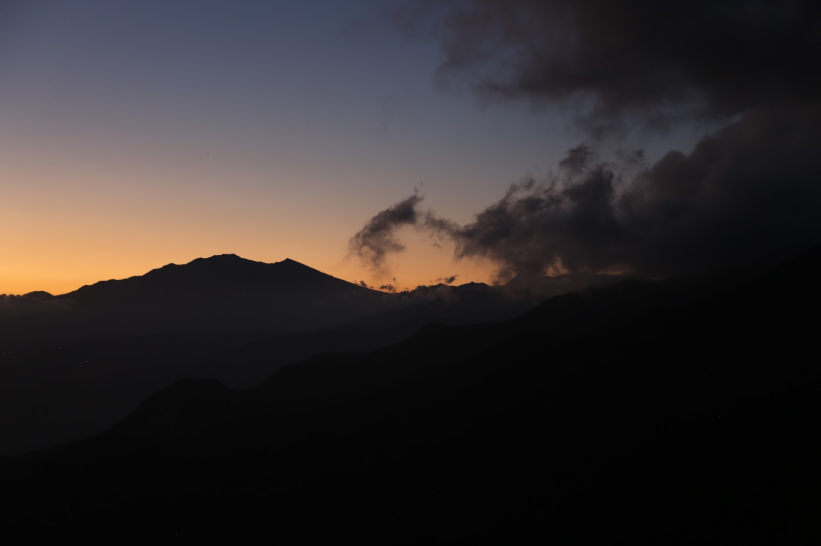
The Sound Map of Panama: How a Country Can Be Understood Through What It Sounds Like

If you tried to understand Panama only through maps, photos, or statistics, you would get a partial picture at best. But there is another way to understand the country that almost nobody talks about: sound. Not music or nightlife specifically, but the everyday acoustic identity of different regions. Panama is small enough that its environments sit close together, yet diverse enough that each one produces its own distinct soundscape. Moving through the country is almost like moving through different audio zones.

In fact, if you were blindfolded and transported around Panama, you could probably tell where you are just by listening.

The Coastal City Sound: Traffic, Wind, and Ocean Layers

In Panama City, sound is layered rather than singular. At street level, there is the constant presence of traffic, engines, construction activity, and urban movement. But because the city sits directly on the coast, there is always another layer underneath it. The ocean never fully disappears from the sound environment.

Along the waterfront, wind interacts with open space, bridges, and tall buildings, creating shifting echoes that change depending on time of day and weather. In some areas, especially near the shoreline, the sound of water becomes part of the urban rhythm rather than something separate from it.

This creates a unique acoustic identity where city noise and natural coastal sound exist at the same time.

The Jungle Sound Layer: Dense, Continuous, and Directionless

Just outside the urban boundary, especially in places like Soberanía National Park, the soundscape changes completely. Instead of layered human activity, sound becomes dense and organic.

In the rainforest, sound is not structured in the way cities are. It does not come from clear directions or predictable sources. It surrounds you. Birds call from multiple levels of the canopy. Insects create continuous background frequencies. Distant movement in vegetation adds occasional interruptions to the constant base layer.

What makes jungle sound in Panama so distinctive is its continuity. It does not have the same sharp breaks that urban environments have. It feels continuous, like a living system that never pauses.

The Mountain Sound: Space, Distance, and Silence Between Notes

In highland regions such as Boquete, sound behaves differently again. Instead of density or constant layering, there is space between sounds.

Wind moves through valleys in slower patterns. Water from rivers and streams becomes more noticeable because there is less competing noise. Human activity exists but is more spaced out, allowing individual sounds to stand out clearly.

At night, this effect becomes even stronger. The absence of urban noise creates a sense of expanded silence where even small sounds feel amplified.

The Coastal Village Sound: Rhythm of Water and Daily Life

Along smaller coastal communities, especially on both the Pacific and Caribbean sides, sound tends to follow a different rhythm. It is less about volume and more about repetition.

Fishing activity, small boats, distant engines, conversations, and waves create a layered but calmer acoustic environment. The ocean plays a constant role, but it is not overwhelming. Instead, it blends into daily life as a background presence.

These environments often feel acoustically balanced, with no single dominant layer.

The Night Sound Shift: When Panama Rewrites Its Audio Identity

One of the most interesting aspects of Panama is how sound changes after dark. In cities, traffic noise decreases but does not disappear entirely. New sounds emerge from nightlife zones, restaurants, and social spaces.

In rural and natural areas, the shift is more dramatic. Jungle sounds intensify as temperature and humidity change. Insects become more prominent. Water and wind become clearer.

Night essentially resets the country’s sound map, reducing human noise in some areas while amplifying natural systems in others.

The Hidden Pattern: Sound Follows Geography More Than Culture

What becomes clear when listening to Panama is that sound is shaped more by geography than by human design alone. Elevation, proximity to water, density of vegetation, and urban development all play direct roles in shaping what you hear.

Cities produce layered mechanical soundscapes.

Forests produce continuous organic soundscapes.

Mountains produce spaced and reflective soundscapes.

Coasts produce rhythmic mixed soundscapes.

These patterns repeat consistently across the country.

The Psychological Effect of Panama’s Sound Diversity

Because Panama’s environments are so close together, the transition between soundscapes can happen quickly. Within a single day, a person can move from urban noise to rainforest density to mountain silence to coastal rhythm.

This constant shift affects perception of time and space. Sound becomes a marker of location and movement rather than just background noise. It also contributes to the feeling that Panama is larger and more complex than its physical size suggests.

Most countries are remembered visually. Panama is also understood acoustically, even if people do not realize it.

It is a place where sound changes as often as scenery.

Where cities speak in traffic and glass.

Where forests speak in layered life.

Where mountains speak in space.

And where the ocean speaks in rhythm.

And once you notice it, you start to realize that Panama is not just something you see as you move through it.

It is something you hear changing around you the entire time.

Panama After Dark: The Nighttime Geography of a Country That Changes Character When the Sun Goes Down

Most travel writing about Panama focuses on what you see during the day. Rainforests, beaches, skyscrapers, islands, mountains, wildlife, and the canal dominate the conversation. But there is another version of the country that begins to emerge when the sun disappears. It is not just a matter of lighting or nightlife. The entire atmosphere of Panama changes after dark in ways that are subtle, layered, and deeply tied to geography, culture, and climate.

At night, Panama stops feeling like a single continuous place and starts feeling like a series of overlapping environments that each develop their own rhythm once daylight fades.

The City That Turns Into Light and Movement

In Panama City, the transformation begins as the sun drops behind the Pacific horizon. The skyline does not disappear. Instead, it becomes more dominant. Glass towers reflect artificial light. Coastal highways fill with moving streams of headlights. The ocean edge becomes a dark boundary lined with glowing architecture.

What is interesting about Panama City at night is not just activity, but contrast. Certain districts become extremely energetic, filled with restaurants, rooftop spaces, music, and social gatherings. Other areas become quiet, almost empty, as if the city has selectively turned itself on in specific zones.

This creates a fragmented nightlife geography rather than a single unified scene. Different parts of the city operate on different rhythms simultaneously.

The Edge of the City Where Darkness Becomes Natural Again

Just beyond the urban core, the atmosphere changes quickly. Streetlights thin out. Buildings become less frequent. Roads begin to disappear into darker landscapes.

In places like Soberanía National Park, night is not a backdrop but a full environmental shift. Artificial light becomes rare, and the natural world takes over completely. The sounds change first. Insects intensify. Distant movement in the forest becomes more noticeable. Wind through trees replaces the hum of traffic.

Night here feels older, more continuous, as if it existed long before human infrastructure and continues unchanged beside it.

Coastal Nights and the Sound of the Pacific

Along the Pacific coast, night introduces a different kind of atmosphere. The ocean becomes invisible but present through sound and movement. Waves become the dominant rhythm, replacing visual stimuli with auditory space.

In many coastal towns, nightlife is less about density and more about openness. Outdoor spaces, quiet roads near the water, and small gatherings define the experience. The scale feels larger, as if the coastline itself expands in the absence of sunlight.

Unlike dense urban nightlife, coastal Panama at night feels more spatial than social.

Mountain Nights That Feel Physically Closer to the Sky

In highland regions such as Boquete, night behaves differently again. Temperature drops, air becomes sharper, and sound carries further through valleys. The absence of urban noise makes even small sounds more noticeable.

The sky becomes a dominant feature. Without city light pollution, stars feel closer and more defined. The landscape becomes less visible but more implied, as shapes and silhouettes replace detail.

Night in the mountains is not energetic. It is quiet in a way that feels expansive rather than empty.

Caribbean Nights: Slower, Softer, and More Fragmented

On the Caribbean side of Panama, night takes on yet another identity. Island communities and coastal settlements often become quieter rather than busier. Movement slows. Lighting is softer. Water remains a constant presence in the background.

Instead of concentrated nightlife zones, activity is often distributed across smaller pockets. The result is a night environment that feels less structured and more organic, shaped by local rhythms rather than urban planning.

Wildlife That Becomes More Present After Dark

One of the most important aspects of Panama at night is that the natural world does not shut down. In many regions, it becomes more active.

Insects create layered soundscapes that vary by region and elevation. Night birds move differently through forest canopies. Amphibians become more audible near water systems. Even distant movement in vegetation becomes part of the sensory environment.

Unlike in heavily urbanized countries where night often feels like a separation from nature, in Panama night feels like a transition into a different version of it.

Human Rhythm After Dark

Human behavior also shifts noticeably. In cities, people gather later, dine later, and remain active well into the evening in many districts. In smaller towns and rural areas, night tends to arrive more quietly, with earlier wind down periods and reduced movement.

This creates a national rhythm that is not uniform. Instead, it reflects geography again. Urban density produces extended activity. Rural and natural environments produce earlier silence.

The Psychological Shift of Night in a Tropical Country

Night in Panama is not just visual or cultural. It is psychological. The combination of humidity, temperature, sound, and darkness creates a sensory environment that feels different from temperate countries.

The absence of cold seasons means night does not feel like a retreat from harsh weather. Instead, it feels like a continuation of the same environment under different conditions.

This subtle difference changes how people use time. Outdoor life continues later. Movement remains fluid. The boundary between day and night feels less rigid than in many other parts of the world.

The Hidden Unity Beneath the Differences

Even though Panama at night feels fragmented into multiple environments, there is an underlying unity to it. The same geography that shapes the country during the day continues shaping it after dark.

Cities glow along the coast. Forests remain active inland. Mountains cool and quiet. Oceans continue moving in darkness.

Nothing stops. It only changes form.

Final Thought

Panama after dark is not a simpler version of the daytime country. It is a different interpretation of the same geography.

A city becomes light and movement.

A forest becomes sound and presence.

A mountain becomes silence and sky.

A coast becomes rhythm and distance.

And together, they form a version of Panama that most travelers experience but rarely describe clearly.

Because in Panama, night does not end the landscape.

It reveals a different one.

Why Panama Is Becoming a Global Shortcut: Trade, Travel, and Time in the World’s Most Strategic Corridor

When people think about global shortcuts, they usually imagine technology, aviation routes, or digital systems that speed up communication. But one of the most important shortcuts on Earth is not digital at all. It is geographical. It is Panama.

Most search queries about Panama focus on tourism, retirement, or the canal as a historical landmark. But fewer people step back and ask a bigger question: why does Panama matter so much in the first place, beyond being a travel destination?

The answer is that Panama is not just a country. It is a connector of systems. It shortens physical distance between oceans, reshapes global shipping routes, compresses travel time between continents, and influences how goods move across the planet. In many ways, Panama functions like a natural and engineered shortcut embedded into global geography.

The Canal as a Time Machine for Global Trade

The most obvious example of Panama’s strategic importance is the Panama Canal, which physically connects the Atlantic and Pacific Oceans. Before its existence, ships traveling between the east and west coasts of the Americas or between Europe and Asia often had to take extremely long routes around South America’s southern tip.

Today, that distance is dramatically reduced.

What looks like a simple passage through water is actually a global time saving mechanism. Every ship that passes through the canal is effectively saving days or even weeks of travel time. That reduction in time translates into lower fuel costs, faster supply chains, and more efficient global trade.

But the canal is only the visible part of a much larger system.

The Logistics Network That Extends Beyond the Canal

Panama’s role as a global shortcut does not stop at the waterway. It extends into ports, storage zones, and distribution systems that manage how goods move after they arrive.

One of the key components of this system is the Colón Free Zone, a massive trade and logistics hub where goods are imported, stored, modified, and re exported across Latin America and the Caribbean.

This creates a second layer of efficiency. Not only does Panama shorten ocean routes, it also shortens distribution time once goods arrive. Products do not simply pass through the country. They are processed, redirected, and redistributed with remarkable speed.

In this sense, Panama is not just a corridor between oceans. It is a processing center for global commerce.

Panama City as a Financial Shortcut

Another less visible form of shortcut exists in finance.

Panama City has developed into a major financial and corporate hub in Latin America. International businesses use Panama for banking, regional headquarters, logistics coordination, and investment structures.

The use of the U.S. dollar provides stability and reduces currency complexity for international operations. Combined with geographic positioning, this creates a financial environment where companies can manage regional activity more efficiently than in many neighboring countries.

In this way, Panama becomes a shortcut not just for ships, but for money, contracts, and corporate systems.

Geography That Compresses Entire Regions Into One Country

One of the most unusual aspects of Panama is how much geographic variety exists in such a small space. In many countries, traveling between ecosystems requires long journeys. In Panama, those transitions happen quickly.

Within a few hours, you can move from modern coastal cities to dense rainforest, then to mountain highlands, and then to tropical beaches on either ocean.

In places like Boquete, the environment shifts again into cooler mountain ecosystems where coffee farms, cloud forests, and elevated terrain create a completely different atmosphere.

This compression of environments creates a kind of geographical shortcut as well. Instead of traveling across multiple countries to experience different climates and ecosystems, visitors can experience them within a single national boundary.

Panama as a Travel Shortcut Between Oceans

From a travel perspective, Panama also functions as a connector between continents.

Its international airport network and geographic position make it a natural transit point for flights moving between North America, South America, and beyond. Many travelers pass through Panama without fully realizing how strategically important their route actually is.

This positioning turns the country into a kind of aerial crossroads, where global movement is constantly passing through in multiple directions.

The Human Shortcut: Migration and Movement

Panama is also a shortcut in a human sense. Over the years, it has become a destination for migration, retirement, and international relocation. People from North America, Europe, South America, and other regions move to Panama for different reasons, including climate, cost of living, business opportunities, and lifestyle change.

Because the country already has established infrastructure for international residents, it often feels easier to transition into than many other destinations in the region. This creates a feedback loop where more people arrive, services expand, and integration becomes smoother over time.

The Hidden Reality: Panama Is Built on Efficiency

When all of these systems are viewed together, a pattern emerges. Panama is not defined by one function. It is defined by efficiency across multiple layers.

It shortens shipping routes.

It accelerates logistics.

It simplifies financial operations.

It compresses geographic diversity.

It connects air travel networks.

It supports migration and relocation.

Each layer reinforces the idea that Panama exists to reduce distance, whether physical, economic, or operational.

Why Panama’s Role Will Keep Growing

As global systems become more interconnected, places that reduce friction become more valuable. Shipping efficiency matters more in a globalized economy. Supply chain optimization matters more in unpredictable markets. Financial stability matters more in uncertain environments. Geographic diversity matters more in tourism and relocation decisions.

Panama sits at the intersection of all of these trends.

That is why its importance is not static. It is increasing.

Final Thought

Panama is often described as a small country with a big canal.

But that description misses the deeper reality.

It is not just a canal country.

It is a shortcut country.

A place where geography, infrastructure, and global systems converge to reduce distance in almost every sense of the word.

And in a world that is constantly trying to move faster, that may be one of the most valuable positions a country can have.

Panama’s Secret Geography: Why This Small Country Feels Like Five Countries in One

When people first look at Panama on a map, it appears simple. A thin land bridge, a canal cutting through the middle, two coastlines on either side. It looks compact, almost easy to understand. But what makes Panama fascinating is that the map hides the reality. Once you are actually inside the country, it does not feel like one place at all. It feels like several different worlds stitched together.

This is why so many travelers, expats, and researchers end up searching variations of the same idea: why does Panama feel so different depending on where you are?

The answer lies in geography, elevation, climate, biodiversity, and human development patterns that shift dramatically over short distances. Panama is small in size, but extreme in variation.

Panama City: The Urban Coastline World

The most familiar version of the country is Panama City. This is where modern Panama is most visible. Skyscrapers line the coastline, highways trace the edge of the Pacific, and business districts operate with the rhythm of a global financial hub. At street level, you can find international restaurants, shopping malls, corporate offices, and luxury residential towers that look similar to those in major global cities.

Yet even here, geography plays a role in shaping identity. The ocean is never far away. The city stretches along the water, meaning coastal views and marine air are part of everyday urban life. This blending of high density development with immediate access to the sea already gives Panama City a unique character compared to inland capitals elsewhere in the world.

But this is only one layer of the country.

The Jungle Borderline World Just Outside the City

Within a surprisingly short distance from the capital, the environment changes completely. Roads leave the urban sprawl and quickly transition into dense tropical forest. One of the most striking examples is Soberanía National Park, where the shift from city to wilderness can happen in under an hour.

Here, the soundscape changes instantly. Traffic disappears. Buildings vanish. Instead, the environment becomes dominated by birds, insects, distant calls of monkeys, and the constant presence of vegetation. The humidity feels different. The light filtering through the canopy behaves differently. Even time feels slower.

What makes this transition so unusual is how abrupt it is. In many countries, true rainforest requires long travel distances. In Panama, it begins at the edge of a highway.

The Highland World: A Completely Different Climate

Travel west and the geography rises. Elevation becomes the dominant factor shaping the environment, and with it comes a completely different version of Panama.

In places like Boquete, the country transforms again. The heat of the lowlands fades and is replaced by cool mountain air. Mist moves through valleys. Rivers cut through green slopes. Coffee farms stretch across hillsides. The entire rhythm of life slows down and becomes more connected to the natural environment.

This is one of the most surprising aspects of Panama for many visitors. They arrive expecting a tropical climate everywhere, only to discover that within a few hours of travel they can experience what feels like a different season entirely.

The highlands are not just a change in temperature. They represent a different lifestyle, where agriculture, nature, and quiet communities shape daily experience more than urban infrastructure.

The Caribbean and Pacific: Two Oceans, Two Personalities

Another major geographic distinction in Panama is its coastlines. Unlike most countries that face a single ocean identity, Panama sits between two completely different marine environments.

On the Caribbean side, the atmosphere is often more relaxed, island oriented, and visually tropical. Water clarity, coral environments, and island geography dominate the experience. Life feels more scattered across smaller coastal and island communities.

On the Pacific side, the geography is broader and more expansive. Beaches stretch longer. Tides are more dramatic. Fishing, surfing, and coastal development define much of the shoreline experience. The Pacific side often feels more connected to large scale continental geography.

This dual ocean identity gives Panama a rare type of coastal diversity that is difficult to find elsewhere in such a small country.

The Central Spine: Mountains, Valleys, and Hidden Ecosystems

Between the coasts lies a complex system of mountains, valleys, and ecological corridors. These regions are less visible to casual travelers but play a crucial role in shaping Panama’s identity.

Elevation changes create microclimates that support different ecosystems within short distances. One valley may be dry and warm while another nearby is humid and forested. These variations support incredible biodiversity and allow species from different ecological zones to overlap.

This is one of the reasons Panama is considered one of the most biologically rich countries relative to its size. It is not just the amount of nature, but the variety compressed into a small geographic space.

Human Geography: How People Adapt to the Landscape

Human settlement patterns in Panama follow the geography closely. Urban life concentrates along the coast and major transport routes. Agricultural communities develop in fertile highland regions. Fishing and coastal communities form along both oceans. Indigenous territories remain in more remote and forested areas.

This creates a patchwork of lifestyles rather than a single national pattern. A person living in Panama may have a daily life that is completely different depending on which region they are in, even if those regions are only a few hours apart.

It also means that national identity is shaped less by uniformity and more by coexistence of different ways of life.

The Hidden Truth: Panama Is Defined by Transition

What makes Panama truly unique is not any single landscape, but how quickly everything changes.

Urban to jungle.

Coast to mountain.

Caribbean to Pacific.

Modern infrastructure to rural isolation.

These transitions are not gradual over vast distances. They are compressed into a small geographic space that allows multiple worlds to exist almost side by side.

This is why people often leave Panama with a sense that they experienced more than one country in a single trip. It is not an exaggeration. It is a direct result of geography shaping every layer of life.

Final Thought

Panama is often described as a bridge between continents, but that description only captures part of its identity. It is also a bridge between climates, ecosystems, cultures, and ways of living.

It is a country where geography does not just define borders.

It defines experience.

And once you start moving through it, you realize that Panama is not a single landscape at all.

It is a collection of them, all existing within one of the smallest countries in the region, yet one of the most diverse in the world.

The Real Panama Travel Experience: What No One Tells You Before You Arrive

When people search for information about traveling to Panama, they usually want simple answers. What are the best places to visit, what is the weather like, is it expensive, is it safe, and how many days do you need. But the real travel experience in Panama is harder to summarize because it is not one type of trip. It is many different trips depending on where you go, how you travel, and what you expect.

Panama has a reputation as a country that is mainly about the canal, but that impression changes quickly the moment you start moving beyond the capital. The country unfolds in layers, and each layer feels slightly different from the last. What begins as a modern city experience can quickly turn into rainforest exploration, coastal travel, mountain escapes, or island hopping. The transitions between these environments are surprisingly fast, which is one of the most unique aspects of traveling here.

Most travelers begin their journey in Panama City, which is often the most surprising part of the trip. Many people arrive expecting a small, quiet, or purely functional capital built around the canal. Instead, they find a modern skyline, coastal highways, luxury hotels, international restaurants, and busy urban districts filled with business activity. The city feels connected to global commerce in a way that is not always expected. Yet just beyond the modern skyline, nature is never far away.

One of the most striking features of Panama as a travel destination is how quickly you can move from urban environments into natural ones. Within a short drive from the city, you can find yourself in dense rainforest where the sounds of traffic disappear completely and are replaced by birds, insects, and wind moving through the trees. Areas like Soberanía National Park demonstrate this contrast clearly. It is possible to spend part of the day in a modern city and then walk through a forest where wildlife feels completely uninterrupted by human presence.

This proximity between city and nature shapes the entire travel experience. It means that Panama does not require long, complicated transfers between destinations. Instead, different environments sit surprisingly close to each other. You can explore rainforests, beaches, mountains, and islands without needing to cross vast distances. This compact diversity is one of the reasons many travelers end up staying longer than originally planned.

As you move west, the landscape begins to shift into mountainous terrain. The temperature drops slightly, the vegetation changes, and the atmosphere becomes calmer and more rural. In places like Boquete, travel takes on a completely different character. Instead of coastal humidity and urban density, you encounter coffee plantations, cloud forests, hiking trails, and cooler mountain air. The pace of life slows noticeably, and outdoor activities become the main focus of the experience.

What makes Boquete especially interesting for travelers is the balance it offers. It is developed enough to provide comfort, accommodation, and services, yet still surrounded by natural landscapes that feel immersive and untouched. Many visitors arrive expecting a short stay and end up extending their time because the environment encourages a slower form of travel that is difficult to replicate in more fast paced destinations.

Panama’s coastline adds another dimension to the experience. Unlike many countries where the ocean is either Atlantic or Pacific, Panama offers both within a relatively small geographic area. Each side has a different character. The Caribbean side tends to feel more tropical and island oriented, with turquoise water, relaxed atmospheres, and a stronger sense of isolation in some areas. The Pacific side is broader and more dramatic, with long coastlines, strong tides, fishing communities, and wide open beaches that change significantly with the movement of the sea.

This coastal diversity means that travelers often experience multiple versions of beach life within a single trip. Some days feel like remote island exploration, while others feel like comfortable coastal relaxation near developed towns. The variety is part of what makes Panama feel larger than it actually is when traveling through it.

Another important aspect of the travel experience is the cultural layer. Panama is not a single cultural identity but a blend of influences shaped by geography and history. Indigenous communities, colonial heritage, Afro Caribbean culture, and modern international influences all exist within the same country. This creates a travel environment where cultural experiences are not confined to specific regions but appear throughout different parts of the journey.

Food reflects this diversity as well. Travelers encounter everything from simple roadside meals to refined dining in urban centers. Fresh tropical fruits are widely available, seafood is common along both coasts, and traditional dishes vary depending on region. In many places, eating becomes part of the exploration rather than just a necessity.

One of the most underrated parts of traveling in Panama is how wildlife fits into the experience. In many destinations, seeing wildlife requires dedicated tours or long excursions into remote areas. In Panama, wildlife often appears unexpectedly and relatively close to human activity. Monkeys, tropical birds, reptiles, and countless insect species are part of the natural environment rather than distant attractions. This creates moments during travel that feel spontaneous rather than planned.

Transportation is another element that shapes how the country is experienced. While Panama has modern infrastructure in certain regions, travel between destinations still requires planning. Distances may not look large on a map, but terrain, weather, and road conditions can influence travel times. This means that Panama rewards travelers who move at a flexible pace rather than trying to fit too many locations into a short period.

What ultimately defines the Panama travel experience is contrast. Few countries allow you to experience such rapid shifts between environments. One moment you are in a modern city with skyscrapers and traffic. The next you are in rainforest silence. After that, you might be in a mountain town with cool air and coffee farms. Then you may end up on an island surrounded by open ocean.

These contrasts are not separated by long journeys. They are part of the same country, often only hours apart.

And that is what makes Panama difficult to categorize as a travel destination.

It is not just a city break.

It is not just a nature trip.

It is not just a beach holiday.

It is all of those experiences combined into one place that constantly changes as you move through it.

For travelers who arrive expecting simplicity, Panama can feel unexpectedly complex. For those who arrive open to variety, it becomes one of the most rewarding and surprising destinations in the Americas.

Life in Panama Beyond the Brochures: What Daily Reality Is Really Like for Locals, Expats, and Newcomers

When people search about Panama, they usually want answers to big, simplified questions: Is it safe? Is it cheap? Is it beautiful? Is it worth moving to? Is it modern or rural? But those questions often miss something more important and more interesting, which is what daily life actually feels like once you are here for more than a short visit. Because Panama is not just a destination or a retirement idea or a tropical postcard. It is a functioning country with routines, frustrations, comforts, contradictions, and rhythms that slowly reveal themselves the longer you stay.

At first glance, life in Panama can feel surprisingly familiar, especially in urban areas like Panama City. Modern skyscrapers dominate parts of the skyline, highways curve along the coastline, and shopping malls look similar to those found in major cities across North America. Supermarkets are stocked with international products, banks operate with efficiency in central districts, and neighborhoods such as Costa del Este feel polished, structured, and designed for a global middle and upper class lifestyle. For many newcomers, especially those arriving from abroad, the initial impression is often that Panama feels more modern than expected.

But that first impression only tells part of the story.

As you move away from the most developed districts, the pace, structure, and texture of daily life begin to shift. Traffic becomes more unpredictable. Street life becomes more visible. Small local businesses replace international chains. Infrastructure varies more noticeably from one neighborhood to another. This contrast is not a flaw in Panama’s identity. It is part of its reality. The country is layered, and those layers coexist in close proximity.

One of the most defining features of everyday life in Panama is movement. People are constantly navigating between different environments that feel distinct even within short distances. A person might live in a modern apartment, shop in a large supermarket, and commute through areas that feel far more traditional or locally rooted. This blending of worlds creates a lifestyle that can feel dynamic but also requires adaptation. Time expectations are different. Services may not always operate with the precision some foreigners are used to. Yet over time, many people begin to adjust and even appreciate the flexibility that comes with it.

Outside the capital, life takes on an entirely different rhythm. In places like Boquete, daily life is shaped more by nature than by urban structure. Mornings are often cooler and quieter. People wake up to mountain air, birdsong, and mist moving through valleys. Instead of high rise buildings and traffic noise, the environment is defined by coffee farms, rivers, gardens, and winding roads. Social life tends to be more community oriented, and routines are often slower and more predictable. For many retirees and long term residents, this contrast is exactly what they are seeking when they choose Panama.

Food is another part of daily life that reflects the country’s diversity. Eating in Panama is not a single experience but a spectrum. On one end, there are simple local meals centered around rice, beans, plantains, chicken, fish, and fresh tropical produce. These meals are widely available and form the backbone of everyday eating for much of the population. On the other end, there is a growing international culinary scene in urban centers, where restaurants serve global cuisine influenced by Europe, Asia, and the Americas. This means that daily food life can shift depending on where you are and what you choose, from casual street style meals to high end dining experiences.

Transportation is another defining aspect of daily reality. In Panama City, modern infrastructure such as the metro system helps connect key parts of the city, but many people still rely on cars, taxis, or rideshare services. Outside the capital, transportation can become more variable, with longer distances between services and fewer structured public transit options. This affects how people plan their day, how they shop, and how they move between work, home, and social activities. Travel time becomes a more important factor in daily planning than many newcomers initially expect.

Climate also plays a major role in shaping everyday life. Panama is tropical, but not uniformly so. Coastal and lowland areas tend to be hot and humid for most of the year, while mountain regions offer cooler and more comfortable temperatures. The rainy season is a significant part of the annual rhythm, influencing everything from traffic patterns to outdoor plans. Heavy rains can arrive quickly and reshape the flow of a day. Locals adapt to this pattern naturally, but newcomers often need time to adjust their expectations around weather and scheduling.

Social life in Panama is generally warm and community oriented, but it varies depending on location and lifestyle. In urban areas, social networks often revolve around work, neighborhoods, restaurants, and international communities. In smaller towns and rural areas, relationships tend to be more tightly knit and locally grounded. For newcomers, building connections can take time, especially outside of established expat areas, but it is often described as rewarding once those connections form.

One of the most interesting aspects of life in Panama is how close nature always feels. Even in and around major cities, it is possible to encounter wildlife and natural environments without traveling far. Forests, rivers, beaches, and mountains are never too distant. This proximity means that weekend routines often involve outdoor activities such as hiking, beach trips, fishing, or exploring national parks. In places like Soberanía National Park, it is possible to step from urban environments into dense rainforest in a very short time, creating a lifestyle where nature is not an occasional escape but a regular presence.

Daily life in Panama also reflects a balance between structure and flexibility. Some systems are highly developed, especially in banking, real estate, and international services. Other aspects operate with more variation depending on region and context. This creates an environment where planning is important, but adaptability is equally valuable. People who thrive in Panama tend to be those who are comfortable navigating both modern systems and more informal realities.

Over time, many newcomers begin to notice something subtle but important. Life in Panama is not defined by a single dominant rhythm. Instead, it is shaped by multiple overlapping rhythms: urban and rural, modern and traditional, fast and slow, structured and flexible. These rhythms coexist rather than replace one another.

And that is what makes daily life in Panama difficult to summarize but interesting to experience.

Because living here is not just about location.

It is about learning how to move between different versions of reality within the same country, sometimes within the same day.

And for many people, that variety is exactly what makes Panama not just a place to visit, but a place to live.

The Future of Panama: How a Small Country Is Quietly Becoming One of the Most Important Places on Earth

When people look at a map of the world, Panama often appears as a thin line connecting two continents and separating two oceans. It is easy to underestimate it. It looks small, almost insignificant compared to larger countries in North and South America. Yet this narrow strip of land has a level of global importance that far exceeds its size. It connects oceans, channels trade, hosts international finance, supports biodiversity, and sits at the crossroads of global movement in a way very few places on Earth can claim. And what makes Panama especially interesting right now is that it is not standing still. It is evolving quickly, and the direction it is heading suggests that its role in the world may grow even more significant in the coming decades.

The foundation of Panama’s global relevance has always been geography. The creation of the land bridge between North and South America millions of years ago fundamentally changed global ecosystems and ocean currents. In modern times, that same land bridge became the site of one of humanity’s most ambitious engineering projects. The Panama Canal transformed the country from a geographical curiosity into a critical artery of global commerce. But the canal is only the beginning of the story. What is happening now goes far beyond shipping lanes and locks. Panama is slowly developing into a multi layered hub where trade, finance, logistics, tourism, technology, and infrastructure all intersect in increasingly complex ways.

One of the most important forces shaping Panama’s future is its continued development as a global logistics center. The country is not only a passage point between oceans but also a redistribution hub for goods moving across continents. Cargo passes through ports, free zones, and storage facilities that connect Asia, Europe, and the Americas. The Colón Free Zone continues to play a central role in this system, functioning as one of the largest commercial distribution zones in the Western Hemisphere. As global trade becomes more interconnected and supply chains become more complex, Panama’s position as a logistics crossroads becomes even more valuable.

At the same time, Panama City continues to evolve into a major financial and business center. The skyline of Panama City is not just a symbol of urban development but a reflection of a deeper economic transformation. International banks, corporate headquarters, investment firms, and service industries are increasingly concentrated in the capital. The use of the U.S. dollar provides stability and predictability, which attracts foreign investment and simplifies international transactions. Over time, this has helped position Panama as a quiet but important financial node in Latin America, often overlooked but deeply integrated into global capital flows.

Beyond finance and logistics, infrastructure development is reshaping the physical identity of the country. New roads, bridges, ports, metro expansions, and residential developments are continuously changing how people move and live. The expansion of districts like Costa del Este shows how quickly land can transform from coastal space into dense urban environments filled with high rise buildings and modern commercial centers. This type of development is not random. It reflects growing demand from both local populations and international residents who see Panama as a stable and strategically located place to live and work.

But perhaps the most interesting aspect of Panama’s future is not purely economic or infrastructural. It is environmental and geographical. Panama is one of the most biodiverse countries on Earth, and its ecosystems are still largely intact compared to many other regions. Rainforests, cloud forests, coral reefs, mangroves, and mountain ecosystems coexist within a relatively small area. In places such as Boquete, natural landscapes are not distant attractions but part of everyday life. This creates a unique situation where modern development and natural preservation exist side by side, sometimes in tension, sometimes in balance.

As global awareness of climate change and environmental preservation increases, countries with significant natural resources and biodiversity are likely to become more important on the world stage. Panama’s forests, watersheds, and marine environments are not just national assets. They are global ones. They influence climate patterns, support migratory species, and store carbon. This gives Panama a type of environmental significance that is increasingly relevant in international discussions about sustainability and conservation.

Tourism is another sector that is likely to play a growing role in Panama’s future, but not in the same way as mass tourism destinations. Instead, Panama’s appeal lies in its diversity. It offers urban experiences, island travel, mountain retreats, wildlife exploration, historical exploration, and cultural immersion all within relatively short distances. The historic district of Casco Viejo represents the cultural and architectural layer of this experience, blending colonial history with modern urban life in a way that continues to attract visitors who are looking for depth rather than just scenery.

Technology and remote work are also beginning to reshape Panama’s identity. While not yet considered a global technology hub, the country is increasingly attractive to digital workers who value stability, infrastructure, and geographic position. High speed internet in urban areas, modern housing options, and international connectivity make it possible for professionals to operate globally while living in Panama. This trend is still developing, but it aligns with broader global shifts toward decentralized work and location independent careers.

Education, healthcare, and lifestyle infrastructure are also improving steadily. Private hospitals in Panama City are expanding services, international schools are growing, and lifestyle amenities continue to diversify. These changes are important because they support long term residency, not just short term tourism or business activity. As more people consider living abroad for extended periods, these systems become critical in determining which countries attract sustained international populations.

Of course, Panama’s future is not without challenges. Rapid development brings questions about sustainability, inequality, and environmental pressure. Urban expansion must be balanced with the protection of natural ecosystems. Infrastructure must keep pace with population growth and economic activity. And as the country becomes more globally integrated, it must manage the complexity that comes with increased international attention.

Yet despite these challenges, Panama’s trajectory remains compelling. It is a country that is not trying to reinvent itself completely, but rather expand and strengthen the roles it already plays. It is building on its geography, its infrastructure, its financial system, its biodiversity, and its strategic position between continents.

What makes Panama unique is not just what it is today, but what it is becoming.

A global logistics hub.

A financial center.

A biodiversity stronghold.

A tourism destination of remarkable variety.

A place where modern cities and ancient forests exist within the same short journey.

A country small in size but disproportionately large in global importance.

And as the world becomes more interconnected, the value of places like Panama does not decrease. It increases.

Because in the end, Panama is not just a country between two oceans.

It is a country that connects them.

And that connection may turn out to be far more important in the future than most people realize.

Panama’s Hidden Economy: The Unseen Forces That Actually Run the Country

When people think about Panama’s economy, one word usually dominates the conversation: the Canal. And yes, the Panama Canal is one of the most important economic engines on Earth. It shapes global shipping routes, generates billions in revenue, and places the country at the center of international trade.

But here’s the interesting truth that most search results barely touch:

The canal is only one piece of Panama’s economic system. Not even the biggest in everyday life for most people.

Behind the skyline of Panama City, behind the ships passing through the locks, and behind the tourism brochures lies a much more complex and fascinating structure. Panama’s real economy is a layered system built from banking, logistics, ports, free trade zones, agriculture, construction, services, tourism, and an entire international financial identity that most visitors never fully notice.

To understand Panama properly, you have to look beyond the obvious.

The Banking Powerhouse Nobody Talks About

One of the most important pillars of Panama’s economy is its financial sector.

Banco General and other major banks operate within a financial system that has made Panama one of the key banking hubs in Latin America.

Panama’s financial sector is heavily international. It supports regional trade, corporate banking, investment flows, and multinational operations. Many companies use Panama as a financial base due to its dollarized economy, stable banking infrastructure, and strategic location.

This creates an economy that is not just local, it is deeply connected to global capital movement.

What surprises many outsiders is that this banking system is not hidden or small. It is a major driver of employment, real estate development, and urban expansion in Panama City.

Logistics: The Real Engine Behind Panama’s Wealth

If the canal is the headline, logistics is the story underneath it.

Panama is one of the most important logistics hubs in the Western Hemisphere. Cargo does not just pass through the canal, it is stored, redistributed, repackaged, and shipped across the region.

Free trade zones and distribution centers play a massive role in this system.

One of the most important examples is the Colón Free Zone, one of the largest free trade zones in the world.

Here, goods from Asia, Europe, and the Americas are imported, stored, modified, and re exported across Latin America and the Caribbean. Electronics, clothing, machinery, pharmaceuticals, and countless other goods flow through this system.

In many ways, Panama is not just a country that connects oceans, it is a country that redistributes global commerce.

Construction: The Constantly Expanding Skyline

Anyone who visits Panama City more than once over a few years notices something immediately.

The skyline changes.

New towers appear.

Old districts are renovated.

Coastal zones expand outward.

This is not accidental. Construction is one of the strongest sectors in the country.

Real estate development is fueled by both domestic demand and international investment. Luxury apartments, office towers, mixed use developments, and infrastructure projects continue reshaping the capital.

Entire districts such as Costa del Este have been transformed from relatively undeveloped coastal land into modern urban centers filled with high rise buildings, corporate offices, and residential complexes.

Construction is not just a supporting industry in Panama, it is a visible symbol of economic momentum.

Tourism: The Quiet Giant of the Economy

Tourism is often underestimated in Panama’s economic identity.

While it may not dominate headlines like the canal, it is a major contributor to employment and regional development.

Tourism in Panama is unusual because it is not concentrated in a single type of attraction. Instead, it is spread across multiple ecosystems:

Rainforests. Beaches. Islands. Mountains. Historic districts. Indigenous regions. Urban culture.

Visitors explore places like Casco Viejo, where colonial architecture meets modern restaurants, nightlife, and cultural spaces.

They also travel to mountain regions like Boquete or island destinations along both coasts.

What makes tourism in Panama interesting economically is its diversity. It is not dependent on one attraction or one season. It is a year round, multi regional industry.

Agriculture: The Quiet Foundation Beneath Everything

While skyscrapers dominate the skyline, agriculture remains deeply important in Panama’s economy.

Outside the capital, large portions of the country are still shaped by farming, cattle ranching, and rural production.

Regions produce bananas, coffee, rice, sugar cane, tropical fruits, vegetables, and livestock.

Coffee from the highlands of Chiriquí, especially around Boquete, has developed an international reputation among specialty buyers.

Agriculture may not be as visible as banking or construction, but it supports food security, rural livelihoods, and export revenue.

It also connects Panama to global commodity markets in a very direct way.

Shipping Ports: The Canal’s Shadow Economy

While the canal is the most famous maritime feature, Panama’s ports are equally important.

Modern container terminals on both the Atlantic and Pacific sides handle enormous volumes of cargo.

These ports work alongside the canal to form a larger maritime ecosystem.

The country essentially functions as a global transfer point where goods change direction, storage location, and destination.

This makes Panama one of the most strategically important shipping nations in the world.

The Dollar Economy Advantage

One of the less discussed economic features of Panama is its currency system.

Panama uses the U.S. dollar as legal tender alongside its own coinage.

This creates stability in inflation, simplifies international trade, and reduces currency risk for businesses.

For investors and multinational companies, this is a major advantage.

It is one of the reasons Panama continues attracting foreign investment in banking, real estate, logistics, and corporate services.

The Digital Economy Is Quietly Growing

Beyond traditional sectors, Panama is also slowly developing a digital economy.

Remote workers, online entrepreneurs, freelancers, and international startups are increasingly choosing Panama as a base due to its location, infrastructure, and lifestyle advantages.

Modern internet infrastructure in cities like Panama City and expanding connectivity in tourist regions have made it more feasible than ever to work remotely from the country.

While not yet a global tech hub, Panama is steadily integrating into the digital workforce economy.

The Hidden Reality: Panama’s Economy Is Not One Thing

The biggest misunderstanding about Panama’s economy is the idea that it is defined by a single industry.

It is not.

It is a layered system:

The canal connects global shipping

Banks connect financial flows

Logistics redistributes goods

Construction reshapes cities

Tourism brings in international visitors

Agriculture supports the countryside

Ports anchor maritime trade

Services support everything in between

Each layer depends on the others.

Remove one, and the system weakens.

Together, they create one of the most strategically connected economies in the Western Hemisphere.

So What Does This Mean for the Future of Panama?

The future of Panama is not about becoming something entirely new.

It is about expanding what already exists.

More logistics.

More infrastructure.

More tourism diversification.

More urban development.

More integration with global trade and digital systems.

But also more pressure to balance growth with environmental protection and regional equity.

Because for all its skyscrapers and global importance, Panama is still a country where rainforest edges meet city limits, where rivers still carve landscapes, and where traditional communities continue to shape rural life.

Final Thought

When most people think of Panama’s economy, they see ships passing through a canal.

But the real story is far larger.

It is a country where global trade, financial systems, natural resources, tourism, agriculture, and urban development all overlap in a narrow strip of land connecting two oceans.

And that is what makes Panama not just economically important but economically unique.

Is Panama Really Worth Visiting? The Ultimate Truth About One of the Most Overlooked Countries in the Americas

Every year, millions of people plan international trips. They search for destinations that offer adventure, culture, nature, great food, interesting history, beautiful scenery, and good value for money. Yet despite possessing all of those qualities, Panama often finds itself overshadowed by larger tourism giants. Travelers dream of Costa Rica, Mexico, Colombia, Spain, Thailand, Italy, or Japan while barely considering the narrow strip of land that connects North and South America.

And that raises one of the most interesting travel questions on the internet:

Is Panama actually worth visiting?

The short answer is yes.

The long answer is far more fascinating.

The truth is that Panama may be one of the most misunderstood countries in the Western Hemisphere. Many people know almost nothing about it beyond the Panama Canal. Some imagine it as a place ships pass through rather than a destination worth exploring. Others assume it is simply another tropical country with beaches and jungles.

In reality, Panama is one of the most geographically diverse, historically significant, and surprisingly modern countries in the Americas. It is a place where skyscrapers stand beside rainforests, where monkeys live within sight of one of the world's most important shipping routes, where cloud forests rise above coffee plantations, and where travelers can experience two oceans without ever leaving the country.

The question is not whether Panama has enough attractions to justify a visit.

The question is why more people are not already talking about it.

The First Surprise: Panama Is Far More Modern Than Most Visitors Expect

One of the biggest shocks for first time visitors occurs within minutes of arriving.

Many travelers arrive expecting a developing tropical nation with limited infrastructure.

Instead, they discover a skyline that rivals major cities across the Americas.

The waterfront of Panama City is often the moment when expectations completely change. Glass towers rise above the Pacific Ocean. Modern highways curve along the coast. Luxury hotels, international restaurants, shopping malls, banks, and business centers create an atmosphere that feels far more cosmopolitan than many outsiders anticipate.

In fact, Panama City often surprises visitors more than any other capital in Central America.

It is not because the city is perfect.

It is because it rarely matches preconceived notions.

Many people arrive expecting one thing and discover something entirely different.

The Canal Is More Impressive Than You Think

Nearly everyone has heard of the Panama Canal.

Far fewer people truly understand its scale.

Before visiting, some travelers imagine a large ditch connecting two oceans. They assume it will be interesting for an hour or two and then move on.

What they discover instead is one of humanity's most remarkable engineering achievements.

Watching a massive vessel rise or descend through the locks provides a new appreciation for the complexity of global trade. Every container ship, cruise ship, tanker, and cargo vessel passing through the canal represents a small piece of a gigantic international system connecting continents.

The canal is not simply a tourist attraction.

It is one of the reasons Panama occupies such an important place on the world stage.

Many visitors arrive with modest expectations and leave fascinated by the scale of the operation.

The Wildlife Is Extraordinary

One of Panama's greatest strengths is that incredible wildlife exists surprisingly close to civilization.

In many countries, seeing monkeys, sloths, toucans, crocodiles, or tropical birds requires long journeys into remote wilderness.

In Panama, these experiences often occur within relatively short distances of major cities.

The forests surrounding Soberanía National Park demonstrate this perfectly.

Less than an hour from downtown Panama City, visitors can find themselves surrounded by rainforest filled with birds, monkeys, butterflies, and countless other species.

This accessibility is remarkable.

You can spend the morning in a modern urban environment and the afternoon listening to howler monkeys in the jungle.

Very few countries offer that combination.

Panama Contains Two Different Oceans

This fact sounds simple until you experience it.

Most countries are associated with a single coastline.

Panama offers access to both the Caribbean Sea and the Pacific Ocean.

These are not interchangeable environments.

They feel different.

They look different.

They support different lifestyles.

The Caribbean side often evokes images of turquoise water, coral reefs, tropical islands, and laid back coastal culture.

The Pacific side offers dramatic tides, rugged shorelines, surfing destinations, fishing opportunities, and spectacular sunsets.

Visitors can experience both within a single trip.

That geographical advantage gives Panama an unusual amount of variety for a relatively compact nation.

The Mountains May Be the Country's Best Kept Secret

Many first time visitors assume Panama is entirely tropical and hot.

Then they visit the highlands.

Suddenly the country feels completely different.

Communities such as Boquete reveal a side of Panama that many travelers never expect.

Cooler temperatures.

Coffee farms.

Mountain valleys.

Rivers.

Cloud forests.

Hiking trails.

Flower gardens.

Mist covered slopes.

The contrast with the coast can be astonishing.

A traveler who spends several days in the mountains often feels as though they have entered another country entirely.

This diversity is one of Panama's greatest assets.

The Biodiversity Is World Class

Panama sits at one of the most important biological crossroads on Earth.

Millions of years ago, the formation of the Isthmus of Panama connected North and South America, allowing animals and plants to move between continents.

The result is extraordinary biodiversity.

The country contains thousands of plant species, hundreds of bird species, numerous mammals, reptiles, amphibians, and insects.

Birdwatchers regularly rank Panama among the best destinations in the world.

Scientists continue discovering new information about its ecosystems.

Nature enthusiasts often arrive expecting a pleasant tropical destination and leave realizing they have visited one of the most biologically rich places on the planet.

The Food Is Better Than Many People Expect

Panamanian cuisine rarely receives the international attention enjoyed by countries such as Mexico, Peru, or Italy.

That does not mean it lacks quality.

The country's food reflects centuries of cultural influences.

Indigenous traditions mix with Spanish heritage, Afro Caribbean flavors, and modern international influences.

Fresh seafood appears throughout the country.

Tropical fruits are abundant.

Rice, plantains, vegetables, soups, stews, and grilled meats form important parts of the culinary landscape.

In Panama City, the dining scene has evolved dramatically over the past two decades.

Visitors can find everything from simple local meals to sophisticated fine dining experiences.

It Is Easier to Explore Than Many People Realize

Some destinations require enormous amounts of travel time between attractions.

Panama's compact size creates advantages.

Within a relatively short period, visitors can experience:

A modern international city.

Rainforests.

Cloud forests.

Beaches.

Islands.

Mountains.

Indigenous cultures.

Wildlife reserves.

Historic districts.

Coffee regions.

The variety packed into a single country is impressive.

Instead of spending entire days moving between destinations, travelers often spend more time actually enjoying them.

The Biggest Misunderstanding About Panama

Perhaps the greatest misconception is that Panama lacks a defining identity beyond the canal.

Nothing could be further from the truth.

Panama is simultaneously a crossroads, a rainforest nation, a maritime nation, a mountain nation, a financial center, a biodiversity hotspot, and a cultural bridge between continents.

Its identity comes from being many things at once.

That complexity makes it far more interesting than stereotypes suggest.

So Is Panama Worth Visiting?

If your ideal vacation involves giant theme parks, endless nightlife, or famous landmarks recognized by every person on Earth, Panama may not always dominate your shortlist.

But if you value variety, nature, culture, history, wildlife, adventure, and the opportunity to discover a destination before it becomes overwhelmed by mass tourism, Panama deserves serious consideration.

It offers tropical islands without requiring long flights between them.

It offers rainforests filled with wildlife close to major cities.

It offers mountains cool enough to surprise people who assumed the entire country was hot.

It offers history stretching from indigenous civilizations to Spanish colonial routes, pirate attacks, gold transport networks, and one of the greatest engineering projects ever undertaken.

It offers modern infrastructure while still preserving vast areas of wilderness.

Most importantly, it offers something increasingly rare in international travel: the feeling of discovery.

Many of the world's most famous destinations arrive burdened by expectations. Travelers already know exactly what they will see before they arrive.

Panama is different.

People arrive with limited knowledge.

They expect little.

And then they discover skyscrapers beside jungles, monkeys beside shipping lanes, cloud forests above tropical coastlines, and landscapes so varied that they seem to belong to several different countries at once.

That is why so many visitors leave Panama saying the same thing.

They came expecting a canal.

They left wondering why nobody told them how incredible the rest of the country was.

What Is the Best Place to Live in Panama? A Complete Guide to Panama's Most Popular Cities, Beach Towns, and Mountain Communities

One of the most common questions searched online by people considering a move to Panama is deceptively simple:

"Where is the best place to live in Panama?"

The problem is that there is no single correct answer.

The best place for a retiree may be completely wrong for a digital nomad. The perfect location for a surfer may not suit someone who wants shopping malls and modern hospitals nearby. A person seeking cool mountain weather will have different priorities from someone dreaming of a beachfront lifestyle.

What makes Panama unique is that it offers all of these options within a relatively small country. In a matter of hours, you can travel from a modern skyline filled with skyscrapers to mountain valleys, tropical islands, agricultural regions, or quiet beach communities. Few countries provide such diversity in such a compact geographic area.

The real question is not simply where the best place to live is. The real question is which version of Panama fits your lifestyle.

Panama City: The Choice for Urban Living

For many newcomers, the obvious starting point is Panama City.

This is where much of the country's economic activity takes place. It is home to international businesses, modern hospitals, shopping centers, restaurants, nightlife, cultural attractions, and the country's largest airport.

Many first time visitors are surprised by how modern the city feels. Glass towers line the waterfront. Luxury residential buildings rise above the Pacific Ocean. International restaurants compete with local favorites. Modern supermarkets stock products from around the world.

For professionals, entrepreneurs, and people who enjoy city life, Panama City offers advantages that are difficult to match elsewhere in the country.

The city also provides access to some of Panama's best healthcare facilities, making it attractive to retirees who prioritize proximity to major hospitals.

The tradeoff is cost.

Housing in desirable neighborhoods can be significantly more expensive than elsewhere in Panama. Traffic can also frustrate newcomers accustomed to smaller communities.

Still, for those who want convenience, connectivity, and urban amenities, Panama City remains the country's most complete package.

Boquete: The Mountain Favorite

If Panama City is the country's urban heart, then Boquete may be its retirement capital.

Nestled in the highlands of Chiriquí Province, Boquete has become internationally famous among retirees, nature lovers, and expats seeking a cooler climate.

One of Boquete's biggest advantages is weather.

Thanks to elevation, temperatures remain noticeably cooler than in much of the rest of Panama. Many residents rarely use air conditioning. Mornings can feel crisp and refreshing, especially compared to coastal areas.

The scenery is spectacular.

Green valleys stretch beneath mountain ridges. Coffee plantations cover hillsides. Rivers flow through the landscape. Flowers bloom throughout the year.

Life moves at a slower pace here.

People come for hiking, birdwatching, gardening, coffee culture, and outdoor living.

For many retirees, Boquete represents the ideal balance between modern conveniences and natural beauty.

David: The Underrated Alternative

Located in western Panama, David often receives less attention than Boquete, but it deserves consideration.

David is Panama's third largest city and serves as the commercial center of Chiriquí Province.

Unlike Boquete, David is not primarily a tourism destination. It is a working city where Panamanians live, shop, study, and conduct business.

This gives it a more authentic local atmosphere.

The city offers hospitals, shopping centers, supermarkets, government services, restaurants, and transportation connections while generally maintaining lower housing costs than many desirable areas of Panama City.

For retirees who want access to services without living in a major metropolis, David can be an excellent option.

Coronado: Beach Living Near the Capital

Many people dream of retiring near the ocean.

For those individuals, Coronado frequently appears near the top of the list.

Located roughly an hour from Panama City under favorable traffic conditions, Coronado combines beach access with modern conveniences.

Over the years, it has developed into one of Panama's best known expat communities.

Residents enjoy supermarkets, restaurants, healthcare services, golf courses, and easy access to the capital.

The area appeals especially to retirees who want a coastal lifestyle without feeling isolated from major services.

Living near the beach does mean warmer temperatures and higher humidity than mountain communities, but many residents consider that part of the appeal.

El Valle de Antón: The Hidden Mountain Gem

One of Panama's most fascinating communities is El Valle de Antón.

The town sits inside the crater of an ancient volcano, creating one of the most unusual settings in the country.

Surrounded by mountains and lush vegetation, El Valle enjoys a pleasant climate that attracts both Panamanians and foreigners.

The area is known for hiking trails, waterfalls, birdwatching opportunities, local markets, and a strong connection to nature.

Life here feels quieter than in Boquete and dramatically slower than in Panama City.

For people seeking tranquility and mountain scenery, El Valle can be extremely appealing.

Bocas del Toro: Caribbean Island Life

For those dreaming of turquoise water and island culture, Bocas del Toro occupies a category of its own.

The Caribbean atmosphere differs significantly from much of mainland Panama.

Colorful buildings, tropical beaches, boating culture, diving, snorkeling, and surfing dominate daily life.

The region attracts adventurers, creatives, digital nomads, and people seeking a more relaxed lifestyle.

Life here is not for everyone.

The islands operate on a different rhythm.

Infrastructure can be less predictable than in larger cities.

Yet many residents would not trade island life for anything.

Pedasí: The Quiet Coastal Escape

In recent years, Pedasí has attracted increasing attention.

Located on the Azuero Peninsula, the town offers a slower pace of life, nearby beaches, fishing opportunities, and a strong sense of community.

Unlike some larger beach destinations, Pedasí still retains much of its small town character.

Many residents appreciate the balance between development and authenticity.

The area appeals particularly to those who value peace, nature, and outdoor recreation.

Costa del Este: Modern Luxury Living

For people seeking one of the most modern residential areas in the country, Costa del Este often tops the list.

Wide roads, modern towers, international schools, shopping centers, corporate offices, and waterfront views define the district.

Many executives, professionals, and affluent families choose Costa del Este because it offers a polished, contemporary environment.

It is among the most expensive areas in Panama, but residents enjoy a high level of convenience and infrastructure.

The Most Important Question

When evaluating places to live in Panama, many newcomers focus on prices, weather, and amenities.

Those factors matter.

But the most important question is often overlooked:

What kind of life do you actually want?

Do you want mountain mornings with cool air and coffee farms?

Do you want city lights and rooftop restaurants?

Do you want ocean sunsets and beach walks?

Do you want island adventures?

Do you want a quiet rural lifestyle surrounded by nature?

Panama offers all of these possibilities.

So What Is the Best Place to Live in Panama?

The truth is that Panama's greatest strength is its diversity.

There is no universally best location.

For some people, Panama City provides everything they need.

Others fall in love with Boquete's mountain climate.

Some prefer the beaches of Coronado.

Others choose island life in Bocas del Toro.

Many discover that smaller communities such as El Valle, Pedasí, or David fit their goals perfectly.

The beauty of Panama is that the country allows people to choose a lifestyle rather than forcing them into one.

That flexibility explains why so many people continue searching for information about living in Panama and why so many ultimately decide to stay. Once they discover the version of Panama that matches their priorities, they often realize they were not simply looking for a new address.

They were looking for a different way of life.

What Is the Cost of Living in Panama? The Complete Guide for Expats, Retirees, Digital Nomads, and Long-Term Travelers

One of the most searched questions about Panama is also one of the most difficult to answer with a single number:

"How much does it cost to live in Panama?"

Type the question into a search engine and you will find wildly different answers. Some articles claim a couple can live comfortably on $1,500 per month. Others suggest you need $4,000 or more. Some retirees report living very well on modest budgets, while others spend more than they did back home.

The reason for these conflicting answers is simple. Panama is not one market. It is several different countries hidden inside one nation.

The cost of living in a modern luxury apartment in Panama City is vastly different from living in a mountain town in Chiriquí. Life in a beachfront community differs from life in a rural farming area. A person who enjoys cooking at home will have a very different budget from someone dining out every day. Understanding these differences is the key to understanding the real cost of living in Panama.

Why So Many People Research Panama's Cost of Living

Panama consistently appears on lists of popular destinations for retirees, remote workers, entrepreneurs, and international residents.

There are several reasons for this interest.

The country uses the U.S. dollar as legal currency alongside Panamanian coins. The banking system is well developed. International flights connect Panama to much of the world. The climate ranges from tropical beaches to cool mountain valleys. Modern healthcare is available in major cities. Residency options attract foreigners from many countries.

Because of these advantages, people naturally want to know whether Panama is affordable.

The answer is yes, but affordability depends greatly on lifestyle.

Housing: The Largest Expense

For most residents, housing will be the single biggest monthly expense.

The difference between regions can be dramatic.

In parts of Panama City, luxury high-rise apartments overlooking the Pacific Ocean may command rents similar to those found in major North American cities. Buildings with pools, gyms, security, social areas, and waterfront views often attract professionals, executives, and international residents willing to pay a premium for location and amenities.

Meanwhile, in smaller cities such as David or rural areas throughout the country, rental prices can be substantially lower. Modest apartments and houses may cost a fraction of what comparable properties would command in major urban centers.

Mountain communities around Boquete have become especially popular among retirees. While prices have risen over the years due to demand, many people still find housing costs attractive compared with similar destinations in North America or Europe.

The key lesson is simple: there is no single Panama housing market.

Groceries and Food Costs

Food expenses vary depending on shopping habits.

People who embrace local products often discover significant savings.

Panama produces a wide variety of fruits and vegetables throughout the year. Mangoes, pineapples, papayas, watermelons, bananas, avocados, and countless other tropical products frequently appear in markets. Locally grown produce can be both abundant and affordable.

Fresh seafood is another advantage in many regions. Depending on location and season, fish, shrimp, and other seafood may be surprisingly accessible.

However, imported products tell a different story.

Many items imported from North America or Europe can be considerably more expensive than local alternatives. Imported specialty foods, foreign wines, premium cheeses, and certain branded products often carry noticeable markups.

Many newcomers quickly learn that eating local is one of the easiest ways to reduce expenses.

Dining Out in Panama

One of the pleasant surprises for many visitors is the variety available.

At one end of the spectrum are small local eateries where simple meals remain very affordable. Traditional dishes featuring rice, beans, meat, fish, plantains, and local ingredients can often be enjoyed without straining a budget.

At the other end are upscale restaurants in Panama City competing with major international dining destinations.

The city has developed an impressive culinary scene in recent years. Luxury restaurants, rooftop venues, international cuisine, and fine dining experiences can cost as much as they would in major cities elsewhere.

The beauty of Panama is that both options coexist.

A person can enjoy a simple local lunch one day and a sophisticated dining experience the next.

Utilities and Internet

Utility costs depend heavily on lifestyle and location.

The largest variable is usually air conditioning.

Panama's tropical climate means electricity consumption can increase significantly if air conditioners run continuously. Residents living in cooler mountain regions often enjoy much lower electricity bills simply because they rarely need air conditioning.

Internet service is generally available in urban areas and many smaller communities. Digital nomads and remote workers are often pleasantly surprised by connectivity in places they initially assumed would be remote.

Mobile phone plans are typically affordable compared with many North American markets.

Transportation Costs

Transportation in Panama offers flexibility.

Some residents own vehicles, particularly outside major cities.

Others rely on public transportation.

Panama City's metro system, represented by the Panama Metro, has become one of the most modern public transportation systems in Central America. Combined with buses, it allows many residents to move around the capital efficiently.

Fuel costs, insurance, maintenance, and vehicle ownership expenses vary, but many residents find transportation more affordable than in large North American metropolitan areas.

Healthcare Costs

Healthcare is one of the major reasons many retirees consider Panama.

The country offers both public and private healthcare options.

Private hospitals in Panama City are modern and attract both residents and medical tourists. Many foreign residents report healthcare costs significantly below what they were accustomed to paying in countries such as the United States.

Insurance needs vary depending on age, health status, and personal preferences.

For many retirees, healthcare affordability becomes one of the strongest arguments in favor of Panama.

The Reality of Living Cheaply in Panama

Many online articles promote the idea that anyone can live comfortably in Panama on a very small budget.

While it is certainly possible to live inexpensively, reality is more nuanced.

Living cheaply usually requires tradeoffs.

A lower-cost lifestyle might involve living outside major urban centers, choosing local products over imported goods, using public transportation, and maintaining modest housing expectations.

People seeking luxury beachfront living, imported products, private healthcare, extensive travel, and upscale dining should expect significantly higher expenses.

Panama can be inexpensive.

It can also be expensive.

The outcome depends largely on personal choices.

Digital Nomads and Remote Workers

Panama continues attracting increasing numbers of remote workers.

The combination of modern infrastructure, tropical climate, international connections, and diverse landscapes makes the country appealing.

A digital nomad can spend mornings working from a city apartment, weekends exploring rainforests, and holidays visiting islands without leaving the country.

Budget requirements vary dramatically depending on preferred lifestyle, but Panama offers options across a wide range of income levels.

The Biggest Surprise About Living in Panama

Perhaps the most surprising thing newcomers discover is that the value proposition extends beyond money.

Yes, many people save on housing, healthcare, or daily expenses.

But they also gain access to things that are difficult to quantify.

Year-round greenery.

Tropical fruit in every season.

Access to both Caribbean and Pacific coastlines.

Mountain climates only a few hours from tropical beaches.

Rich biodiversity.

International connectivity.

A relaxed pace of life in many regions.

For many residents, these benefits become just as important as the financial savings.

So How Much Does It Really Cost to Live in Panama?

The honest answer is that Panama accommodates a wide range of budgets.

Some individuals live comfortably on relatively modest incomes.

Others spend several thousand dollars per month enjoying luxury lifestyles.

The country offers everything from simple rural living to high-end urban sophistication.

This flexibility is one of Panama's greatest strengths.

Rather than forcing everyone into a single lifestyle, the country allows residents to choose the version of Panama that fits their goals, priorities, and budget.

That is why the question "How much does it cost to live in Panama?" remains so popular.

The answer is not a fixed number.

The answer is that Panama can be surprisingly affordable, surprisingly luxurious, or somewhere in between. And for many people researching life abroad, that flexibility is exactly what makes Panama such an attractive destination.

Is Panama Safe? The Honest Truth About Crime, Scams, Weather Risks, Wildlife, and Everyday Safety for Travelers and Expats

One of the most common questions people type into search engines before visiting Panama is surprisingly simple: "Is Panama safe?" It is a fair question. Whether someone is planning a vacation, considering retirement, working remotely as a digital nomad, or thinking about relocating permanently, safety is often one of the biggest concerns. The challenge is that many answers found online tend to be either overly optimistic or unnecessarily alarmist. Some articles make Panama sound like a tropical paradise where nothing ever goes wrong. Others focus exclusively on isolated incidents and create the impression that danger lurks around every corner.

The reality lies somewhere in between.

The honest truth is that Panama is generally considered one of the safer countries in Latin America for tourists, retirees, and expats, but like every country on Earth, it has risks, challenges, and areas where common sense is important. Understanding those realities can help visitors enjoy the country while avoiding unnecessary problems.

How Safe Is Panama Compared to Other Countries?

For many travelers arriving from North America or Europe, Panama often feels surprisingly comfortable and familiar. The country has modern shopping malls, international hotel chains, reliable telecommunications, modern banking services, major hospitals, and a large tourism industry. Panama City in particular feels more like a modern international metropolis than what many first time visitors expect.

Compared with many countries in the region, Panama generally performs well in terms of political stability, infrastructure, and services. The economy is one of the strongest in Central America, and millions of tourists pass through the country every year without experiencing serious problems.

That does not mean crime does not exist. It does. However, the majority of visitors who exercise reasonable caution have safe and enjoyable trips.

Is Panama City Safe?

The vast majority of tourists spend at least some time in Panama City, and this is where many safety questions begin.

The good news is that most areas commonly visited by tourists are generally considered safe during the day and reasonably safe at night when normal precautions are taken.

Popular areas such as Casco Viejo, Cinta Costera, the banking district, Punta Pacifica, Costa del Este, El Cangrejo, and Obarrio attract large numbers of visitors and residents every day.

Like major cities anywhere in the world, petty crime can occur. Pickpocketing, opportunistic theft, and unattended belongings disappearing are far more common concerns than violent crime for most visitors.

If you would feel uncomfortable walking alone through a poorly lit neighborhood at 2 a.m. in your home country, the same rule applies in Panama.

Areas Where Extra Caution Is Recommended

One of the biggest mistakes travelers make is assuming every neighborhood in a city carries the same level of risk.

Certain areas of Panama City have historically experienced higher crime rates than major tourist districts. Visitors generally have little reason to wander into unfamiliar neighborhoods without local knowledge.

This does not mean such areas are inherently dangerous at all times. Many residents live normal daily lives there. However, tourists unfamiliar with local conditions should exercise caution and focus on well known areas unless accompanied by people who know the city.

The same principle applies almost everywhere in the world.

Are Scams Common in Panama?

Another popular search question involves scams.

Compared with some heavily touristed destinations around the world, Panama is not particularly notorious for elaborate tourist scams. However, common sense remains important.

Typical issues include:

Taxi drivers occasionally overcharging tourists who fail to agree on a fare beforehand.

Unofficial guides offering services that may not deliver what was promised.

Inflated prices in certain tourist focused areas.

Online rental scams involving properties that do not actually exist.

Fortunately, most of these risks are easy to avoid through basic research and caution.

Using established transportation services, booking accommodations through reputable platforms, and confirming details in advance eliminates many potential problems.

Is It Safe to Drink the Water in Panama?

This is one of the most searched travel questions about the country.

In much of Panama City and many urban areas, tap water is generally considered safe to drink and meets standards that surprise many visitors.

However, conditions vary depending on location.

In remote regions, small islands, rural communities, and certain beach destinations, many travelers prefer bottled or filtered water.

When in doubt, ask locally.

How Dangerous Is the Weather?

Many visitors focus on crime while overlooking one of the country's most significant natural risks: weather.

Panama experiences a tropical climate, and during the rainy season conditions can change rapidly.

Heavy downpours may cause:

Flash flooding.

Temporary road closures.

Landslides in mountainous regions.

Swollen rivers.

Reduced visibility while driving.

The rainy season is also one of the most beautiful times of year, with lush landscapes and dramatic scenery. However, travelers should respect the power of tropical weather and avoid underestimating it.

Are There Dangerous Animals in Panama?

Another search topic that generates enormous interest is wildlife safety.

The good news is that dangerous encounters are rare.

Panama is home to venomous snakes, including species such as the Fer-de-lance and the Bushmaster. However, these animals generally prefer avoiding humans.

Most snake encounters occur because people accidentally approach or step near them.

The best protection is simple:

Watch where you step on forest trails.

Wear appropriate footwear.

Avoid reaching into vegetation blindly.

Follow local guidance.

Other wildlife including crocodiles, caimans, scorpions, and certain marine species deserve respect but rarely cause problems for visitors who behave responsibly.

Millions of people explore Panama's forests and beaches each year without incident.

Is Panama Safe for Solo Travelers?

Panama is one of the most popular destinations in Central America for solo travelers.

Backpackers, retirees, remote workers, and adventure travelers frequently report positive experiences.

Solo travelers should follow the same principles that apply anywhere:

Stay aware of surroundings.

Avoid displaying expensive valuables unnecessarily.

Use reputable transportation.

Inform others of plans when visiting remote locations.

Trust instincts if a situation feels uncomfortable.

Many solo travelers find Panama easier to navigate than they initially expected.

Is Panama Safe for Retirees?

This question appears constantly in online forums.

Thousands of retirees from around the world have chosen Panama as a retirement destination. The country offers modern healthcare, relatively good infrastructure, favorable residency options, and a lower cost of living than many North American cities.

Popular retirement destinations such as Boquete, Coronado, and various mountain communities have developed strong international populations.

While no location is perfect, Panama's popularity among retirees speaks volumes about how many people perceive its overall safety and livability.

The Safety Factor Nobody Talks About

Ironically, one of the greatest risks for many travelers in Panama has little to do with crime.

It is overconfidence.

People arrive, discover that Panama feels comfortable and modern, and begin abandoning basic precautions they would normally take anywhere else.

The safest approach is balance.

Do not be paranoid.

Do not be careless.

Use the same awareness you would apply in any unfamiliar city or country.

So, Is Panama Safe?

The short answer is yes.

For most tourists, retirees, digital nomads, and expats, Panama is generally a safe destination when approached with normal common sense.

Millions of people visit every year and enjoy beaches, rainforests, mountains, islands, cities, and cultural attractions without major problems.

The country is not free of crime. No country is.

Scams exist. Weather creates hazards. Wildlife deserves respect. Some neighborhoods require greater caution than others.

Yet for the overwhelming majority of visitors, the biggest danger is not crime or wildlife. It is arriving with unrealistic expectations, either excessively fearful or completely careless.

Panama rewards travelers who stay informed, remain aware of their surroundings, and approach the country with curiosity and respect. Do that, and you will likely discover what countless visitors, retirees, and expats have already learned: Panama is not only one of the most fascinating countries in the Americas, but also one of the most welcoming and enjoyable places to explore.

The Great Silence: Exploring Panama's Least Visited and Most Remote Places

In an age when satellites can photograph nearly every corner of the Earth, when smartphones can provide directions to distant destinations, and when social media constantly reveals new travel hotspots, it is easy to assume that there are few true frontiers left. Yet Panama remains home to places where silence still dominates, where nature vastly outnumbers people, and where a traveler can experience a sense of isolation that has become increasingly rare in the modern world.

Most visitors to Panama follow familiar routes. They visit Panama City, explore the canal, wander through Casco Viejo, travel to Boquete, relax in Bocas del Toro, or spend time on popular beaches. These destinations deserve their popularity. Yet beyond the well known attractions lies another Panama, a country of remote mountains, forgotten coastlines, immense forests, little visited islands, and valleys where entire days can pass without encountering another person.

These places are not necessarily difficult to reach because they are far away. Rather, they remain isolated because Panama's geography itself creates barriers. Dense rainforest, rugged mountains, winding rivers, seasonal weather, and vast protected areas have preserved pockets of wilderness that feel astonishingly untouched.

One of the most remarkable things about remote Panama is the sound, or more accurately, the lack of human sound.

In modern cities, silence barely exists. Even at night there are engines, machinery, distant traffic, air conditioners, construction projects, aircraft, and countless other sources of noise. Many people have become so accustomed to constant background sound that they no longer notice it. In Panama's most remote landscapes, however, an entirely different acoustic world emerges.

Imagine standing beside a river deep within the forests of eastern Panama. There are no highways. No sirens. No aircraft overhead. No distant music. Instead, the dominant sounds come from the natural world. Water moves over rocks. Insects produce intricate choruses. Birds call from hidden branches. Wind moves through leaves high above the ground. The silence between these sounds feels almost tangible.

For many travelers, this experience becomes one of the most memorable aspects of visiting remote regions.

The forests of Darién National Park represent perhaps the ultimate expression of this isolation. Covering enormous areas of eastern Panama, these forests contain some of the largest remaining wilderness landscapes in Central America. Here, the rainforest still governs daily life. Rivers serve as transportation corridors. Wildlife remains abundant. Distances that appear modest on a map can require considerable effort to cross.

In certain areas, a traveler can journey for hours through forest landscapes without seeing evidence of major development. The experience offers a glimpse into what much of tropical America may have looked like centuries ago.

The remoteness is not merely geographical.

It is psychological.

Modern life encourages constant connection. Notifications arrive every few minutes. Information flows endlessly. News updates compete for attention. Remote landscapes remove many of these distractions. Time seems to slow. A person becomes more aware of weather, terrain, wildlife, and the passage of daylight.

The mountains of western Panama contain their own hidden corners.

While destinations such as Boquete attract substantial numbers of visitors, numerous valleys, ridges, and cloud forest regions remain surprisingly quiet. Beyond the most popular trails, entire landscapes unfold where mist drifts through ancient forests and where the primary signs of life may be birds, insects, and distant streams.

Cloud forests are especially effective at creating a feeling of separation from the outside world.

When fog moves through the trees, visibility can shrink dramatically. Mountains disappear. Valleys vanish. The forest becomes an intimate world of moss covered branches, dripping leaves, and filtered light. Sounds seem softer. Distances become difficult to judge. Walking through such environments often feels less like hiking and more like entering another realm entirely.

Then there are Panama's forgotten coastlines.

Because the country possesses both Caribbean and Pacific shores, many visitors naturally gravitate toward famous beaches and islands. Yet hundreds of kilometers of coastline remain lightly visited. In some areas, beaches stretch for long distances without hotels, restaurants, or major development.

A traveler arriving at one of these remote beaches may encounter little more than sand, waves, forest, and sky.

The absence of crowds creates an experience increasingly difficult to find elsewhere.

There are no lines.

No reservations.

No competition for space.

Only the rhythms of nature.

The Pacific coast is particularly rich in such locations. Long stretches of shoreline remain surprisingly undeveloped. Tides dramatically transform the landscape throughout the day. Islands emerge from the sea. Mangrove forests reveal intricate root systems. Wildlife often appears more abundant because human activity remains limited.

Panama's islands also contribute to its reputation as a country of hidden places.

Many people know about the popular island destinations, yet countless smaller islands receive relatively few visitors. Some are little more than forest covered pieces of land surrounded by tropical water. Others support small fishing communities. A few seem almost untouched by time.

Approaching such islands by boat can create a powerful sense of discovery.

The shoreline appears.

Palm trees emerge from the horizon.

Birds circle overhead.

The water shifts through shades of blue and green.

For a brief moment, one experiences something resembling the excitement felt by early explorers entering unfamiliar territory.

Perhaps the greatest luxury offered by remote Panama is not scenery but perspective.

Modern life often compresses attention into short bursts. Emails demand responses. Schedules become crowded. Deadlines accumulate. In remote landscapes, many of these pressures lose their importance.

A river does not care about calendars.

A mountain is indifferent to deadlines.

A rainforest follows rhythms established long before human civilization.

Spending time in such environments can alter one's perception of time itself.

Hours feel longer.

Days feel fuller.

Simple experiences become more meaningful.

Watching clouds move across a mountain ridge.

Listening to rain strike the canopy.

Observing a bird perched on a distant branch.

These moments gain significance when distractions disappear.

The wildlife of remote Panama further reinforces this sense of wonder.

In heavily developed regions, wildlife often becomes elusive.

In less visited areas, encounters become more frequent.

Monkeys move through the canopy.

Toucans cross clearings.

Sloths rest among branches.

Frogs call from streams.

Even common species seem more impressive when observed in intact ecosystems.

The feeling is not that nature has been arranged for visitors.

Rather, visitors have entered nature's domain.

This distinction matters.

In truly remote places, humans are participants rather than directors.

The landscape determines the experience.

Weather influences plans.

Terrain sets the pace.

Nature establishes the rules.

Perhaps this is why remote Panama remains so appealing.

The country still offers opportunities to encounter genuine wildness.

Not wilderness carefully packaged for tourism.

Not landscapes viewed only through observation platforms.

But authentic environments where forests, rivers, mountains, and coastlines continue functioning largely according to their own logic.

As the world becomes increasingly connected, such places grow more valuable.

They remind us that not every corner of the planet has been transformed into an attraction.

Not every destination requires a crowd.

Not every journey needs a detailed itinerary.

Some places still reward curiosity, patience, and a willingness to venture beyond the familiar.

Panama's least visited regions may never appear on the cover of travel magazines. They may never become household names. Yet for those who seek solitude, natural beauty, and a rare glimpse of landscapes still governed primarily by nature, they offer something increasingly precious.

They offer silence.

They offer space.

They offer perspective.

And in a noisy, crowded world, that may be one of the greatest treasures Panama still possesses.

The Kingdom of Giants: The Largest Trees and Most Ancient Forests of Panama

When people think of Panama, they often picture beaches, the canal, tropical islands, or the skyline of Panama City. Yet some of the country's most impressive wonders are not found along the coast or inside cities. They are found deep within forests where living organisms tower above the jungle floor like natural skyscrapers. These giants were already growing when many of the world's modern nations did not yet exist. They survived storms, droughts, floods, and centuries of change. Some have witnessed the arrival of explorers, the rise and fall of empires, the construction of the canal, and the transformation of Panama into a modern nation. They are the great trees of Panama, silent giants that form one of the most remarkable living landscapes in the Americas.

A person walking through a mature tropical forest for the first time often struggles to understand the true scale of what surrounds them. Photographs rarely capture it. Looking upward from the forest floor can feel like standing at the base of a cathedral built by nature. Massive trunks rise into the air before disappearing into a canopy that may be more than forty or fifty meters above the ground. Branches spread outward like enormous arms. Vines twist toward sunlight. Epiphytes cling to bark. Birds, insects, monkeys, and countless other creatures occupy levels of the forest invisible from below.

These forests are not merely collections of trees. They are entire vertical worlds.

One of the most impressive species found in Panama is the majestic kapok tree, known locally as the ceiba. The Ceiba pentandra is among the largest and most recognizable tropical trees in the Americas. Some specimens reach extraordinary heights and develop immense buttress roots that extend outward from the trunk like the walls of an ancient fortress. These roots are not simply decorative. They provide stability in the often shallow soils of tropical forests. Standing beside a giant ceiba can feel like standing next to a living monument. The trunk may be so large that several adults joining hands would struggle to encircle it completely.

What makes tropical trees particularly fascinating is that height alone does not tell the whole story. Tropical forests are environments of intense competition. Every plant seeks sunlight. Reaching the canopy provides access to one of the most valuable resources in the ecosystem. As a result, trees grow upward in a constant race toward the sky. Over decades and centuries, the winners become towering giants that dominate the forest landscape. Their crowns receive direct sunlight while smaller plants survive beneath them in perpetual shade.

The forests of Panama contain numerous species capable of reaching impressive dimensions. Some hardwoods grow slowly but achieve exceptional size and durability. Others grow more rapidly, taking advantage of favorable conditions. Certain trees become ecological centers supporting entire communities of life. Birds nest in their branches. Mammals feed on their fruits. Insects inhabit their bark. Fungi interact with their roots. A single large tree may support hundreds of different species throughout its lifetime.

Perhaps the most remarkable thing about these giants is their age. Tropical forests often give the impression of constant change. Leaves fall. Branches break. New plants emerge. Yet hidden among this apparent dynamism are individuals that have persisted for centuries. While determining the exact age of tropical trees can be more difficult than aging temperate species, some of Panama's largest forest giants likely began life long before the modern era. Imagine a tree that started as a seedling while sailing ships crossed the oceans, before railroads existed, before airplanes flew, and before electricity illuminated cities. Such timescales are difficult for humans to comprehend.

The forests themselves are even older. Not individual trees, but the ecosystems they belong to. Panama's rainforests represent the latest chapter in ecological histories stretching back millions of years. The species composition may have shifted. Climatic conditions may have changed. Yet forests have occupied parts of the isthmus for immense spans of geological time. They witnessed the emergence of the land bridge connecting North and South America. They experienced climatic fluctuations and evolutionary transformations that shaped the modern natural world.

One reason Panama's forests are so rich is its unique geographical position. The country serves as a biological crossroads between continents. Species from North and South America meet here. Plants evolved in different regions coexist within the same ecosystems. The result is extraordinary biodiversity. A walk through a Panamanian forest reveals an astonishing variety of tree forms, leaf shapes, flowers, fruits, and ecological strategies. Few places on Earth contain such diversity within such a relatively small area.

The giant trees play critical roles in maintaining this biodiversity. Their canopies create habitats for birds, monkeys, sloths, and countless other animals. Cavities within old trunks provide nesting opportunities. Fallen branches create microhabitats on the forest floor. Even after death, large trees continue contributing to the ecosystem. Decaying wood becomes food and shelter for fungi, insects, amphibians, and numerous other organisms. In a tropical forest, the life of a giant tree influences generations of other living things.

Rainfall is another key factor behind the growth of these giants. Panama's wet climate provides the moisture necessary for sustained growth. In some regions, annual rainfall reaches extraordinary levels. Water supports photosynthesis, nutrient cycling, and countless biological processes. Combined with warm temperatures throughout the year, these conditions allow forests to remain productive and vibrant. The result is a landscape capable of supporting some of the most impressive vegetation in the tropics.

The forests surrounding Soberanía National Park provide an excellent example. Located relatively close to Panama City, these forests contain towering trees and extraordinary wildlife diversity. Visitors walking the trails often focus on birds, monkeys, or butterflies, but the trees themselves are equally impressive. Some dominate the canopy, creating the structural framework upon which much of the ecosystem depends.

Farther east, the forests of Darién National Park contain some of the most extensive and least disturbed tropical forests in Central America. Here, giant trees continue to shape landscapes much as they have for centuries. In remote valleys and ridges, immense trunks rise above dense vegetation, forming part of one of the last great wilderness regions of the Americas.

One of the lesser appreciated aspects of giant trees is their influence on climate. Large trees store enormous quantities of carbon. They regulate local temperatures through shade and transpiration. Their roots stabilize soils and reduce erosion. Their canopies intercept rainfall. Forests function as complex environmental systems, and the largest trees are among their most important components. Remove the giants and the entire character of the ecosystem changes.

The experience of standing beneath one of these living towers is difficult to forget. Looking upward, a person gains a sense of scale rarely encountered in everyday life. Human concerns suddenly seem smaller. The tree has survived storms that would have flattened buildings. It has endured dry seasons, floods, and the passage of generations. It continues growing, slowly adding wood, leaves, and branches year after year.

Perhaps that is what makes Panama's giant trees so compelling. They represent continuity in a rapidly changing world. Cities expand. Roads are built. Technologies evolve. Generations come and go. Yet deep within Panama's forests, ancient giants continue reaching toward the sky just as they have for centuries.

These trees are not simply plants. They are living monuments, architects of ecosystems, guardians of biodiversity, and witnesses to history. Their roots anchor them to the earth, but their stories extend across centuries. To walk among them is to enter one of the oldest and grandest worlds still thriving in Panama today, a kingdom of giants whose true scale can only be appreciated by standing in their shadow and looking up.

The Great Rainy Season: How Panama's Wet Months Transform the Entire Country Into a Different World

Many travelers spend months planning a trip to Panama only to ask the same question: "When is the best time to visit?" The answers usually focus on sunshine, beaches, and the dry season. Travel brochures often celebrate cloudless skies and predictable weather. Yet there is another side of Panama that receives far less attention, despite being one of the most dramatic and important natural events in the entire country. Every year, for months at a time, Panama undergoes a transformation so profound that it almost becomes a different nation. Rivers swell, forests explode with life, waterfalls appear where none existed before, mountains disappear behind curtains of mist, and the landscape shifts from green to an almost impossible shade of emerald. This is the rainy season, and understanding it is essential to understanding the real Panama.

For those unfamiliar with the tropics, the concept can be difficult to grasp. In many parts of North America and Europe, rain is simply another type of weather. It might last an hour, a day, or perhaps several days. In Panama, the rainy season is something much larger. It is a vast annual cycle that shapes ecosystems, agriculture, wildlife, rivers, forests, and daily life across the entire country. It is not merely a season. It is one of the great natural engines that keeps Panama alive.

The arrival of the rainy season is often subtle at first. The landscape may still appear dry from previous months. Dust clings to roads. Grasses lose some of their vibrant color. Streams shrink. Then the first substantial rains arrive. The transformation begins almost immediately. Within days, vegetation responds. Within weeks, hillsides become greener. Forests begin producing new growth. Rivers gain strength. Life returns to places that seemed dormant only a short time before.

One of the most astonishing aspects of Panama's rainy season is the sheer amount of water involved. Certain regions receive several meters of rainfall annually. In some mountainous areas, clouds and rain seem almost permanent during parts of the year. Moisture arrives from the Caribbean, the Pacific, and atmospheric systems that interact with Panama's unique geography. Mountains force humid air upward. Clouds form. Rain falls. Rivers carry water toward the sea. The cycle repeats endlessly.

To witness a Panamanian rainforest during the rainy season is to see nature operating at full power. Every leaf appears freshly washed. Mosses spread across branches. Ferns unfurl new growth. Orchids bloom. Vines climb toward sunlight. The forest becomes almost overwhelmingly alive. Insects multiply. Frogs begin calling from puddles and streams. Birds take advantage of increased food availability. Countless biological processes accelerate simultaneously.

The sounds alone can be remarkable. During a heavy tropical downpour, rain striking leaves creates a roar that can overwhelm conversation. Water cascades from the canopy. Small streams suddenly become rushing torrents. Thunder echoes through valleys. Then, as quickly as it began, the storm may pass, leaving behind sunlight sparkling on wet vegetation and steam rising from the forest floor.

One of the greatest beneficiaries of the rainy season is Panama's network of rivers. During the dry months, many rivers become manageable, predictable waterways. During the rainy season, they can transform dramatically. Water levels rise. Currents strengthen. Tributaries awaken. Floodplains absorb excess water. Entire landscapes become linked through moving water. Rivers that appear modest during one part of the year can become powerful forces during another.

The importance of this water cannot be overstated. Panama's rivers provide drinking water, support agriculture, sustain wildlife, generate hydroelectric power, and help operate one of the world's most important engineering achievements: the Panama Canal. Every ship passing through the canal depends upon freshwater stored in reservoirs replenished by rainfall. Without the rainy season, the canal as we know it could not function.

The mountains undergo some of the most dramatic transformations. In regions such as Boquete, Cerro Punta, and the slopes of Volcán Barú, clouds become frequent companions. Entire ridges disappear into mist. Valleys emerge and vanish as weather shifts throughout the day. Waterfalls grow larger and more numerous. Small trickles flowing down cliffs can become impressive cascades. The scenery often feels almost cinematic in its intensity.

Cloud forests reach their peak during these wetter periods. Mosses covering tree trunks become lush and vibrant. Epiphytes flourish. The air feels saturated with moisture. Every surface seems alive. These ecosystems depend upon abundant rainfall and cloud cover, making the wet season one of the most important times of year for maintaining their ecological health.

Wildlife responds dramatically as well. Amphibians are perhaps the most obvious example. Frogs emerge in extraordinary numbers. Their calls create nighttime choruses that can seem endless. Temporary pools provide breeding opportunities. Insects increase in abundance, creating food sources for birds, reptiles, bats, and countless other animals. The rainy season effectively triggers a chain reaction throughout the food web.

For farmers, the rainy season has always been a period of tremendous importance. Across Panama, agricultural calendars are closely linked to rainfall patterns. Crops depend upon water. Pastures become greener. Livestock benefit from improved forage. Rural communities have spent generations learning how to work with seasonal cycles rather than against them. Traditional knowledge regarding weather patterns remains valuable even in an era of modern forecasting.

Yet the rainy season is not always gentle. Heavy rains can create challenges. Roads may become difficult to navigate. Landslides occasionally occur in mountainous areas. Rivers can flood. Infrastructure must be designed with tropical rainfall in mind. Panamanians understand these realities and have adapted accordingly. The same rains that sustain life can also remind people of nature's power.

Perhaps nowhere is the rainy season more visually impressive than in Panama's waterfalls. During the dry season, some waterfalls may be modest streams flowing over rock faces. After sustained rains, they can become roaring torrents. Hidden cascades emerge from forests. Temporary waterfalls appear on mountain slopes. Areas that seemed relatively dry suddenly overflow with moving water.

Visitors who experience Panama during the rainy season often discover something unexpected. Instead of viewing the rain as an inconvenience, they begin to appreciate it as part of the country's identity. The dramatic afternoon storms, the lush vegetation, the misty mountains, and the vibrant wildlife are not separate from Panama. They are Panama.

The contrast becomes especially clear when comparing the wet and dry seasons. During the dry months, landscapes can appear more open. Beaches attract larger numbers of visitors. Travel is often easier. Yet during the rainy season, nature reveals another side of itself. Forests become richer. Rivers become more dynamic. Waterfalls become more spectacular. Wildlife becomes more active. The country feels intensely alive.

Perhaps the most remarkable thing about Panama's rainy season is how completely it connects everything. The rain falling on a mountain slope may eventually enter a stream. That stream joins a river. The river supports wildlife, agriculture, and communities. Some water reaches reservoirs that help operate the canal. Some reaches mangrove forests along the coast. Some enters the sea, where it influences marine ecosystems. Every drop becomes part of a larger story.

For centuries, travelers, farmers, indigenous communities, fishermen, and explorers have lived according to these rhythms. The rainy season is not simply weather. It is one of the fundamental forces that shaped the country. It created forests, carved valleys, filled rivers, nourished wildlife, and made possible the incredible biodiversity for which Panama is famous.

When viewed from this perspective, the rainy season becomes more than a period on a calendar. It is the annual renewal of an entire nation. It is the force that turns hillsides emerald green, awakens forests, powers rivers, and sustains countless forms of life. It transforms Panama from beautiful to extraordinary.

And when the clouds gather over the mountains, when thunder rolls across the landscape, and when warm tropical rain begins falling through the canopy, one is witnessing not merely a storm but one of the most important natural events in the life of the country itself.

The Lost World Beneath Panama: The Hidden Caves, Underground Rivers, and Secret Landscapes Few People Ever See

When people imagine Panama, they usually picture what exists above the ground. They think of tropical rainforests stretching to the horizon, beaches washed by Caribbean and Pacific waters, cloud forests draped over mountain peaks, and the modern skyline of Panama City rising beside the sea. Yet beneath all of these landscapes lies another Panama, a hidden world that most people never see and rarely think about. Deep underground, beneath forests, farms, mountains, and valleys, exists a realm of caves, underground rivers, chambers carved by water over millions of years, and geological formations that can seem almost otherworldly.

This underground Panama is one of the country's least appreciated natural treasures. Unlike a mountain or a beach, caves are easy to overlook because they are hidden from view. Many Panamanians will spend their entire lives without entering one. Yet these underground environments contain clues about ancient climates, extinct animals, early human history, and the geological forces that helped shape the nation itself.

The creation of a cave is often a story measured not in years or centuries but in immense spans of time. Rainwater seeps into the ground and slowly dissolves certain types of rock. Tiny cracks become larger. Water continues its patient work. Over thousands and eventually millions of years, entire underground passages can form. Chambers large enough to contain buildings emerge from what began as microscopic fractures. Underground rivers carve their own hidden valleys beneath the surface. The result is a landscape that exists entirely beyond the view of the people walking above it.

One of the most remarkable things about caves is that they preserve history in ways that surface environments often cannot. Rain, wind, floods, and vegetation constantly reshape landscapes above ground. Underground environments tend to be more stable. As a result, caves can serve as natural archives. Ancient animal remains, archaeological evidence, pollen, sediments, and mineral formations may survive for thousands of years. Scientists exploring cave systems often uncover clues that help reconstruct what Panama looked like long before modern cities, roads, and farms appeared.

Imagine standing inside a cave chamber deep beneath a Panamanian mountain. The outside world disappears completely. There is no traffic noise. No city lights. No ocean waves. No wind moving through trees. Instead, there is silence broken only by the occasional drip of water. The air remains cool and still. Mineral formations hang from ceilings and rise from floors. Shadows dominate every corner. It becomes easy to understand why caves have inspired curiosity, stories, and exploration throughout human history.

Some of Panama's cave systems contain stunning geological formations. Stalactites descend from ceilings like stone icicles. Stalagmites rise from the ground beneath them. Over immense periods of time, these formations grow as mineral rich water deposits microscopic layers of rock. The growth is astonishingly slow. A formation that appears massive today may have required tens of thousands of years to reach its current size. In some chambers, these formations create landscapes that resemble natural cathedrals sculpted entirely by water and time.

The wildlife of Panama's caves is equally fascinating. Many people associate caves primarily with bats, and indeed bats are among the most important inhabitants of these environments. Panama hosts numerous bat species, and caves often serve as critical roosting sites. Far from being merely mysterious nighttime creatures, bats perform essential ecological roles. Some consume vast numbers of insects. Others pollinate plants. Certain species disperse seeds that help regenerate forests. Entire ecosystems can benefit from healthy bat populations.

Yet bats are only part of the underground story. Certain insects, spiders, crustaceans, and other organisms have adapted specifically to cave environments. Some spend their entire lives in darkness. Over evolutionary time, cave dwelling species may develop unusual characteristics. Eyes can become reduced or disappear. Pigmentation may fade because camouflage from sunlight is no longer necessary. Other senses become enhanced. These creatures represent some of the most specialized forms of life found anywhere in Panama.

Water is perhaps the true architect of the underground world. In many areas, rivers flow through caves hidden beneath the landscape. Some disappear into openings in the earth and travel underground before reemerging elsewhere. These hidden waterways play important roles in local hydrology. They influence water supplies, ecosystems, and geological processes. To the casual observer, a stream may simply vanish into the ground. Beneath the surface, however, an entire hidden river system may continue its journey through darkness.

The relationship between caves and human history is also significant. Throughout the Americas, caves have often served as shelters, ceremonial sites, and places of cultural importance. Panama is no exception. Archaeologists have discovered evidence of human activity in cave environments dating back centuries and sometimes much further. Artifacts, tools, pottery fragments, and other remains provide glimpses into the lives of people who inhabited the region long before modern history began.

Indigenous traditions throughout the Americas frequently attached spiritual significance to caves. They were often viewed as places connected to origins, transformation, or powerful natural forces. While beliefs varied between cultures, caves rarely functioned as ordinary spaces. Their darkness, mystery, and apparent separation from the everyday world naturally inspired respect and imagination.

Exploring caves requires a very different mindset from exploring forests or mountains. Progress is often slower. Light becomes an essential resource. Every passage invites questions. What lies around the next corner? How far does the system extend? Where does the underground river lead? Even relatively small caves can create a powerful sense of discovery. Unlike many landscapes visible from satellites and aerial photographs, underground environments still retain an element of mystery.

One reason caves capture the imagination so effectively is that they remind us how little of the world we actually see. Most people experience only the surface of the Earth. Yet beneath our feet exists another realm shaped by entirely different processes. The forests, rivers, and mountains of Panama are spectacular, but they represent only part of the story. Underground landscapes continue evolving in darkness, slowly changing year after year whether anyone observes them or not.

The geological diversity of Panama makes the country particularly interesting from an underground perspective. Volcanic regions, limestone areas, mountainous terrain, and abundant rainfall create conditions favorable for the development of varied cave systems. Some caves are relatively small. Others extend through extensive networks of passages. Each reflects a unique combination of rock type, water movement, and geological history.

Perhaps the most fascinating aspect of Panama's underground world is how hidden it remains. Millions of visitors come to the country every year. They photograph beaches, admire wildlife, visit islands, and explore historic districts. Very few spend much time thinking about what lies beneath those landscapes. Yet below the forests where monkeys leap through trees and beneath the mountains where cloud forests gather moisture from the sky exists a second Panama, one carved by water over immense stretches of time.

It is a world without sunlight, where rivers may flow unseen and where stone formations grow so slowly that entire human civilizations can rise and fall while a stalactite gains only a few centimeters. It is a world that preserves fragments of ancient history, shelters unique wildlife, and reminds us that the most remarkable landscapes are not always visible from the surface.

Panama is often celebrated for the wonders people can see. But beneath the forests, beneath the hills, and beneath the familiar world of everyday life lies another Panama entirely. Quiet, ancient, mysterious, and largely unseen, it remains one of the country's last truly hidden frontiers.

The Great Jungle Highways of Panama: The Ancient Paths That Existed Long Before Roads

Modern Panama is a country of highways, bridges, airports, ports, and one of the most important shipping routes on Earth. Cars race along the Inter-American Highway. Trucks transport goods between provinces. Aircraft cross the country in minutes. To many people, transportation in Panama feels like a modern story. Yet long before the first paved road, long before railways, and long before the Panama Canal, the country was already connected by an astonishing network of routes. These were not highways of asphalt and concrete. They were jungle paths, rivers, mountain trails, and coastal corridors that allowed people to travel across the isthmus for thousands of years.

The forgotten transportation networks of ancient Panama may be one of the most fascinating aspects of the country's history. Today, a traveler driving from Panama City to David might complete the journey in several hours while barely thinking about the terrain. But for countless generations, movement across Panama required intimate knowledge of rivers, forests, mountain passes, weather patterns, and natural landmarks. Entire civilizations developed systems for navigating a landscape that outsiders often viewed as impenetrable. The result was a web of routes that connected communities, facilitated trade, spread ideas, and shaped the history of the region long before Europeans arrived.

To appreciate the achievement of these early transportation systems, one must first understand the environment. Panama is not an easy country to cross. Dense rainforests cover large portions of the landscape. Rivers can swell dramatically during the rainy season. Mountains create natural barriers. Tropical vegetation grows quickly enough to reclaim abandoned trails in surprisingly short periods of time. Heat and humidity can challenge even experienced travelers. Yet despite these obstacles, indigenous peoples established routes linking different regions of the isthmus centuries before modern infrastructure existed.

Some of these routes followed rivers. In many parts of Panama, rivers were the equivalent of highways. A canoe could transport people and cargo far more efficiently than carrying goods through dense forest. Communities developed along riverbanks. Trade moved up and down waterways. Knowledge of currents, seasonal changes, and navigable channels became essential skills. Even today, in remote regions such as parts of Darién, rivers remain among the most practical transportation corridors available.

Imagine a journey through Panama a thousand years ago. Rather than following road signs, travelers relied upon memory, landmarks, and generations of accumulated knowledge. A river bend, a distinctive hill, a particular stand of trees, or a mountain ridge might serve as navigation markers. The landscape itself became the map. Travelers knew where fresh water could be found, where flooding was common, which trails were safest during certain seasons, and how long it would take to reach neighboring communities. This knowledge represented an extraordinary intellectual achievement developed over centuries of experience.

Trade was one of the primary reasons these routes existed. Contrary to outdated assumptions, many indigenous societies in Panama were not isolated villages with little interaction beyond their immediate surroundings. Archaeological evidence reveals extensive trade networks connecting different regions. Gold objects, ceramics, stone tools, shells, and other goods moved between communities. Some items traveled remarkable distances. The existence of such trade demonstrates that transportation routes were not occasional pathways but essential components of everyday life.

One of the most remarkable aspects of these ancient networks is that Panama's geography actually made the region unusually important. The narrowness of the isthmus created opportunities for movement between the Caribbean and Pacific coasts. Long before anyone imagined a canal, people recognized that Panama occupied a strategic position. Goods arriving from one side of the country could be transported to the other through combinations of river travel and overland trails. The concept that would eventually inspire the Panama Canal had ancient roots. People understood the value of connecting oceans long before modern engineering made it possible.

When European explorers arrived, they quickly learned that indigenous knowledge of transportation routes was invaluable. Outsiders often struggled in unfamiliar environments. Forests appeared confusing. Rivers behaved unpredictably. Weather created challenges. Local guides, however, understood the landscape in ways newcomers could scarcely imagine. Many early expeditions relied heavily on indigenous expertise. Routes used by native communities frequently became foundations for later colonial transportation systems.

One of the most famous examples is the historic route linking the Pacific and Caribbean sides of the isthmus during the Spanish colonial period. Treasure from South America passed through Panama on its journey toward Europe. Mule trains transported silver, gold, and other valuable goods across the country. While the Spanish improved and expanded these routes, many followed corridors whose importance had been recognized long before European arrival. Geography dictated the most practical crossings, and generations of indigenous travelers had already identified them.

Travel through colonial Panama was an adventure that required endurance, patience, and preparation. Dense vegetation surrounded many routes. Tropical rains transformed trails into mud. Rivers had to be crossed. Supplies needed to be carried. Yet despite these difficulties, enormous quantities of wealth moved across the isthmus. The transportation system worked because it built upon centuries of accumulated geographical understanding.

The mountain regions of Panama presented their own challenges and opportunities. Highland communities established trails connecting valleys and settlements. Some routes climbed steep slopes before descending into entirely different watersheds. These paths linked communities separated by rugged terrain. Travelers moving through the highlands often encountered dramatically different climates as they gained or lost elevation. A journey might begin in warm lowlands and end in cool mountain environments within a relatively short distance.

The coastal routes were equally important. Long stretches of shoreline provided opportunities for travel by canoe and other small vessels. Fishing communities exchanged goods and information. Coastal navigation became an essential skill. Knowledge of tides, reefs, currents, and weather conditions determined success or failure. The sea itself became part of the transportation network.

Perhaps the most impressive achievement was not the construction of any single trail but the creation of an interconnected system spanning diverse environments. Rivers linked to overland routes. Mountain paths connected to coastal corridors. Communities served as stopping points where travelers could rest, exchange information, and continue their journeys. The network functioned because people understood how different parts of the landscape interacted.

Today, traces of these ancient routes remain scattered across Panama. Some evolved into modern roads. Others disappeared beneath forests. Archaeologists occasionally uncover evidence of old pathways, settlements, and trading connections. Rivers that once served as primary transportation corridors still flow through the landscape. Mountain passes used centuries ago continue to guide modern routes. The skeleton of the old network survives, even when the original paths themselves have vanished.

What makes these forgotten highways so fascinating is that they challenge common assumptions about the past. It is easy to imagine ancient societies as isolated and disconnected. The reality was far more dynamic. People traveled, traded, communicated, and explored. Ideas moved between regions. Goods crossed mountains and forests. Communities maintained relationships across considerable distances. Panama was not an empty wilderness waiting to be connected. It was already connected through systems developed over countless generations.

The modern traveler speeding down a highway may never realize that beneath the asphalt lies a much older story. Long before engines, bridges, and pavement, people were finding ways to cross the isthmus. They learned the rhythms of rivers, the secrets of forests, and the safest mountain passes. They transformed a challenging landscape into a network of routes that supported trade, culture, and communication for centuries.

In many ways, Panama's modern transportation infrastructure represents the latest chapter in a very old tradition. The canal, highways, railways, and airports all serve the same fundamental purpose as those ancient jungle paths. They connect people, goods, and ideas across one of the most strategically important pieces of land on Earth. The technology has changed dramatically, but the geography remains the same. Panama is still a bridge between worlds, just as it has been for thousands of years.

The Forgotten Empire of the Coconut: How a Simple Palm Tree Shaped the History, Culture, and Survival of Coastal Panama

If someone were asked to name the most important plant in Panama, many answers would come to mind. Some would mention bananas because of their enormous influence on the economy and history of regions such as Bocas del Toro. Others might point to coffee, especially the world famous beans grown in the highlands of Chiriquí. Rice would be a strong contender because it is such an important staple food. Sugar cane has shaped rural life for centuries. Yet there is another plant that quietly transformed entire regions of the country while rarely receiving the attention it deserves. That plant is the coconut palm.

At first glance, the coconut palm seems almost ordinary. It appears on postcards, travel advertisements, beach photographs, and tropical resort logos around the world. Because it is so closely associated with tropical scenery, people often overlook just how valuable it has been throughout history. Along Panama's Caribbean coast, on remote islands, in fishing villages, and among indigenous communities, the coconut palm was never merely a decorative tree. It was a provider of food, drink, shelter, trade goods, cooking ingredients, rope, building materials, animal feed, fuel, and economic opportunity. Entire communities depended upon it. In some places, survival itself was closely linked to the health of coconut groves stretching along beaches and islands. Long before supermarkets, convenience stores, and cargo ships supplied modern goods, the coconut palm functioned almost like a complete natural supermarket growing directly from the sand.

To truly understand the importance of coconuts in Panama, one must travel to the Caribbean side of the country. The warm waters, steady rainfall, and tropical climate create ideal conditions for coconut palms. Along the coast of what is now the Guna Yala region, coconut palms became so abundant and so economically important that they influenced local society in profound ways. For generations, coconuts served not only as food but also as a form of wealth. Large coconut groves represented prosperity. Ownership of productive groves could provide long term economic security for families and communities. Traders visited islands and coastal settlements seeking coconuts and coconut products. Boats loaded with coconuts traveled between communities, carrying one of the region's most valuable resources.

The remarkable thing about coconuts is how completely every part of the tree could be utilized. The fruit itself provided refreshing water that could be consumed directly from young coconuts. The white flesh offered a rich source of calories and nutrition. Coconut milk became a cornerstone ingredient in countless traditional dishes. The shell could be transformed into containers, tools, fuel, and decorative items. Fibers from the husk could be used to create ropes and other useful materials. Leaves could be woven into roofing that protected homes from tropical rains. Trunks could be incorporated into construction projects. Very little was wasted. In an environment where imported goods were once rare and expensive, such versatility was invaluable.

The influence of coconuts can still be tasted throughout Panama's Caribbean cuisine. Some of the country's most beloved coastal dishes owe their distinctive character to coconut milk. Rice cooked with coconut develops a richness and aroma unlike anything found in ordinary preparations. Seafood stews become transformed by the addition of coconut. Fish, lobster, crab, and shellfish combine with coconut based ingredients to create flavors deeply connected to coastal identity. Travelers who have only experienced coconuts as ingredients in desserts are often surprised to discover how central they can be in savory Caribbean cooking. Entire culinary traditions developed around the availability of coconuts and the creativity of communities that learned to make the most of this extraordinary resource.

The history of coconuts in Panama is also tied to maritime culture. For sailors crossing tropical seas, coconuts represented a valuable source of fresh liquid and nutrition. Coastal communities frequently relied on boats for transportation, trade, and communication. Coconut groves lining islands and beaches often became important landmarks for navigation. Generations of fishermen launched their vessels beneath swaying palms. Returning boats unloaded catches beside coconut shaded shorelines. Daily life became inseparable from these trees. In many communities, it would have been difficult to imagine the coastline without them.

What makes the coconut palm especially fascinating is its ability to thrive in environments that many other plants find challenging. Sandy soils, salt spray, strong coastal winds, and tropical heat pose few problems. In fact, the very conditions that limit many crops are ideal for coconuts. This allowed communities to utilize land that might otherwise have been less productive. Beaches that appeared unsuitable for agriculture could still support valuable coconut groves. Over decades and centuries, these groves became defining features of coastal landscapes.

The relationship between coconuts and the sea extends beyond simple geography. Coconuts are remarkable travelers. Their thick husks allow them to float across oceans while protecting the seed inside. This natural design enabled coconut palms to colonize tropical coastlines across vast distances. Long before modern transportation existed, coconuts were capable of crossing stretches of ocean and establishing themselves on new shores. In many ways, the coconut palm is perfectly adapted for life in the tropical maritime world. It belongs to the coastline as naturally as mangroves belong to estuaries or coral reefs belong to clear tropical waters.

For many indigenous communities, coconuts eventually became integrated into local economies in ways that extended far beyond food. Trade networks developed around coconut production. Merchants exchanged coconuts for manufactured goods and supplies. Families accumulated wealth through coconut cultivation. In some areas, coconuts became so economically important that fluctuations in production could significantly affect local livelihoods. Diseases affecting coconut palms or severe storms damaging groves had consequences that rippled through entire communities.

Tropical storms have always represented one of the greatest threats to coconut producing regions. While coconut palms are remarkably resilient, powerful winds can still topple trees, destroy harvests, and alter coastal landscapes. Throughout history, communities along Panama's Caribbean coast have witnessed hurricanes and severe storms reshape shorelines and damage valuable groves. Recovery often required years of effort because newly planted palms take time to mature and become productive. The long lifespan of coconut trees means that successful groves often represent decades of growth and care.

Modern visitors frequently admire coconut palms without realizing how much history is hidden within their trunks and leaves. A grove of mature palms may have witnessed generations of families, countless fishing expeditions, changing political eras, and transformations in transportation and commerce. Some trees standing today may trace their origins back many decades. They have survived storms, droughts, changing economies, and the arrival of modern tourism. They are living connections to earlier chapters of Panama's coastal history.

Tourism has given coconuts a new role in contemporary Panama. For many visitors, the sight of coconut palms leaning over white sand beaches embodies the tropical dream. Yet this modern image often obscures the deeper reality. The coconut palm is not merely a symbol of paradise. It is a survivor, a provider, and a historical companion that helped sustain human communities long before tourists arrived with cameras and smartphones. Behind every picturesque beach photograph lies a story of practical importance and cultural significance.

Perhaps the most remarkable thing about the coconut palm is that it quietly shaped lives without demanding attention. It did not inspire the dramatic headlines associated with gold rushes, canal construction, or political revolutions. It rarely appeared at the center of national debates. Yet for countless coastal families, it was every bit as important as those larger historical events. It provided food when other resources were scarce. It offered economic opportunities in remote regions. It influenced cuisine, architecture, trade, and daily routines. It became woven into the cultural fabric of coastal Panama so completely that its importance often became invisible.

Today, as travelers explore the islands of the Caribbean, visit indigenous communities, or relax beneath palm shaded beaches, they are witnessing the legacy of one of the most influential plants in Panama's history. The coconut palm may not dominate history books, but its impact can still be seen everywhere along the coast. It stands as a reminder that sometimes the forces shaping a nation are not always grand engineering projects or famous historical figures. Sometimes they are living things rooted quietly in the sand, providing for generations and helping entire communities flourish beneath their shade. The story of the coconut in Panama is ultimately the story of resilience, adaptation, and the extraordinary ways in which a single tree can shape the destiny of a coastline.

The Strange and Wonderful World of Panama After Dark

Most travelers experience Panama during the day. They visit beaches under bright sunshine, explore rainforests beneath tropical skies, wander through historic districts in the afternoon, and admire the skyline of Panama City as daylight reflects off glass towers. Yet when darkness falls across the country, an entirely different Panama emerges. The forests change. The oceans come alive. The cities transform. Sounds replace sights. Creatures hidden during the day suddenly become active. What appears familiar under sunlight can become mysterious and fascinating after sunset.

To understand Panama fully, one must experience it at night.

As evening approaches in the rainforest, one of nature's great daily transformations begins. During the day, birds dominate the forest. Colorful toucans, parrots, tanagers, and countless other species fill the canopy with movement and noise. But as darkness spreads beneath the trees, many daytime creatures settle into hiding places. Their shift ends another shift begins.

The first signs are often heard rather than seen.

Frogs begin calling from streams, puddles, and hidden pools. Insects create a constant background chorus. Strange whistles, chirps, clicks, and buzzing sounds emerge from every direction. The forest becomes an enormous orchestra composed of thousands of performers, many invisible to human eyes.

Visitors are often astonished by how loud a tropical forest can become at night. What appeared peaceful during daylight may become a world of constant sound after sunset. Every noise serves a purpose. Frogs attract mates. Insects communicate. Predators search for prey. Countless interactions occur simultaneously in the darkness.

Some of Panama's most fascinating wildlife is almost entirely nocturnal.

The forests are home to creatures that many visitors never see simply because they are active while most people sleep. Tree frogs emerge from leaves glistening with moisture. Night monkeys move through the canopy. Bats leave their roosts and begin feeding on insects, fruit, nectar, or other food sources. Owls patrol forest edges searching for prey.

Even creatures commonly seen during the day often behave differently at night.

A rainforest after dark is not merely the daytime forest with less light. It is effectively a different ecosystem operating on a different schedule.

The oceans undergo similar transformations.

Along both the Caribbean and Pacific coasts, nighttime reveals marine activity hidden from daytime observers. Fish move into shallow waters. Crabs emerge from burrows. Rays sometimes glide through coastal shallows. On certain beaches, sea turtles may come ashore under cover of darkness to lay eggs.

Few wildlife experiences are more memorable than witnessing a sea turtle emerge from the ocean on a remote Panamanian beach. Guided by instincts older than human civilization itself, the turtle slowly climbs onto the sand and begins a process repeated for millions of years. Long before the first cities, before agriculture, before written language, sea turtles were already following these ancient rhythms.

The Pacific coast offers another nighttime spectacle.

In some regions, enormous tidal changes transform the landscape after sunset. Areas covered by water during the day may become exposed at low tide. Sandbars emerge. Rocky formations appear. Mangroves reveal intricate root systems. The coastline seems to reshape itself every few hours.

For fishermen, nighttime has always been important.

Across Panama, generations have worked the waters after dark. Lights appear offshore as fishing vessels pursue their catches. Coastal communities continue traditions tied closely to the rhythms of moonlight, tides, weather, and fish movements. Long before electric lights illuminated cities, people along Panama's shores understood the significance of the night.

The mountains experience their own nocturnal transformation.

In the highlands around Boquete, Cerro Punta, and the slopes of Volcán Barú, temperatures drop after sunset. Mist drifts through forests. Clouds move across valleys. The atmosphere can become surprisingly cool. During clear nights, the stars appear with remarkable brilliance.

One of the great advantages of many parts of rural Panama is the relative absence of light pollution. Away from major urban centers, the night sky becomes a spectacular display. The Milky Way stretches overhead. Constellations emerge in extraordinary detail. Meteor showers become unforgettable experiences. In some remote regions, the stars seem almost bright enough to cast shadows.

For thousands of years, indigenous peoples, farmers, sailors, and travelers navigated using these skies. Before GPS, before smartphones, and before modern mapping systems, the heavens served as guides.

Then there is urban Panama after dark.

The transformation of Panama City is dramatic.

As daylight fades, skyscrapers illuminate one by one. Reflections dance across the waters of Panama Bay. Traffic flows through the city. Restaurants fill with customers. Rooftop venues come alive. The modern skyline takes on a completely different character.

Viewed from the Cinta Costera, the city becomes one of the most impressive urban landscapes in Latin America. Towers rise above the waterfront. Ships anchor offshore waiting for canal transits. Historic districts glow under carefully placed lighting. The contrast between old and new becomes especially striking.

In Casco Viejo, nighttime reveals another side of Panama's capital. Colonial architecture takes on a different atmosphere under streetlights. Plazas become gathering places. Music drifts from restaurants and cafes. The district's centuries of history seem more tangible after dark.

Yet perhaps the most fascinating aspect of nighttime Panama is how it connects the modern world with something ancient.

The forests continue operating according to rhythms established millions of years ago.

Sea turtles still follow instinctive routes older than humanity itself.

Frogs continue calling from hidden streams.

Tides continue rising and falling.

Stars continue crossing the sky.

The modern nation exists within these older cycles.

A person can spend an evening in a skyscraper overlooking Panama Bay and then, only a short distance away, find themselves listening to rainforest sounds that would have been familiar to the first humans who entered the region.

That contrast is part of what makes Panama so remarkable.

It is a country where cutting-edge modernity and ancient natural processes coexist side by side.

Most visitors see Panama in daylight and believe they understand it.

But after sunset, another Panama emerges.

A Panama of glowing city skylines and dark rainforests.

A Panama of nocturnal wildlife and ancient coastlines.

A Panama of stars, tides, mountain mist, and unseen creatures moving through the darkness.

It is quieter in some places, louder in others, and in many ways even more fascinating than the country revealed by the sun. For those willing to stay awake and pay attention, nighttime unveils one of Panama's greatest secrets: after dark, the nation becomes an entirely different world.

The Great Forgotten Boomtowns of Panama: Cities and Settlements That Once Mattered More Than You Think

When people think about Panama today, their attention naturally gravitates toward the skyline of Panama City, the Panama Canal, the beaches of the Pacific and Caribbean coasts, or perhaps the cool highlands of Chiriquí. Yet scattered across the country are towns, ports, settlements, and communities that were once among the most important places in the nation. Some thrived because of gold. Others grew rich through agriculture, railroads, shipping, bananas, cattle, pearls, or trade. A few seemed destined for greatness before history took an unexpected turn. Together, they tell the story of a Panama that most visitors never see.

History often creates the illusion that today's winners were always destined to succeed. In reality, the map of Panama could have looked very different. There were moments when towns that are now quiet provincial centers seemed poised to become major cities. There were ports that bustled with activity long before modern Panama City dominated the economy. There were settlements that flourished briefly and then faded, leaving behind traces of a past that many people have forgotten.

One of the most fascinating examples is Portobelo. Today it is a relatively small Caribbean town known for its historic fortifications and cultural traditions. Yet there was a time when Portobelo was one of the most important ports in the entire Spanish Empire. Treasure from across South America passed through its harbor. Merchants, soldiers, sailors, priests, and adventurers crowded its streets. Massive trade fairs attracted visitors from across the Atlantic world. Gold and silver destined for Europe flowed through the town in extraordinary quantities. At certain moments in history, Portobelo stood at the center of a global trading network that stretched from the Andes to Spain.

Imagine visiting Portobelo during its peak centuries ago. Warehouses overflowed with goods. Ships filled the harbor. Treasure convoys arrived under heavy guard. Forts bristling with cannons defended the bay against pirates and rival powers. The town was not a sleepy coastal settlement. It was one of the great economic engines of the Spanish colonial world. Had history unfolded differently, Portobelo might have grown into one of the largest cities in the Caribbean basin.

Another forgotten giant is Panama Viejo, the first site of Panama City. Before its destruction in 1671, this settlement was one of the most important urban centers in the Americas. Goods from Peru and other parts of South America passed through the city on their way to Europe. Wealth accumulated there on an astonishing scale. Churches, government buildings, warehouses, and homes reflected its importance. Then came the attack led by the privateer Henry Morgan. Fires swept through the settlement. The city was devastated. Eventually a new city was established at what is now Casco Viejo. The ruins that remain today are among the most powerful reminders that even great cities can rise and fall.

Moving westward, the story of David reveals a different kind of growth. Today it is Panama's second largest urban area and the commercial heart of western Panama. Yet for much of its history, David developed gradually as an agricultural center rather than a colonial treasure hub. The surrounding region's fertile soils supported cattle ranching, farming, and trade. Over generations, the city became the gateway to the highlands and one of the country's most important economic centers. Unlike some boomtowns that exploded into existence and disappeared just as quickly, David grew steadily through persistence and geography.

Perhaps no region better illustrates the rise and fall of economic fortunes than the banana zones of western Panama. During the twentieth century, towns associated with banana production experienced tremendous growth. International companies built infrastructure, railways, housing, ports, and support facilities. Entire communities depended on the banana industry. Workers arrived from different countries seeking employment. Economic activity transformed landscapes. Some settlements flourished for decades. Then changing markets, diseases affecting banana crops, labor disputes, and shifting economic conditions altered the industry's trajectory. While bananas remain important, the era when certain towns revolved almost entirely around banana exports has largely passed into history.

The Caribbean city of Colón offers one of the most dramatic examples of how strategic geography can create rapid growth. Located near the Atlantic entrance of the Panama Canal, Colón became a crucial transportation and commercial center. During different periods, waves of migration transformed the city. Workers arrived to build railroads and later the canal. Trade expanded. Businesses opened. Shipping activity increased. For a time, Colón ranked among the most dynamic places in the region. Although it faces challenges today, its historical importance to global commerce remains undeniable.

Then there are the towns that nearly became something much larger.

Throughout Panama's history, various settlements attracted attention because of their location. Investors imagined new ports. Governments envisioned transportation hubs. Entrepreneurs anticipated future growth. In some cases roads were planned, surveys conducted, and development proposals drafted. Yet economic realities, political decisions, technological changes, or simple bad luck prevented many of these visions from becoming reality.

One of the most fascinating examples of forgotten prosperity can be found in pearl producing regions of the Pacific coast. Before cultured pearls became common, natural pearls were among the most valuable luxury goods in the world. The waters surrounding the Pearl Islands produced treasures coveted by royalty and wealthy elites. Entire local economies developed around pearl harvesting. Fortunes were made. Expeditions were organized. Trade flourished. While the islands remain beautiful today, few visitors realize how important they once were to global luxury markets.

Even Panama's rivers have hosted forgotten boomtowns. During periods of resource extraction, transportation development, or agricultural expansion, settlements emerged along waterways that served as vital transportation routes. Some prospered briefly before declining when roads replaced river traffic or economic conditions changed. Others survived as small communities long after their period of greatest importance ended.

What makes these stories so fascinating is how quickly fortunes can change. A town that appears insignificant today may once have influenced international trade. A quiet harbor may have hosted treasure fleets. A sleepy agricultural community may have been at the center of a booming export industry. History constantly reshapes the landscape, elevating some places while leaving others behind.

Traveling through Panama today, traces of these earlier eras remain everywhere. Old railway lines cut through forests. Historic buildings stand in provincial towns. Forts overlook Caribbean waters. Ruins emerge from vegetation. Street layouts reveal colonial origins. Local traditions preserve memories of former prosperity. The clues are there for anyone willing to look closely.

Perhaps the greatest lesson of Panama's forgotten boomtowns is that history is never as fixed as it appears. The country's modern centers of wealth and influence were not inevitable. Geography created opportunities, but human decisions, global markets, technological change, and historical events determined which communities flourished and which faded.

In many ways, Panama remains a nation shaped by crossroads. Some crossroads involve oceans and trade routes. Others involve choices, opportunities, and moments when the future could have unfolded differently. Hidden among the country's forests, coastlines, valleys, and rivers are the stories of places that once stood at the center of those crossroads. They may no longer dominate the map, but their influence helped shape the Panama we know today.